
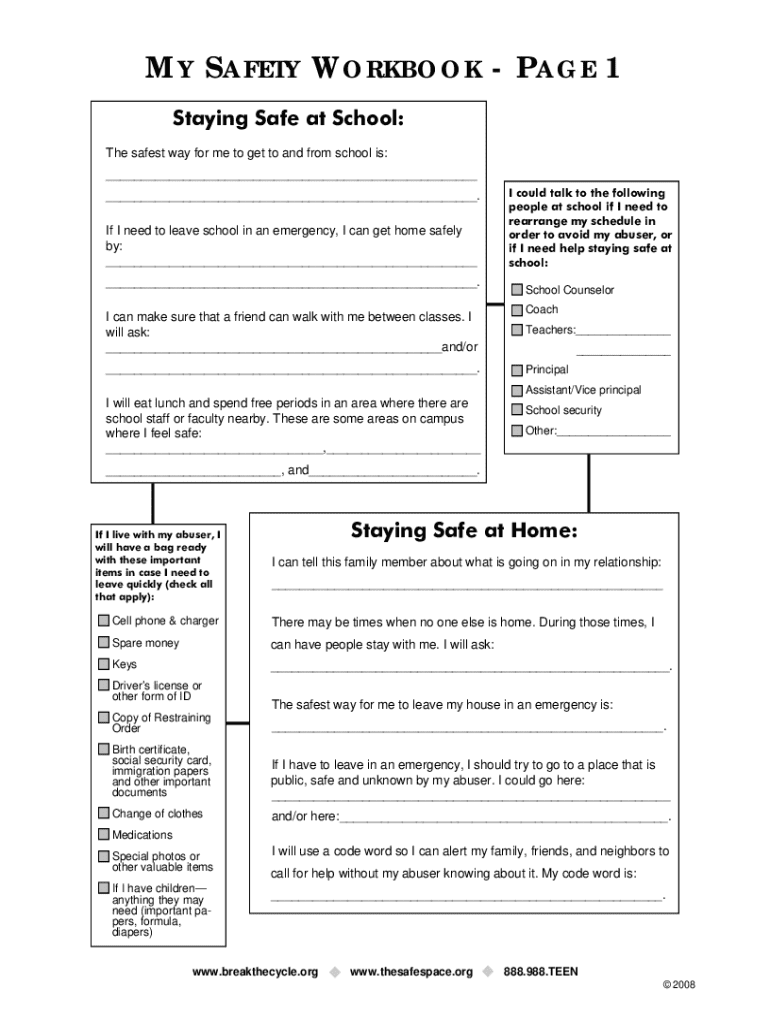







Definition & Meaning
A safety plan for teenagers is a structured guide designed to help young people navigate challenging or potentially dangerous situations. This plan focuses on personal safety, especially in the context of abusive relationships. It aims to provide clear steps and resources that teenagers can rely on to ensure their safety at school, home, or during social interactions. By recognizing signs of abuse and understanding proactive measures, teenagers are better equipped to protect themselves.
How to Use the Safety Plan for Teenager Template
The safety plan template serves as a practical tool that teenagers can use to outline specific actions they should take in various situations. To use the template effectively, follow these steps:
- Identify potential risks or hazards in your daily life.
- Tailor the template to address these specific risks.
- Include trusted contacts who can provide immediate assistance.
- Define safe places to go during an emergency.
- Keep the safety plan accessible for quick reference at all times.
Using this template allows teenagers to feel more confident and prepared to handle unsafe situations.
Steps to Complete the Safety Plan for Teenager Template
Completing the safety plan involves several critical steps:
- Assessment of Current Safety Concerns: Begin by evaluating potential safety concerns in everyday environments like school or home.
- Personalizing the Plan: Adapt the template to suit personal circumstances and include details relevant to individual experiences.
- Listing Emergency Contacts: Identify and list contacts such as family members, teachers, or friends who can be reached in case of emergency.
- Define Safe Spaces: Determine locations where the teenager can find safety or support during emergencies, such as a friend's house or community center.
- Review and Update Regularly: Make sure to review the plan periodically and update details as life circumstances change.
Each of these steps helps to ensure the safety plan remains practical and useful.
Key Elements of the Safety Plan for Teenager Template
The safety plan template includes several vital components that contribute to its effectiveness:
- Emergency Contact Information: Names and numbers of trusted individuals or support services.
- Safe Locations: Specific places identified as safe havens.
- Warning Signs: A list of behaviors or situations that indicate potential danger.
- Immediate Responses: Defined steps to take when feeling threatened.
These elements collectively form a comprehensive plan that addresses various aspects of personal safety.
Examples of Using the Safety Plan for Teenager Template
Consider the following hypothetical scenarios to understand the application of the safety plan:
- School Bullying: A teenager facing bullying may use the plan to identify trusted teachers to approach and determine safe routes or areas within the school.
- Domestic Issues: In cases of parental abuse, the plan can include friends’ or relatives’ homes as temporary safe spaces and outline how to alert authorities discreetly.
- Online Harassment: For online threats, the template might include guidelines for blocking harassers and resources for cyber safety.
Each example illustrates the diverse situations where a safety plan proves essential.
Who Typically Uses the Safety Plan for Teenager Template
Typically, the safety plan for teenagers is used by students, parents, educators, and counselors who seek to ensure the safety and well-being of teenagers. Teenagers themselves are encouraged to actively participate in crafting their safety plans, providing them with a sense of ownership and agency over their security measures.


Important Terms Related to the Safety Plan for Teenager Template
Understanding key terms associated with the safety plan is crucial:
- Safe Space: A physical or emotional environment where a person feels secure.
- Trigger: Any event or action that may elicit feelings of distress or danger.
- Support Network: A group of trusted individuals who provide emotional and practical support.
- Boundaries: Personal limits set to protect one's emotional and physical well-being.
Familiarity with these terms aids in the effective use of the safety plan.
Legal Use of the Safety Plan for Teenager Template
While the safety plan itself is a personal tool, its use can intersect with legal considerations:
- Mandatory Reporting: Educators and counselors may be required by law to report certain disclosures made during safety planning sessions.
- Restraining Orders: The plan can support the decision to seek legal protection if necessary, such as restraining orders against abusers.
- Confidentiality: Understanding the boundary of confidentiality when sharing the plan with others.
The incorporation of legal awareness ensures that the safety plan is both protective and compliant with applicable laws.
Versions or Alternatives to the Safety Plan for Teenager Template
While the primary template serves a broad purpose, there are variations and alternatives designed to suit specific needs:
- Digital Versions: Interactive online versions that offer easy updates and secure storage.
- Abuse-Specific Templates: Tailored options focusing on particular types of abuse, such as emotional or cyber abuse.
- Culturally Specific Templates: Versions that consider cultural nuances and language preferences.
These alternatives allow for more individualized approaches to safety planning.




