







Definition and Meaning
Accredited veterinary colleges play a critical role in shaping the future of veterinary professionals by providing high-standard education recognized by relevant accrediting bodies. Accreditation ensures that a veterinary college meets specific educational and ethical standards required for professional practice. In the United States, these colleges are typically evaluated by associations like the American Veterinary Medical Association (AVMA). Accreditation serves as a benchmark that guarantees that the education and training offered are consistent with national and international veterinary standards, thus qualifying graduates for licensure and practice.
How to Use Information on Accredited Veterinary Colleges
Finding and utilizing information about accredited veterinary colleges is vital for prospective veterinary students and professionals seeking continuing education. Once a list of accredited colleges is compiled, compare each program based on various factors such as curriculum offerings, faculty expertise, clinical training opportunities, and research facilities. This evaluation assists in making informed decisions about which college aligns best with your career goals. Researching output and career placement statistics also provides deeper insights into program effectiveness and potential career paths.
Steps to Complete Applications for Accredited Veterinary Colleges
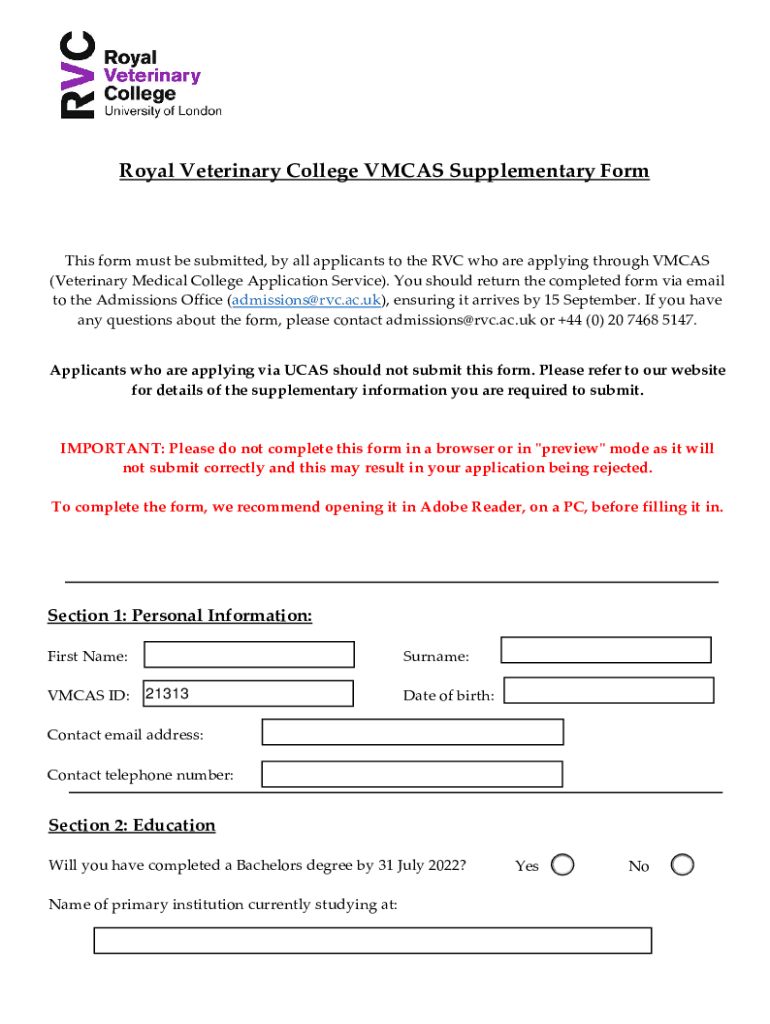
The application process for accredited veterinary colleges can be intricate, involving several steps designed to capture a comprehensive profile of each applicant. Typically, the process begins with submitting an application through the Veterinary Medical College Application Service (VMCAS), requiring detailed information on academic records, standardized test scores, and personal statements. Sometimes, supplementary forms unique to each college may be required to evaluate applicants based on specific criteria such as veterinary-related experience, character references, and skills. Ensuring that all forms are completed accurately and submitted before deadlines is crucial for successful application processing.
Important Terms Related to Accredited Veterinary Colleges
Understanding key terms related to accredited veterinary colleges can aid in navigating the application and educational process. Some crucial terms include:
- VMCAS (Veterinary Medical College Application Service): A centralized application hub for applying to multiple veterinary schools.
- Pre-Veterinary Requirements: Courses and experiences necessary before applying to veterinary programs.
- DVM (Doctor of Veterinary Medicine): The degree typically awarded after completing a veterinary education program.
- Clinical Rotations: Practical, hands-on training in veterinary medicine that occurs in the final years of a veterinary program.
Key Elements of Accredited Veterinary Colleges
Accredited veterinary colleges have several fundamental components that contribute to their quality and effectiveness:
- Curriculum: Comprehensive courses covering animal anatomy, physiology, pharmacology, and surgery.
- Faculty: Experienced educators and researchers with expertise in various veterinary disciplines.
- Facilities: State-of-the-art labs and hospitals providing practical learning experiences.
- Research Opportunities: Access to cutting-edge research facilities enabling students to participate in pioneering veterinary studies.
Required Documents for Application
Applying to accredited veterinary colleges generally requires the submission of several important documents:
- Academic Transcripts: Official records from all previously attended institutions.
- Standardized Test Scores: Relevant exam results, such as the GRE (Graduate Record Examination).
- Personal Statement: A written document articulating your passion for veterinary medicine and career aspirations.
- Letters of Recommendation: Endorsements from relevant mentors or professionals attesting to your qualifications and character.
Application Process and Approval Time
Gaining admission to an accredited veterinary college involves a rigorous application process. Start by applying through the VMCAS platform, followed by submission of college-specific supplemental materials if required. The review and decision-making process varies by institution, typically taking several months. Applicants can expect to receive interview invitations as part of the evaluation. Acceptance offers are usually extended to successful candidates by early spring for the fall term. Staying informed about each school’s specific timelines is paramount for managing expectations.
State-Specific Rules for Accredited Veterinary Colleges
Different states may have specific rules and requirements for students attending veterinary colleges. While accreditation standards are primarily managed on a national level, geographical and state-specific licensure requirements can influence educational content and prerequisites. Prospective students should research state veterinary boards to understand specific licensure requirements, such as examinations, residency requirements, or particular coursework. This information is vital for ensuring compliance and securing a successful transition from education to professional practice in a chosen location.




