







Definition & Meaning
The Attorney Grievance Procedures in Connecticut establish a structured process through which grievances or complaints against attorneys are formally managed. This procedure serves to ensure accountability, professionalism, and ethical conduct within the legal profession. It provides a mechanism for clients, other attorneys, and any concerned parties to report unethical behavior or malpractice. The primary aim is to maintain public trust in the legal system by addressing grievances promptly and effectively.
How to Use the Attorney Grievance Procedures in Connecticut
To utilize the Attorney Grievance Procedures, individuals must first identify the nature of their complaint. This involves collecting all relevant documents, such as correspondence with the attorney or records that substantiate the grievance. Once the details are in place, the complaint is to be submitted to the appropriate grievance committee. Complainants should ensure that they follow specific guidelines, which may include using a standardized form and providing clear and detailed descriptions of the issue at hand.
Steps to Complete the Attorney Grievance Procedures in Connecticut
- Gather Information: Collect all necessary documentation and evidence related to the grievance. This includes any contracts, emails, and transcripts of communications with the attorney.
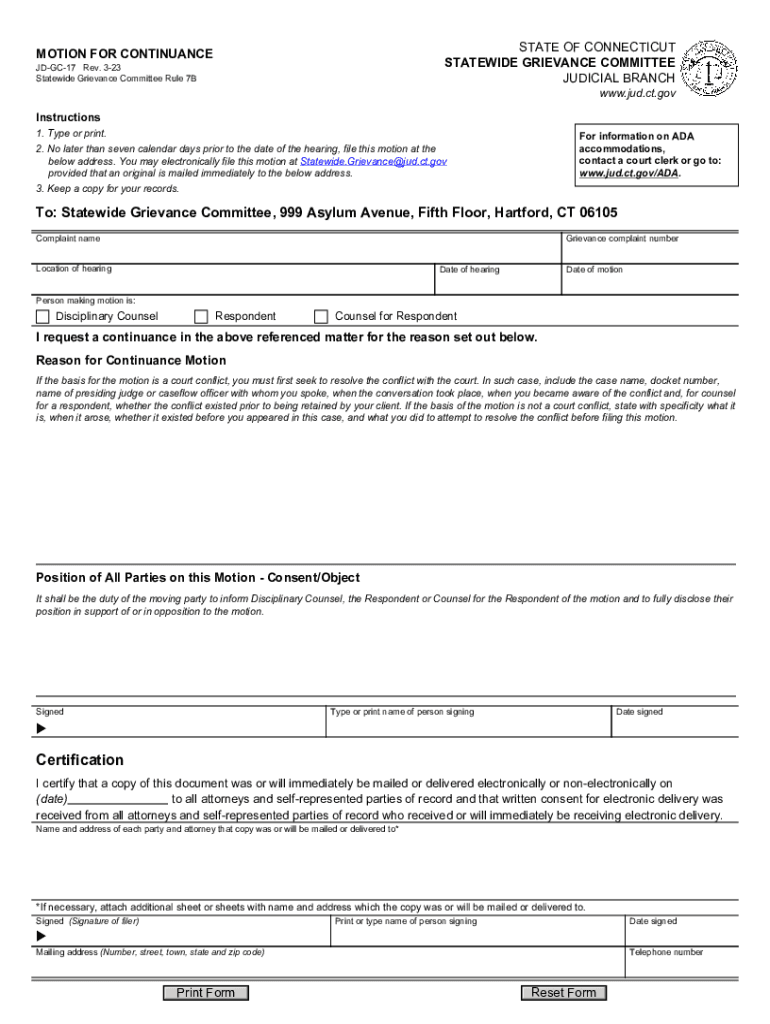
- Fill Out the Complaint Form: Accurately complete the grievance form, ensuring that you articulate the nature of the complaint clearly and succinctly.
- Submit the Complaint: Depending on the options available, you may submit the form online, via mail, or in person to the Statewide Grievance Committee.
- Review Process: After submission, the grievance will undergo a preliminary review. Additional documentation may be requested.
- Attend a Hearing: If warranted, you may be required to attend a hearing where you can present your case.
- Receive Resolution: Once the grievance committee has reviewed the complaint, they will issue a decision or recommendation.
State-Specific Rules for the Attorney Grievance Procedures in Connecticut
Connecticut has unique practices and regulations when handling attorney grievances. The Statewide Grievance Committee is responsible for overseeing these procedures. Some rules include strict deadlines for filing grievances—typically within a specified time frame after the alleged incident. Additionally, there are procedures for the attorneys involved to respond to the grievances made against them. In most cases, hearings are confidential to protect the involved parties' privacy.
Important Terms Related to Attorney Grievance Procedures in Connecticut
- Complainant: The individual or entity submitting the grievance against an attorney.
- Respondent: The attorney against whom a grievance has been filed.
- Statewide Grievance Committee: The body that oversees and adjudicates attorney grievances in Connecticut.
- Disciplinary Action: Actions that may be taken against attorneys found in violation of ethical or professional standards.
Legal Use of the Attorney Grievance Procedures in Connecticut
These procedures are legally binding and are part of the Connecticut Judicial Branch. They are meant to protect the integrity of legal services and ensure that attorneys adhere to professional standards. The procedures provide a formal avenue for complaints to be heard and acted upon, potentially leading to sanctions or disciplinary actions against attorneys who violate professional conduct rules.
Required Documents
Filing a grievance requires several key documents:
- Grievance Form: This is the official document where the complaint is detailed.
- Evidence: Including but not limited to emails, contracts, and transaction records that support the grievance.
- Correspondence Record: Documentation of all communication associated with the attorney and grievance process.
Penalties for Non-Compliance
Failure to adhere to the Attorney Grievance Procedures can result in several consequences. For complainants, it may mean their grievance is dismissed if not submitted correctly or timely. For attorneys, non-compliance can lead to disciplinary actions, such as reprimands, suspension of the license to practice law in Connecticut, and in severe cases, disbarment. The procedures ensure that all parties involved uphold professional standards conducive to fair and ethical legal practice.
By understanding the comprehensive nature of these procedures, individuals can effectively utilize the system to address any grievances with an attorney in a structured and legally recognized manner.




