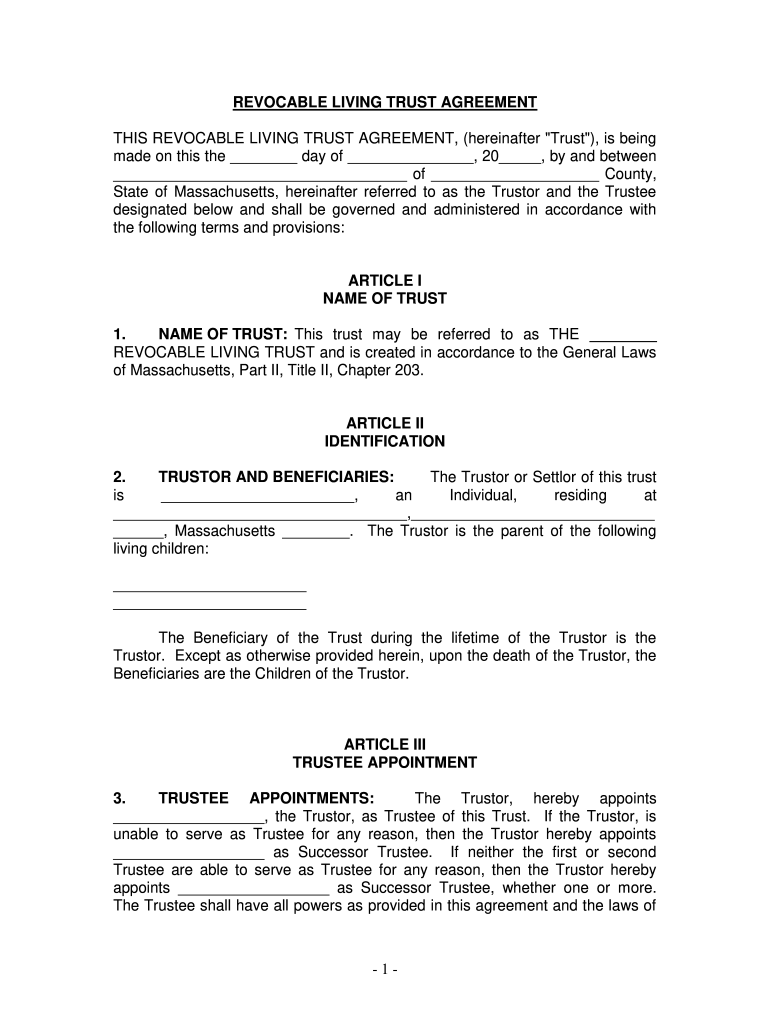







Definition & Meaning
A Massachusetts Living Trust for individuals who are single, divorced, or widowed with children is a legal arrangement where a Trustor establishes a trust to manage their assets during their lifetime and distribute them after their death. This type of trust is revocable, meaning the Trustor can alter or terminate it during their lifetime, providing flexibility in asset management. The primary intent is to bypass the probate process, ensuring a smoother transfer of assets to beneficiaries, commonly the Trustor's children, after death. This trust type is particularly beneficial for those who wish to ensure their children's financial security while retaining control over their assets.
Key Elements of the Massachusetts Living Trust
Creating a comprehensive Massachusetts Living Trust involves several key components:
- Trustor and Beneficiaries: The Trustor is the person establishing the trust, while the beneficiaries are those who will derive benefits from it, typically the Trustor's children.
- Trustee: This is the individual or institution responsible for managing the trust's assets according to its terms. The Trustor can designate themselves as the initial trustee.
- Assets: These include the properties and investments placed within the trust. The trust document specifies how these assets are managed and distributed.
- Distribution Specifications: Clear guidelines are outlined regarding how assets should be distributed both during the Trustor's lifetime and posthumously.
- Amendment Provisions: The Trustor retains the right to amend or revoke the trust, allowing for changes as circumstances evolve.
Steps to Complete the Massachusetts Living Trust
Creating a Massachusetts Living Trust involves several detailed steps to ensure legal compliance and clarity of intentions:
- Drafting the Agreement: Collaborate with a legal professional to draft a trust agreement, detailing the Trustor's intentions and outlining the management and distribution of assets.
- Selecting a Trustee: Choose a responsible individual or institution to manage the trust. The Trustor may act as the initial trustee and name a successor trustee for when they are no longer able to serve.
- Funding the Trust: Transfer assets into the trust. This process involves changing titles of real estate, bank accounts, and other assets to the name of the trust.
- Declaring Beneficiaries: Clearly identify the beneficiaries and specify their respective shares of the trust assets.
- Signing the Document: The trust agreement must be signed and notarized according to Massachusetts law to be legally binding.
- Review and Adjustments: Regularly review the trust to accommodate any changes in life circumstances or legal requirements.
Important Legal Terms Related to the Massachusetts Living Trust
Understanding specific legal terminology is essential for managing a Massachusetts Living Trust:
- Probate: A legal process to validate a will and distribute a deceased person's estate, which a living trust aims to circumvent.
- Revocable: The ability to alter or terminate the trust during the Trustor's lifetime.
- Incapacity Clause: A provision outlining management guidelines if the Trustor becomes legally incapacitated.
- Fiduciary Duty: A trustee's obligation to act in the best interest of the beneficiaries.
- Successor Trustee: The individual or entity designated to manage the trust following the initial trustee's death or incapacity.
Legal Use of the Massachusetts Living Trust
The Massachusetts Living Trust serves several legal and financial purposes:
- Avoiding Probate: Allows direct transfer of assets to beneficiaries without court intervention, saving time and costs associated with probate.
- Privacy Protection: Unlike wills, trusts do not require public disclosure, maintaining the privacy of the Trustor's estate planning.
- Incapacity Planning: Outlines management of assets if the Trustor becomes incapable of managing their affairs, ensuring continuity and adherence to the Trustor's wishes.
- Flexibility and Control: Provides the Trustor with the ability to modify terms as their personal circumstances or familial relationships change.
State-Specific Rules for the Massachusetts Living Trust
When creating a living trust in Massachusetts, several state-specific regulations must be considered:
- Witness and Notarization Requirements: Trust documents must be signed in the presence of a notary public, ensuring adherence to legal formalities.
- Homestead Protection: Consideration of Massachusetts' homestead laws, which protect a portion of the home equity from certain creditors, even when transferred into a trust.
- Legal Compliance: The trust must comply with Massachusetts General Laws, specifying formalities and permissible provisions within the document.
Examples of Using the Massachusetts Living Trust
Real-world application examples illustrate the versatility and benefits of a living trust:
- Single Parent: A single mother creates a trust to ensure her children's financial needs are met without court intervention in case of her sudden demise or incapacity.
- Divorced Individual: A divorced individual uses a living trust to maintain control over asset distribution to children while excluding an ex-spouse from financial affairs.
- Widow or Widower: Widowed individuals often establish trusts to secure the management and distribution of inherited and personal assets to their children, laying out clear terms.
Eligibility Criteria
To establish a Massachusetts Living Trust, there are several basic requirements:
- Capacity: The Trustor must possess the legal capacity to enter into a contract, which typically means being at least eighteen years of age and of sound mind.
- Ownership of Assets: The Trustor should have a clear title to assets intended to be placed within the trust.
- Intent: The Trustor must clearly express their intent to create a trust, as interpreted through the trust document's provisions.