



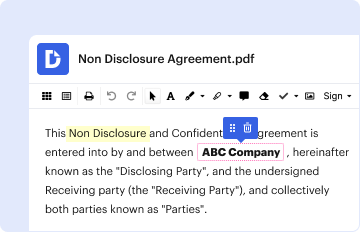
01. Edit your form online
Type text, add images, blackout confidential details, add comments, highlights and more.

Type text, add images, blackout confidential details, add comments, highlights and more.
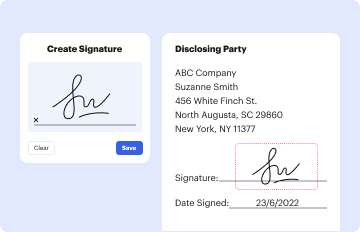
Draw your signature, type it, upload its image, or use your mobile device as a signature pad.

Send it via email, link, or fax. You can also download it, export it or print it out.
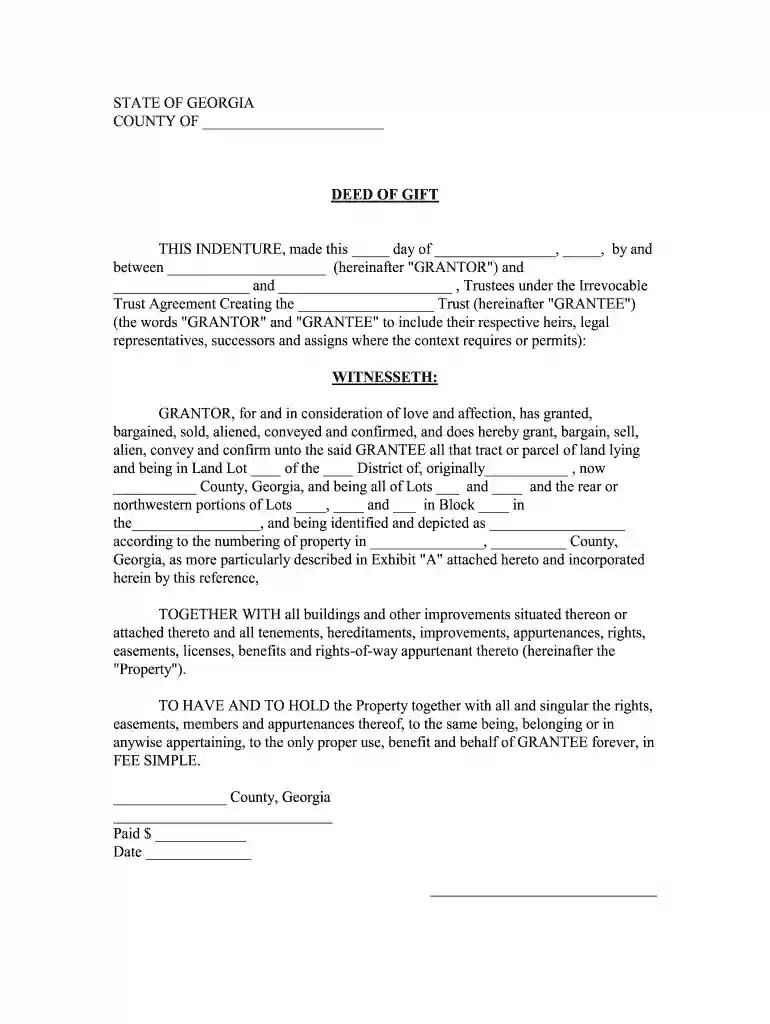
A Deed of Gift is a legal document used to voluntarily transfer ownership of property from a grantor (current owner) to a grantee (recipient) without any monetary exchange. This transfer is often motivated by personal reasons such as familial love, affection, or charitable intent. The deed must clearly identify the involved parties, describe the property in question, and explicitly state the intent to gift the property. As this is a legal document, it often requires witnessing or notarization to ensure its validity, especially in matters where it may later need to be defended or scrutinized in a legal setting.
Utilizing a Deed of Gift involves several steps to ensure legal compliance and proper documentation. First, the grantor must prepare the document, ensuring all necessary fields are completed accurately. The specifics of the property must be noted, including any associated rights or improvements. The deed should be presented to the grantee, who then accepts the gift as stipulated. Finally, to formalize the transaction, often the presence of witnesses and notarization is mandatory. Recording the deed at the local county recorder's office not only helps in public notice but also solidifies the change of ownership in legal records.
A Deed of Gift is legally binding and holds significance in estate planning and tax planning contexts. It serves to transfer ownership without financial compensation, which can have tax implications for both the giver and recipient. In the United States, gifts above a certain value may require reporting to the IRS, though the deed itself reflects a non-monetary exchange. Legal advisors often recommend involving legal assistance to draft or finalize the deed, ensuring compliance with local laws and regulations and avoiding potential future disputes.
Deed of Gift regulations can vary significantly from one state to another. For example, some states stipulate specific wording to be included in deeds, while others might have unique notarization or witnessing requirements. It's crucial to review state-specific guidelines or consult with a legal expert to ensure a deed's validity within the state it is being executed. For instance, in California, strict guidelines exist regarding notarization, while Georgia may emphasize witnessing requirements more heavily.
Deeds of Gift are typically utilized by individuals seeking to transfer property to family members, as part of inheritance planning, or when contributing property to charitable organizations. They are particularly common for parents passing property to children, grandparents looking to include their descendants in inheritance arrangements, or philanthropists gifting to foundations or non-profits. Businesses might also use them to transfer equipment or real estate to subsidiaries without selling assets.
Each of these sections offers critical insights into the various aspects of a Deed of Gift, providing depth and clarity necessary for understanding and executing this legal instrument in the United States.
At DocHub, your data security is our priority. We follow HIPAA, SOC2, GDPR, and other standards, so you can work on your documents with confidence.
You, as a landowner of a restricted Native allotment or townsite lot, can apply to give (gift) your Native Allotment or restricted townsite lot to a relativeRead more
I/We represent and warrant that the Property is free and clear of any and all claims, judgments, interests, restrictions, liens, infringements, or encumbrances,Read more


