







Understanding a Daily Food Plan Worksheet
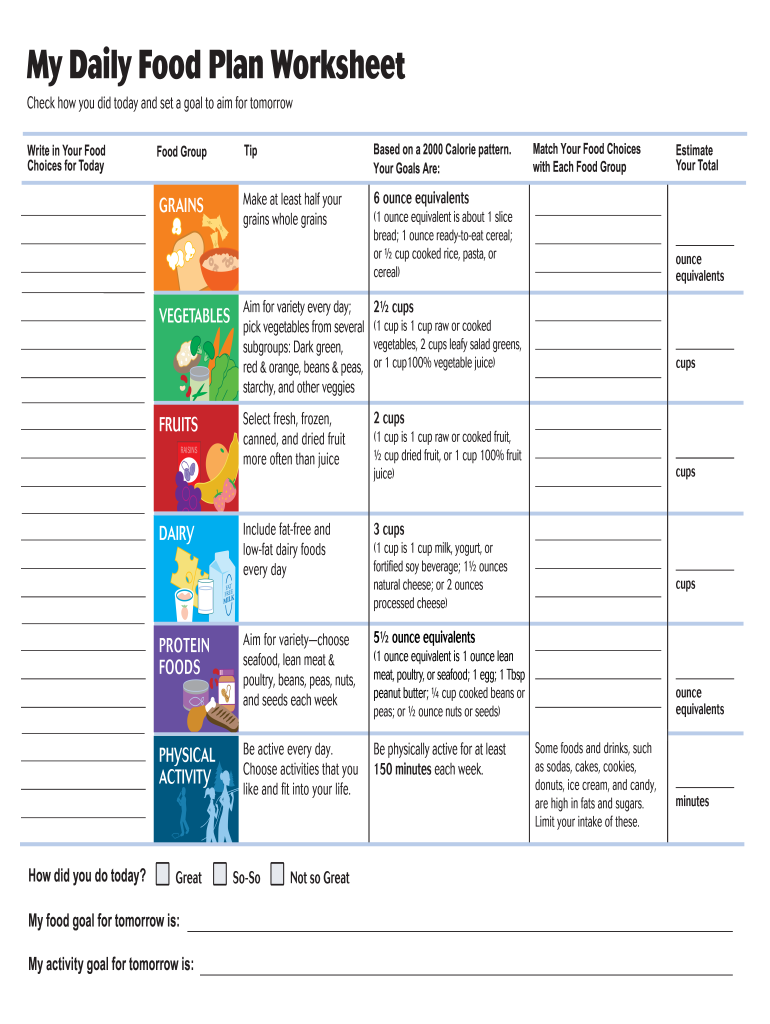
A daily food plan worksheet is a structured tool that helps individuals monitor their food intake and establish better dietary habits. This worksheet is particularly designed for individuals aiming to achieve healthier eating patterns by providing a format for recording meals, snacks, and beverages throughout the day. The food plan typically aligns with a balanced diet concept, often based on a standard intake of around two thousand calories per day, which is commonly recommended for adults.
Key Components of a Daily Food Plan Worksheet
The worksheet typically includes sections outlining servings from various food groups, including:
- Grains: Encouraging whole grains over refined options.
- Vegetables: Promoting a variety of colors and types for nutrient diversity.
- Fruits: Suggesting portions to ensure adequate fiber and vitamins.
- Dairy: Highlighting low-fat or non-fat options for calcium intake.
- Protein: Including options like lean meats, legumes, and nuts.
In addition to these food categories, users can find spaces for self-assessment, allowing them to reflect on their choices and set goals for the following day.
Benefits of Using a Food Plan Worksheet
Using a food plan worksheet can significantly enhance awareness of dietary habits. Here are some benefits:
- Tracking Food Intake: Recording meals encourages mindfulness around food choices, which can lead to healthier eating habits.
- Goal Setting: Users can reflect on their daily choices and set realistic goals to achieve overarching health objectives.
- Nutritional Balance: Following portion guidelines supports a balanced intake of essential nutrients across food groups.
Incorporating Physical Activity and Other Health Metrics
A comprehensive food plan worksheet often includes sections beyond just meals. It may feature:
- Physical Activity Logs: Encouraging users to engage in at least 150 minutes of moderate activity weekly.
- Hydration Goals: Monitoring water intake to emphasize hydration as part of a healthy lifestyle.
- Reflective Sections: Providing prompts for users to reflect on their food-related emotions, boosting self-awareness.
Real-World Applications of a Food Plan Worksheet
Various demographics can benefit from using a food plan worksheet, such as:
- Individuals with Specific Health Conditions: Those with diabetes might use the worksheet to monitor carbohydrate intake carefully.
- Health Enthusiasts: Individuals seeking to optimize their nutrition for fitness gains may use it to ensure balanced macronutrient consumption.
Holistic View: The 5x5x5 Eating Plan Connection
The daily food plan worksheet can be aligned with the 5x5x5 eating plan, which emphasizes incorporating five servings each of vegetables, fruits, and whole grains into daily diets. This structured approach promotes not only individual health but also aligns with broader dietary guidelines designed to combat chronic diseases. Users can use the worksheets to track their adherence to this specific food plan, which reinforces positive dietary behaviors.
Getting Started with Your Daily Food Plan Worksheet
To effectively use a daily food plan worksheet:
- Set Clear Goals: Begin with attainable health and dietary goals.
- Record Daily Meals: Dedicate time at the end of each day to note what you've consumed.
- Review and Adjust: Use your assessments to adjust your food choices and portions as needed.
- Incorporate Variety: Strive for diversity in food choices to benefit from a wider range of nutrients.
Conclusion
A well-structured daily food plan worksheet serves as a guiding tool for anyone looking to take charge of their eating habits. By fostering awareness and encouraging accountability, it supports individuals in making informed dietary choices that lead to improved overall health.




