105 medical plan 2026

Get Form
105 medical plan Preview on Page 1

Here's how it works

01. Edit your form online
Type text, add images, blackout confidential details, add comments, highlights and more.

02. Sign it in a few clicks
Draw your signature, type it, upload its image, or use your mobile device as a signature pad.

03. Share your form with others
Send it via email, link, or fax. You can also download it, export it or print it out.

Definition and Meaning of the 105 Medical Plan

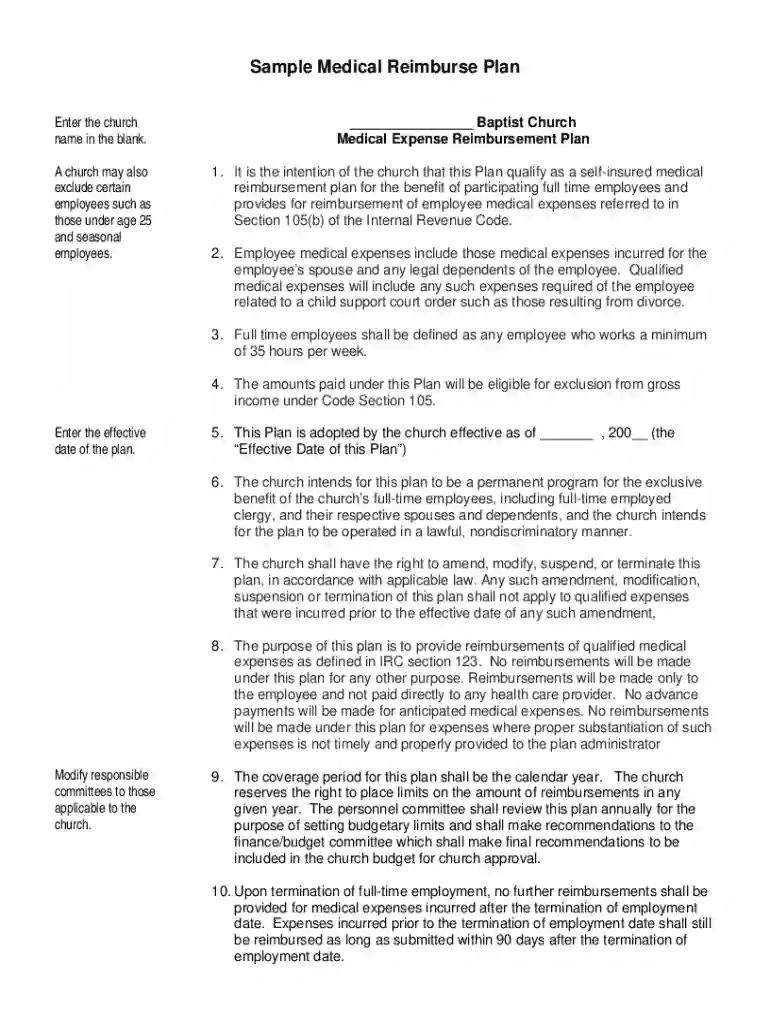
The "105 Medical Plan" refers to Section 105 of the Internal Revenue Code, which allows employers to reimburse employees for medical expenses not covered by insurance. This plan provides a tax-free reimbursement for medical expenses, offering a valuable benefit to both employers and employees. It's particularly useful for businesses seeking a cost-effective method to provide health benefits without the need for a traditional insurance plan. The reimbursement can cover various healthcare expenses such as doctor visits, prescription medications, and surgical procedures.

Practical Examples and Scenarios

  • Small businesses often implement 105 medical plans as a means to offer competitive health benefits that might otherwise be financially burdensome.
  • Employees of companies with a 105 medical plan can submit claims for reimbursement to reduce the out-of-pocket costs associated with medical care.

Unique Features of the 105 Medical Plan

  • Flexibility: Employers can design the plan to meet the specific needs of their workforce.
  • Cost-Effective: It offers a more affordable alternative to traditional group health insurance plans.
  • Tax Advantages: Both employer contributions and employee reimbursements are typically tax-free.

How to Use the 105 Medical Plan

Using a 105 medical plan involves several steps to ensure both compliance and maximization of benefits for participants. Employers establish the plan by setting up a formal written document that outlines the terms and conditions. Employees then submit eligible medical expenses to the plan administrator for reimbursement.

Step-by-Step Instructions for Employers

  1. Plan Design: Define the scope, eligibility, and types of expenses that will be reimbursable.
  2. Implementation: Establish a plan document and communicate the details to employees.
  3. Administration: Process claims submitted by employees, ensuring they meet eligibility criteria.

Step-by-Step Instructions for Employees

  1. Expense Tracking: Keep all receipts and documentation for eligible medical expenses.
  2. Claim Submission: Submit the necessary claims forms to the plan administrator.
  3. Reimbursement: Receive payment for eligible expenses, reducing out-of-pocket costs.

Key Elements of the 105 Medical Plan

Several core components make the 105 medical plan a functional and efficient reimbursement tool:

  • Eligibility Requirements: Clearly defined criteria regarding who can participate in the plan.
  • Reimbursement Process: Detailed procedures for submitting and processing claims.
  • Coverage Limits: Set maximum amounts that can be reimbursed to each employee within a plan year.

Coverage Examples

  • Prescription medications and co-pays
  • Doctor visits and specialist consultations
  • Essential medical equipment and supplies

Legal Use of the 105 Medical Plan

The legal framework for a 105 medical plan is grounded in the IRS guidelines, which dictate the compliance and operation of these plans. Employers must adhere to specific rules to ensure their plans qualify for tax advantages.

IRS Guidelines and Compliance

  • Written Plan Document: A formal document outlining the guidelines and operation of the plan.
  • Non-Discrimination Requirements: Plans must not favor highly compensated employees over others.
  • Recordkeeping: Employers are required to maintain detailed records of claims and reimbursements.

Examples of Using the 105 Medical Plan

The following examples illustrate the practical application of a 105 medical plan in various business settings:

  • Tech Startups: Often use 105 medical plans to provide comprehensive health benefits while conserving cash flow.
  • Non-Profit Organizations: Implement these plans to attract and retain employees who value extensive health coverage.

Case Study: Small Business Application

An independent consultancy firm employs ten staff members and uses a 105 medical plan to reimburse employees for their health expenses, thus enabling them to offer a competitive benefits package similar to larger firms.

IRS Guidelines and Compliance

Adherence to Section 105 of the IRS code is essential for the optimal operation of a 105 medical plan. Employers must ensure the plan document complies with current regulatory standards and updates.

Compliance Measures

  • Annual Reviews: Regular audits and assessments of the plan to ensure continued compliance with IRS regulations.
  • Training: Educating employees about their responsibilities and rights under the plan.

Required Documents for Participation

Participation in a 105 medical plan necessitates specific documentation from both employers and employees.

Documentation for Employers

  • A comprehensive plan document outlining the details of the plan
  • Financial statements showing disbursements and reimbursements

Documentation for Employees

  • Receipts and proof of payment for all medical expenses claimed
  • Completed claim forms with detailed information about each expense

Employer and Employee Benefits

Both employers and employees benefit significantly from the implementation of a 105 medical plan.

Employer Benefits

  • Tax Deductions: Contributions to the plan are deductible as a business expense.
  • Employee Retention: Enhanced benefits can improve satisfaction and reduce turnover.

Employee Benefits

  • Tax-Free Reimbursements: Receive reimbursements for medical expenses without tax implications.
  • Enhanced Financial Security: Offset high out-of-pocket medical expenses.

By understanding the comprehensive scope and benefits of the 105 medical plan, businesses and employees alike can better navigate the complexities of healthcare expenses, resulting in improved financial and health outcomes.

See more 105 medical plan versions

We've got more versions of the 105 medical plan form. Select the right 105 medical plan version from the list and start editing it straight away!
Versions Form popularity Fillable & printable
2007 4.9 Satisfied (28 Votes)
be ready to get more

Complete this form in 5 minutes or less

Get form

Got questions?

We have answers to the most popular questions from our customers. If you can't find an answer to your question, please contact us.
Contact us
A Section 105 HRA is an employer-funded plan that reimburses employees for medical expenses, including insurance premiums, up to a certain amount. This framework is not just about providing health benefits; its about doing so in a way thats tax-advantaged for both you and your employees.
Section 105(a) provides that amounts received by an employee through accident or health insurance for personal injuries or sickness are included in gross income to the extent such amounts (1) are attributable to contributions by the employer that were not includible in the gross income of the employee or (2) are paid
Section 105 Plans allow employers to make contributions using pre-tax dollars toward their employees medical care. WhereawsSection 125 Plans take a different route by letting employees themselves pay for certain qualified expenses using pre-tax dollars.
A Section 105 plan is an employer-sponsored health plan that allows organizations to provide tax-free reimbursement of employees medical and health insurance expenses, as allowed under Section 105 of the Internal Revenue Code (IRC). The most common form of Section 105 plan is a health reimbursement arrangement (HRA).
Section 105 Plans focus on reimbursing employees for specific medical expenses, offering a customizable approach to healthcare benefits. In contrast, Section 125 Plans enable pre-tax contributions to cover various qualified expenses, providing a different form of financial relief.

Security and compliance

At DocHub, your data security is our priority. We follow HIPAA, SOC2, GDPR, and other standards, so you can work on your documents with confidence.

Learn more
ccpa2
pci-dss
gdpr-compliance
hipaa
soc-compliance