
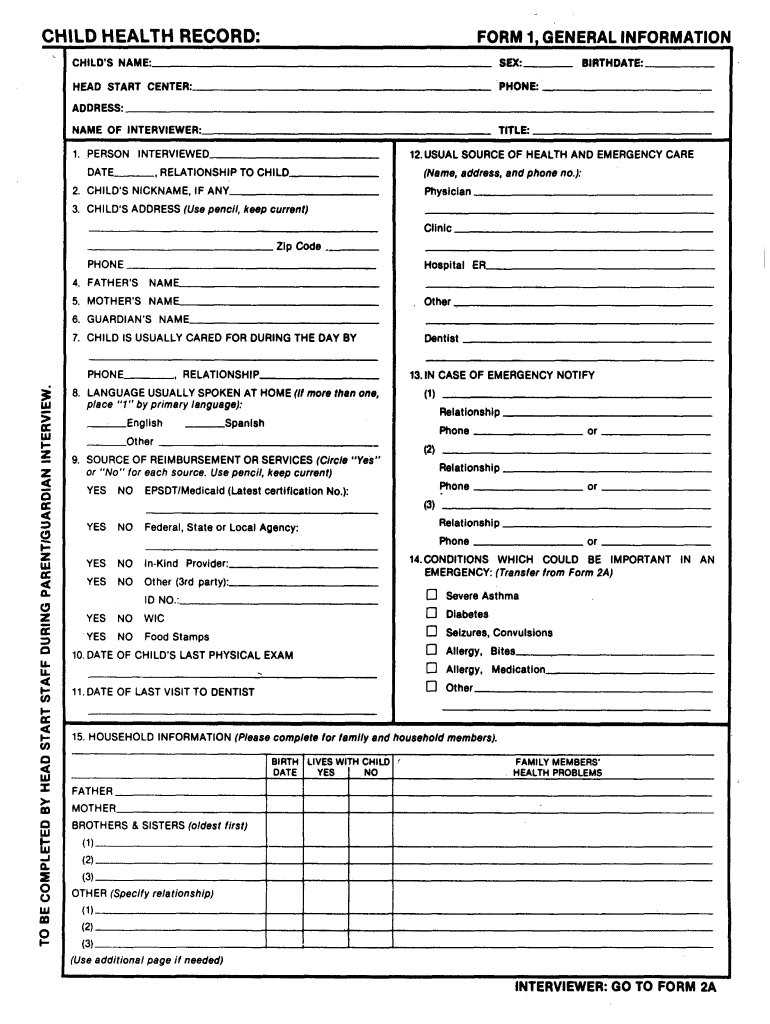







Definition and Purpose of the Child Health Record Form
A Child Health Record Form is a comprehensive tool designed to compile and maintain essential information about a child's health, development, and family background. It plays a crucial role in both educational and healthcare settings, particularly in programs such as Head Start, where tracking children's health and developmental milestones is paramount.
Key Components of the Child Health Record Form
-
General Information: This section captures vital details such as the child's name, date of birth, and contact information for parents or guardians. It serves as the foundation for all subsequent health assessments.
-
Health History: A record of previous illnesses, surgeries, and chronic conditions allows healthcare providers and educators to understand the child's health background. This is critical for addressing any specific health needs during their development.
-
Immunizations: An up-to-date immunization record is essential for ensuring that children are protected against preventable diseases. This section includes dates of vaccinations, types received, and any upcoming shots needed.
-
Nutrition and Dietary Preferences: Understanding a child's dietary needs and preferences is essential for their overall health. This section can include any allergies, dietary restrictions, or cultural food practices that should be considered.
-
Developmental Milestones: Tracking milestones in physical, social, and emotional development helps identify any areas where a child may need additional support or resources.
How to Effectively Use the Child Health Record Form
Utilizing the Child Health Record Form involves several steps to ensure comprehensive healthcare management and monitoring of a child’s well-being.
-
Initial Setup: Start by filling out the general information section accurately. This is done by gathering information from parents or guardians to ensure clarity and accuracy.
-
Documentation of Health History: Collect detailed health history by asking parents about the child’s previous health issues, family medical history, and any existing medical conditions. This section is critical for understanding the context of the child's health needs.
-
Maintain Current Immunization Records: Regularly update the section dedicated to immunizations. This requires monitoring vaccination schedules and ensuring that records are promptly filled out after each administration.
-
Review and Update Developmental Milestones: Periodically assess developmental milestones through observations and assessments. This can involve checklists provided by healthcare professionals that align with age-appropriate development.
-
Nutrition and Health Evaluations: Schedule regular health evaluations to adapt the nutrition section as needed based on the child’s growth and dietary needs. Consult with registered dietitians if necessary for specialized nutrition plans.
Legal Requirements and Best Practices
Various legal and regulatory guidelines dictate how child health records should be maintained and used within the United States, particularly concerning privacy and security.
Key Legal Considerations
-
HIPAA Compliance: Health information must be stored in accordance with the Health Insurance Portability and Accountability Act, ensuring that a child's health data remains confidential and secure.
-
Informed Consent: Parents or guardians should provide consent before any health information is shared with other parties, such as educational or healthcare institutions.
-
Retention of Records: Organizations should adhere to state-specific regulations regarding how long child health records must be held. This ensures compliance with local laws, as different states may have varying requirements.
Best Practices for Record Management
-
Secure Storage: Store physical records in a locked cabinet or protected digital files with adequate encryption.
-
Regular Audits: Conduct periodic audits to ensure all information is current, accurate, and compliant with storage protocols.
-
Staff Training: Train staff on the importance of confidentiality and secure handling of child health records to prevent unauthorized access.
Common Scenarios for Utilizing the Child Health Record Form
Example Situations
-
School Enrollments: When enrolling in school, parents often need to present completed child health records to demonstrate that the child meets health requirements.
-
Healthcare Visits: Pediatric offices frequently request health records during visits to assess a child's growth and developmental progress.
-
Emergency Situations: In the event of an emergency, having an up-to-date health record available can be critical for obtaining immediate and appropriate care.
Digital Versions and Tools for Managing Child Health Records
The shift towards digital documentation has enhanced the process of managing child health records in numerous ways.
Benefits of Digital Records
-
Accessibility: Digital health records allow parents and healthcare providers to access important information quickly from multiple devices, facilitating timely decision-making.
-
Integration with Health Systems: Electronic systems can often integrate with various health management tools, providing a holistic view of a child’s health.
-
Simplified Updates: Digital forms can be updated in real time, ensuring that any new health information is immediately reflected in the child's record.
Digital Platforms
Specific platforms offer features that support child health record management, enabling organizations to maintain compliance while improving workflow efficiency. These platforms often come with built-in data security measures, making them ideal for managing sensitive health information.
Incorporating innovative tools and adhering to best practices for form usage can significantly enhance the management of a child's health information while ensuring compliance with relevant regulations.




