
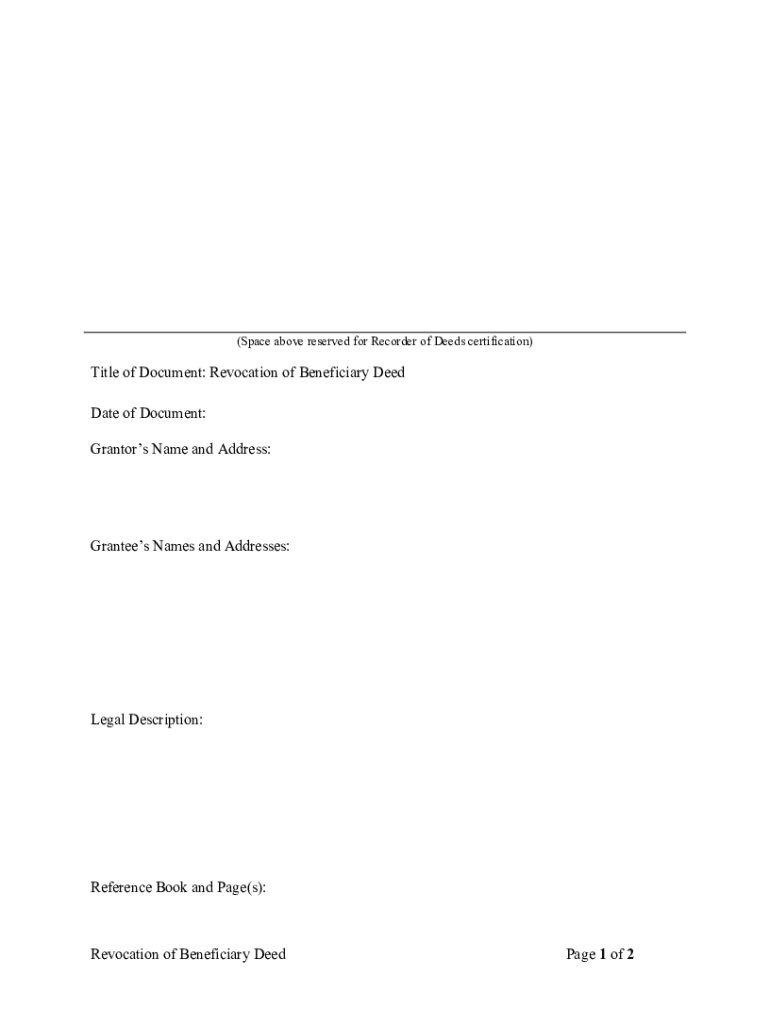







Definition and Meaning of Missouri Beneficiary
In Missouri, a beneficiary refers to an individual or entity designated to receive assets, benefits, or ownership from an estate, trust, insurance policy, retirement account, or any other financial instrument upon the passing of the original owner. The designation of a beneficiary ensures that the decedent's wishes are fulfilled according to their instructions, providing a clear directive for asset distribution. This term is particularly significant in legal documents, as it dictates the flow of asset management and transitional ownership in estate planning.
Key Contextual Examples
- A beneficiary can be named in a will to inherit property or specified assets.
- In insurance, the beneficiary receives the policy's death benefit.
How to Use the Missouri Beneficiary Designation
Missouri beneficiary designations streamline asset distribution processes, providing beneficiaries with direct access to specified assets without needing probate court involvement. Proper use of such designations requires careful drafting and maintenance to reflect current intentions accurately.
Practical Guidelines
- Form Completion: Clearly fill out forms with up-to-date beneficiary information.
- Review and Update: Regularly review and update beneficiary information to ensure it aligns with current circumstances, especially after major life events like marriage or divorce.
Obtaining a Missouri Beneficiary Designation Form
The process of obtaining a beneficiary designation form varies based on asset types involved. Typically, financial institutions or insurance companies provide these forms for their particular accounts or policies.
Common Access Points
- Online Platforms: Forms can often be downloaded directly from the official website of the institution managing the asset.
- In-Person Requests: Visit the financial institution or insurance provider to obtain physical copies.
Steps to Complete the Missouri Beneficiary Form
Completing a Missouri beneficiary form requires accuracy to avoid future disputes or delayed asset transfers. Follow these steps to ensure completeness and correctness.
Detailed Procedure
- Gather Required Information: Ensure the correct legal names and addresses of all beneficiaries.
- Fill Out Form Accurately: Include all necessary details, ensuring accuracy to avoid delays.
- Submit for Review: Send the completed form back to the issuing entity for validation.
Why You Should Designate a Missouri Beneficiary
Designating a beneficiary offers a targeted approach to estate planning, ensuring asset distribution aligns with your wishes. It reduces the burden on family members to navigate probate and lessens potential estate taxes.
Benefits
- Avoid Probate: Direct transfer of assets bypasses the long probate process.
- Tax Efficiency: Structured inheritance can mitigate estate tax liabilities.
Who Typically Uses the Missouri Beneficiary Designation
A wide range of individuals and entities employs beneficiary designations for estate planning, each for various reasons tailored to their personal and financial contexts.


Common Users
- Individuals with Life Insurance Policies: To ensure death benefits pass directly to beneficiaries.
- Retirees: Designate beneficiaries for retirement accounts for smoother transfer.

Important Terms Related to Missouri Beneficiary
Understanding key terms associated with beneficiary designations in Missouri helps in developing a clear estate plan and avoiding legal uncertainties.
Essential Terms
- Primary Beneficiary: Individual or entity first in line to receive assets.
- Contingent Beneficiary: Receives assets only if the primary beneficiary cannot.
Legal Use of Missouri Beneficiary Designation
Legal use involves accurate completion and periodic updates to the designation forms. It is crucial for estate planning and ensuring compliance with Missouri state laws.
Legal Considerations
- Annual Reviews: Regularly updating beneficiary information ensures compliance with state laws and personal intentions.
- Professional Advice: Consulting with legal professionals can help navigate complex situations involving multiple beneficiaries or changes in life circumstances.




