





Definition & Meaning of the Lower Extremity Functional Scale
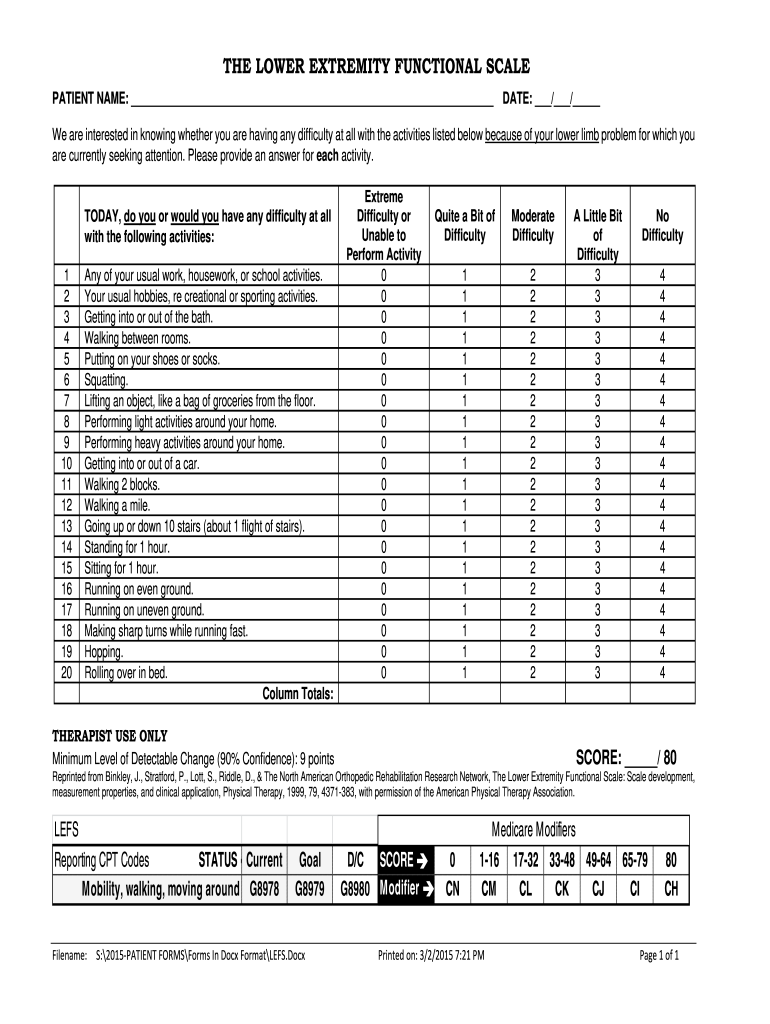
The Lower Extremity Functional Scale (LEFS) is a widely recognized patient assessment tool utilized in clinical settings to evaluate the impact of lower limb problems on a patient's daily activities. This scale specifically measures the difficulties patients encounter when performing various functional tasks due to issues related to their lower extremities, such as joints, muscles, or nerves.
Scoring System
The LEFS consists of twenty questions that cover a range of activities, including walking, stair climbing, and participating in sports. Each activity is rated on a scale from zero to four, where zero indicates "extreme difficulty" and four represents "no difficulty." The maximum possible score is 80, with higher scores indicating better functional ability.
Clinical Relevance
This tool is beneficial for healthcare professionals in assessing mobility and functional status, setting treatment goals, and monitoring progress over time. It can be especially useful in physical therapy, orthopedics, and rehabilitation contexts, ensuring that treatment plans are tailored to the individual needs of patients.
How to Use the Lower Extremity Functional Scale Printable
To effectively utilize the lower extremity functional scale printable, follow these steps:
-
Download the LEFS Form: First, obtain a printable version of the Lower Extremity Functional Scale. This can usually be found in PDF format on medical websites or databases.
-
Review the Instructions: Before distributing the form to patients, review any specific instructions provided. This ensures the assessment is completed correctly and returns valid results.
-
Administer the Scale: Give the form to the patient either in a clinical setting or as part of a telehealth consultation. Allow enough time for them to read and understand each question.
-
Collect Responses: After the patient completes the form, collect the responses and calculate the total score. This score will help in assessing the patient’s functional limitations.
-
Interpret the Results: Use the score to guide treatment decisions. Discuss with the patient how their ratings correspond to their perceptions of disability and any necessary interventions.
Considerations for Use
- Patient comfort is paramount. Encourage honest feedback to ensure accurate results.
- Update and reassess periodically to track changes in the patient’s functional status over time.
How to Obtain the Lower Extremity Functional Scale Printable
Acquiring the lower extremity functional scale printable is straightforward. Here are several methods:
-
Direct Download from Medical Sites: Many healthcare organizations and academic institutions offer the LEFS as a downloadable PDF. Online platforms such as DocHub often provide a user-friendly interface to access and print the form directly.
-
Contacting Healthcare Providers: Physical therapists or orthopedic specialists can provide patients with printed copies of the LEFS or direct them to online resources.
-
Health Clinics and Rehabilitation Centers: Many clinics use the LEFS in their evaluation processes and may have printed forms available upon request.
Online Resources for LEFS
- Check reputable medical websites for downloadable content that may include the LEFS PDF.
- Institutions often produce resources that include both the form and detailed guidance on usage.
Steps to Complete the Lower Extremity Functional Scale Printable
Completing the lower extremity functional scale is a systematic process that involves clear steps to ensure accurate assessment:
-
Prepare the Form: Ensure the LEFS form is accessible, whether in digital or printed format.
-
Patient Instructions: Explain to the patient how to correctly fill out the form, emphasizing honesty in their responses to capture their true level of function.
-
Complete Each Activity Rating: Guide the patient through each question, allowing them to rate their difficulty on a scale from zero to four based on their experiences.
-
Total the Score: Once the patient completes the form, add up the scores to derive a final point total.
-
Discuss Outcomes: Review the results with the patient and initiate a discussion about their functional status, which can guide subsequent treatment plans.
Important Tips
- Ensure privacy and comfort during the assessment.
- Encourage follow-up assessments to determine any changes in the patient’s condition and adapt treatment plans accordingly.
Key Elements of the Lower Extremity Functional Scale Printable
Understanding the essential components of the lower extremity functional scale can enhance its application in clinical practice:
-
Structure of the Form: The LEFS consists of a straightforward layout, ensuring patients can easily navigate through the questions. Each question addresses specific activities to evaluate functional capability.
-
Scoring: Each activity provides clear scoring options, facilitating a quick assessment by both the patient and the clinician.
-
Versatility: The LEFS can be utilized across various clinical scenarios, providing valuable insight for treatment plans in multiple disciplines, including orthopedics, sports medicine, and rehabilitative therapies.
Examples of Activities Rated
- Walking on level ground
- Climbing stairs
- Participating in recreational activities
By using these elements effectively, providers can gain critical insights into a patient’s functional limitations, enhancing the overall treatment process.




