





Overview of the Income Support Application
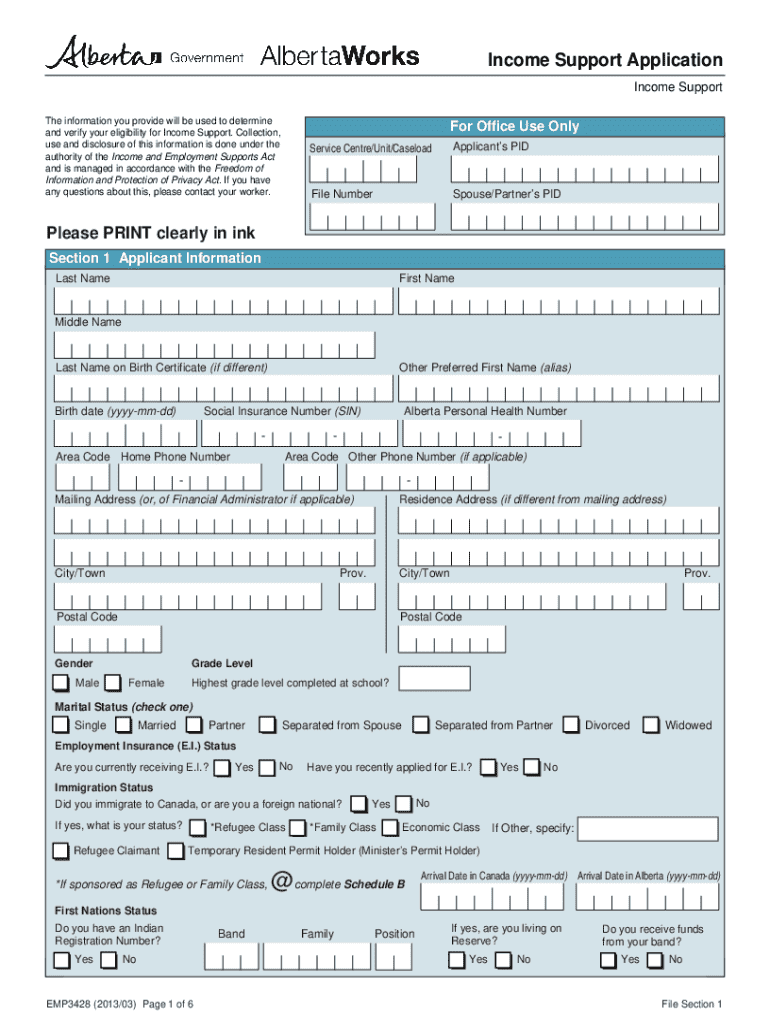
The income support application is a critical document designed to assist individuals and families who require financial aid to address basic needs, such as food, clothing, and shelter. This program emphasizes supporting those in need, offering a vital safety net. Understanding the nuances of this application can enhance the likelihood of receiving support.
Eligibility Criteria for Income Support

Basic Eligibility Requirements
Applicants must meet specific criteria to qualify for income support. The primary conditions include residency in the United States and demonstrating financial need. Non-citizens may also apply if they have lawful residency status. Other factors, such as family size, employment status, and other income sources, are evaluated to determine eligibility.
Exceptions and Special Cases
Certain scenarios might offer exceptions to typical eligibility criteria. For example, individuals facing sudden unemployment or those with medical disabilities might qualify even if they initially appear ineligible. It's important to consult the specific state guidelines to understand these exceptions better.
Steps to Complete the Income Support Application
-
Gather Necessary Documents:
- Proof of residency
- Identification documents (e.g., Social Security card)
- Recent income statements or pay stubs
- Asset documentation (e.g., bank statements)
-
Access the Application Form:
- Locate the form online through state government websites or request a paper version by mail or in-person at local offices.
-
Complete the Application:
- Carefully fill out each section, ensuring accuracy and completeness.
- Utilize the form fields for additional details when necessary.
-
Submit the Application:
- Choose to submit either online, via mail, or in-person.
- Retain copies of the application and all supporting documents for personal records.
Tips for Accurate Submission
- Double-check all entries for correctness.
- Ensure all required documents are included.
- Contact local assistance offices for help if needed.
Required Documents and Their Importance
- Proof of Income: Recent pay stubs or income statements verify earnings and qualify the financial need.
- Identification Proof: Such as a driver's license or passport, confirms the applicant's identity and residency.
- Asset Records: Provide a comprehensive overview of any savings or property owned, helping assess financial status.
Having these documents ready speeds up the application process and ensures compliance with all requirements.
Legal Context and Compliance
Understanding the legal obligations tied to the income support application is integral. Misrepresentation of financial need or providing false information can lead to penalties, including fines or repayment of funds. Adhering to legal requirements ensures integrity and compliance, benefiting both the applicant and the program.
Application Process and Approval Time
The processing time for income support applications varies greatly but generally ranges from a few weeks to a couple of months. The process involves document verification, eligibility assessment, and final approval by authorities. Timely submission and accurate, complete information can help expedite this process.
Exploring Alternate or Older Versions
In some states, variations of the income support application may exist, or older forms might still be in circulation. It's crucial to use the most current form to avoid processing delays. Checking with local government offices or official state websites ensures that the applicant has the correct version.
Digital vs. Paper Applications
Advantages of Digital Submissions
- Faster processing times due to automated systems.
- Immediate confirmation and tracking of the application's status.
- Reduced risk of lost documents compared to sending paper versions via mail.
Paper Application Considerations
- Useful for those without internet access.
- Offers a tangible record of the submitted details.
- Requires careful attention to detail to prevent errors.
Digital applications are generally recommended for their efficiency and ease of submission, but paper applications remain a viable alternative.
State-Specific Rules and Differences
Each state in the U.S. may have distinct rules and procedures for the income support application. Factors such as income thresholds, required documentation, and processing timelines can differ based on state regulations. Understanding these nuances can assist applicants in navigating state-specific requirements effectively.
Software Compatibility and Integration
For those who choose to fill out the application electronically, compatibility with popular software platforms like TurboTax or QuickBooks can streamline the process. These programs often help auto-fill sections based on previously entered data, enhancing accuracy and saving time.
Applicants leveraging these integrations can benefit from increased efficiency, but must ensure the software is updated to align with current form versions and state-specific requirements.


