
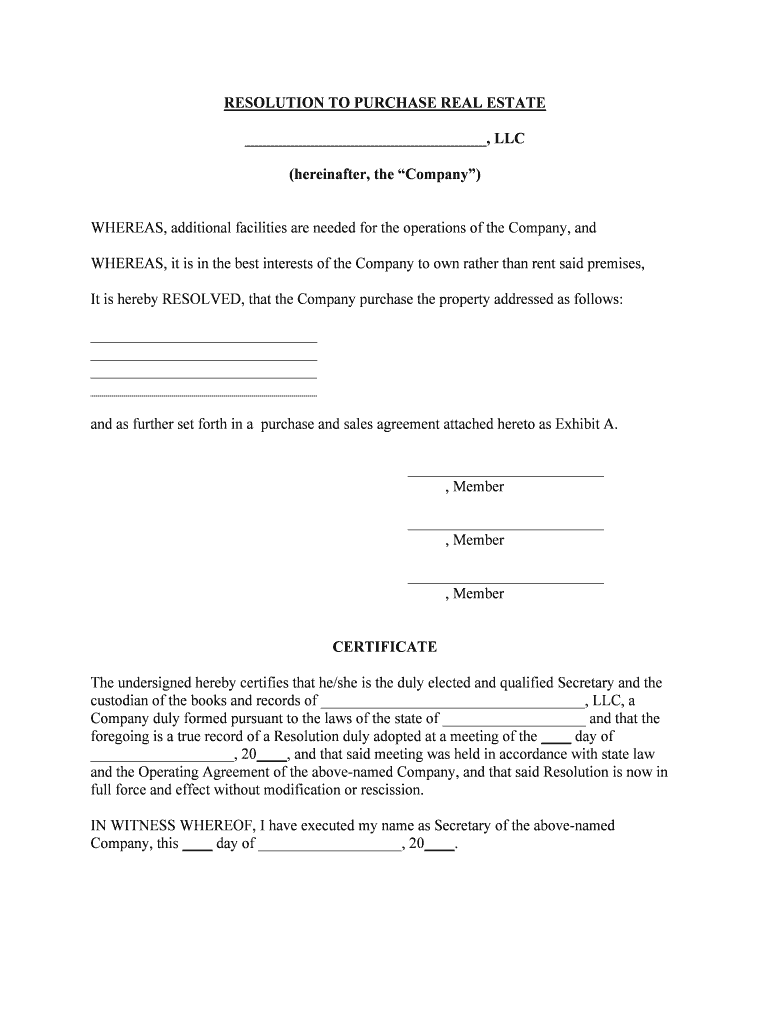







Definition and Meaning of a Resolution to Purchase Real Estate
A resolution to purchase real estate is a legal document used by organizations, particularly corporations and limited liability companies (LLCs), to officially record the decision to acquire property. This document serves as formal evidence that the decision-making body, such as the board of directors or members of an LLC, has authorized the purchase. The resolution outlines the details of the property and confirms that owning real estate aligns with the company's strategic and operational objectives.
Key Components
- Authorization of Purchase: The resolution typically includes language that grants specific individuals the authority to sign contracts, make offers, or perform other actions necessary to complete the real estate transaction.
- Property Details: Descriptions of the property, including location, legal description, and purchase price, are commonly detailed to provide clarity and avoid disputes.
- Legal Compliance: The document reflects that the decision follows appropriate corporate policies, the operating agreement, and relevant state laws.
Steps to Complete a Resolution to Purchase Real Estate
Creating a resolution requires a structured approach to ensure its effectiveness and legal compliance. Here's a step-by-step guide:
- Identify Key Participants: Involve the required parties in the discussion, such as board directors or LLC members.
- Draft the Resolution Language: Clearly define the purpose, specifying the property details and the authorization granted.
- Review and Amend: Ensure the language aligns with corporate bylaws and applicable laws. Amend where necessary to address any specific concerns.
- Meet for Adoption: Convene a formal meeting to discuss and vote on the resolution. Document the meeting minutes for record-keeping.
- Sign and Certify: Obtain signatures from authorized individuals to certify the resolution. Ensure notarization if required by state law.
- File the Document: Store the resolution in the company's official records and distribute copies to necessary stakeholders.
Why a Resolution to Purchase Real Estate is Crucial
The adoption of a formal resolution offers several benefits:
- Ensures Legal Compliance: Validates that the purchase decision follows the organizational and legal procedures, minimizing the risk of disputes.
- Clarifies Authority: Clearly delineates who is empowered to act on behalf of the company, preventing unauthorized actions.
- Supports Due Diligence: Demonstrates a thorough vetting process, enhancing transparency and accountability for corporate governance.
Key Elements of the Resolution to Purchase Real Estate
A well-drafted resolution includes the following core elements:
- Title and Purpose: Clearly identifies the document's intention and its role in authorizing the property acquisition.
- Authority and Roles: Specifies who has the power to execute the transaction and any limitations on their authority.
- Detailed Property Information: Includes specific details such as legal descriptions, proposed use, and strategic reasons for acquisition.
State-Specific Rules Governing Resolutions
While resolutions are generally similar across jurisdictions, state-specific regulations can introduce variations:
- State Law Compliance: Some states require additional layers of approval or specific language related to environmental assessments.
- Form Funder Requirements: State legislation may dictate particular clauses in the resolution, especially in real estate-related statutes.
- Recording Overheads: Certain states might require the resolution to fulfill particular recording practices for validity.
Examples of Using a Resolution to Purchase Real Estate
An example of practical use:
- LLC Real Estate Investment: An LLC wishes to expand its operations by acquiring adjacent land. A resolution is drafted and adopted at a member meeting, authorizing the principal members to negotiate and finalize the purchase.
- Corporate Office Expansion: A corporation, after analysis, resolves to purchase a building to establish a new headquarters. The board of directors records the decision in a resolution, ensuring that the acquisition aligns with the corporate growth strategy.
Who Typically Uses a Resolution to Purchase Real Estate
Various business entities employ resolutions for real estate purchases to ensure procedural clarity and authorization. The most common users include:
- Corporations: Boards of directors prepare resolutions to authorize large capital expenditures, like purchasing property.
- Limited Liability Companies (LLCs): Members convene to decide on acquisitions, documenting their decisions through resolutions.
- Nonprofit Organizations: Boards of trustees or directors use resolutions to secure real estate linked to charitable missions and activities.
Important Terms Related to Real Estate Purchase Resolutions
Understanding the terminology within a resolution is crucial for clarity and compliance:
- Quorum: Refers to the minimum number of members required to validate decisions made during meetings.
- Notarization: Some resolutions necessitate notarization to formally authenticate the signatures.
- Fiduciary Duty: The obligation to act in the best interest of the company, ensuring the purchase aligns with organizational goals.
Legally Binding Nature and Use of the Resolution
Incorporating a resolution to purchase real estate lends legal gravitas to the decision. Legal obligations and considerations include:
- Adherence to Corporate Governance: Ensures all decision-making follows established governing documents and bylaws.
- Contractual Obligations: Once adopted, the resolution creates a binding obligation on the parties authorized to act on its behalf.
- Document Preservation: Essential for maintaining a paper trail in corporate records, aiding in potential future audits or legal inquiries.




