
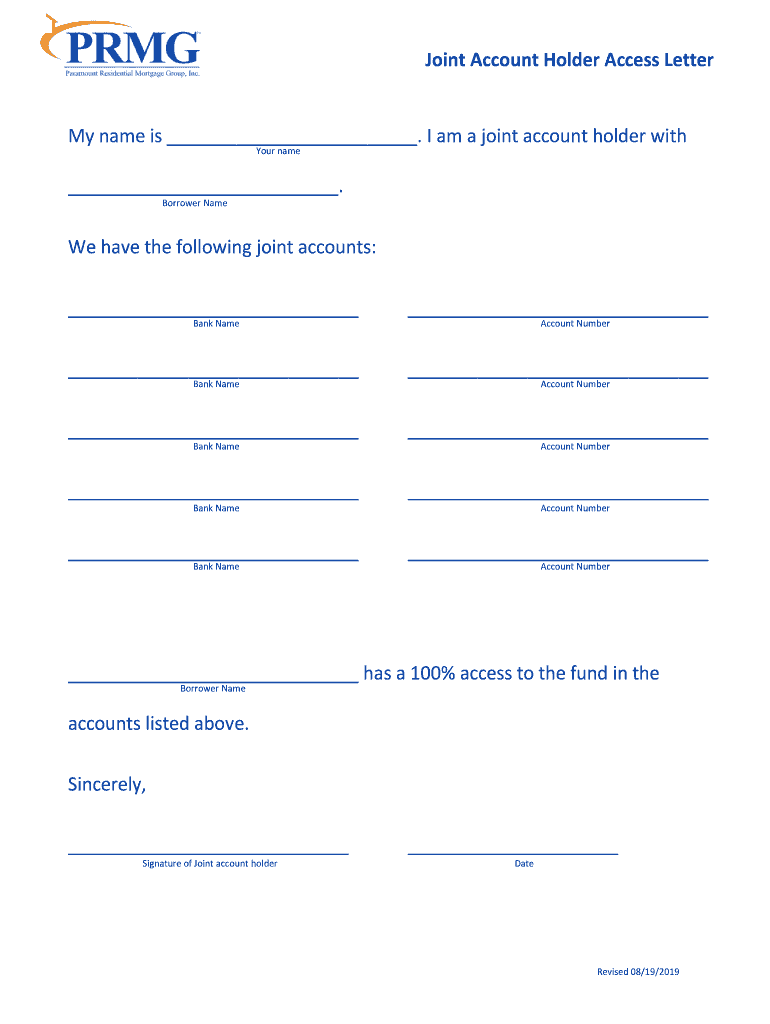







Definition & Purpose of the Joint Account Holder Access Letter
The Joint Account Holder Access Letter is a formal document that verifies an individual's authority to access and manage joint accounts shared with another individual. Typically, this letter confirms that one joint account holder has full access to the specified accounts and includes crucial information like account details, holder names, and required signatures. This ensures clarity and legal backing for the individual using or managing the funds within the joint account.
The letter protects the rights of account holders by stipulating terms under which each holder can operate the account. It serves as an agreement that details the extent of access granted—be it limited or full control. Having this documentation is critical for avoiding disputes and misunderstandings regarding account management and financial decisions.
Key Elements of the Joint Account Holder Access Letter
The letter should generally include several key components:
- Identifying Information: Full names and contact details of all account holders.
- Account Details: Mention of the specific joint accounts involved, including account numbers.
- Access Rights: Clear articulation of access level—whether it’s full access or with limitations.
- Signature Section: Spaces for signatures of all involved parties, dated appropriately to indicate consent and acknowledgment of the document.
- Witness or Notary Fields: Optional, depending on the legal requirements or the financial institution’s policy. These fields enhance the letter's legal enforceability.
Steps to Complete the Joint Account Holder Access Letter
Ensuring that the Joint Account Holder Access Letter is accurately completed involves several steps:
-
Gather Personal and Account Information: Collect details of the account and all parties involved.
-
Fill in the Identifying Information: Accurately enter names, addresses, and contact information for all account holders.
-
Detail Account Information: Clearly specify the number and type of accounts affected by this letter—this ensures clarity over what is covered.
-
Define the Access Rights: Explicitly state the extent of authority granted to the joint account holder, whether it’s for deposits, withdrawals, or management of account details.
-
Authentication through Signatures: Ensure all parties sign the document, confirming their agreement to the terms specified.
-
Optional Witness or Notarization: Having the document witnessed or notarized can provide additional legal validation, though this may depend on specific institutional requirements.
Importance of the Joint Account Holder Access Letter
This letter plays a pivotal role in financial management for joint accounts. It serves several important functions:
- Legal Clarity: Provides a formal, written record of the rights each account holder has, minimizing legal disputes.
- Preventive Measure: Helps prevent unauthorized access and misuse of funds by delineating access rights.
- Facilitates Communication: Clearly outlines each party’s responsibilities, aiding in smooth communication between holders and financial institutions.
- Record Keeping: Acts as a reference for financial auditors or legal advisors, ensuring structured financial management.
Who Typically Uses the Joint Account Holder Access Letter
Various individuals and entities find this document crucial:
- Couples: Married couples or partners managing shared finances.
- Business Partners: Individuals operating joint business accounts who need clarity on account access.
- Family Members: Parents and children or siblings sharing accounts for financial support.
- Guardians and Trustees: Persons responsible for managing funds on behalf of others, such as in the case of minors or dependents.


Legal Use and Compliance
The Joint Account Holder Access Letter must comply with legal standards to be valid:
- Consent from All Parties: Must be signed by all account holders to be legally binding.
- Compliance with Financial Regulations: Should adhere to both federal and state banking laws to ensure enforceability.
- Record Retention: Copies should be retained by all involved parties and the financial institution to provide documentation of agreement and intent, ensuring compliance with regulatory requirements.
State-Specific Rules for the Joint Account Holder Access Letter
Although broadly similar, state-specific laws may influence the requirements or enforcement of this letter:
- Witness and Notarization: Some states may have stricter requirements regarding notarization or require witnesses.
- Financial Privacy Laws: Varying state laws might affect information disclosure rules, impacting how account details are listed.
- Regulatory Frameworks: Local banking regulations may impose additional conditions on account management authorization.
Verification with state laws and financial institutions is essential for tailoring the letter to meet specific legal obligations effectively.
Examples of Using the Joint Account Holder Access Letter
This document finds application in several practical scenarios:
- When Changing Account Conditions: Needed when the terms of the shared account management need redefining post a significant life event, such as marriage, divorce, or business reorganization.
- Estate Planning: Helpful for defining access for successors in estate planning and will execution.
- Business Ventures: Utilized by business partners establishing clear financial boundaries and roles, especially in new partnerships.
The above examples illustrate the document’s adaptability to various situations, affirming its utility in managing joint financial operations.




