







Definition & Meaning
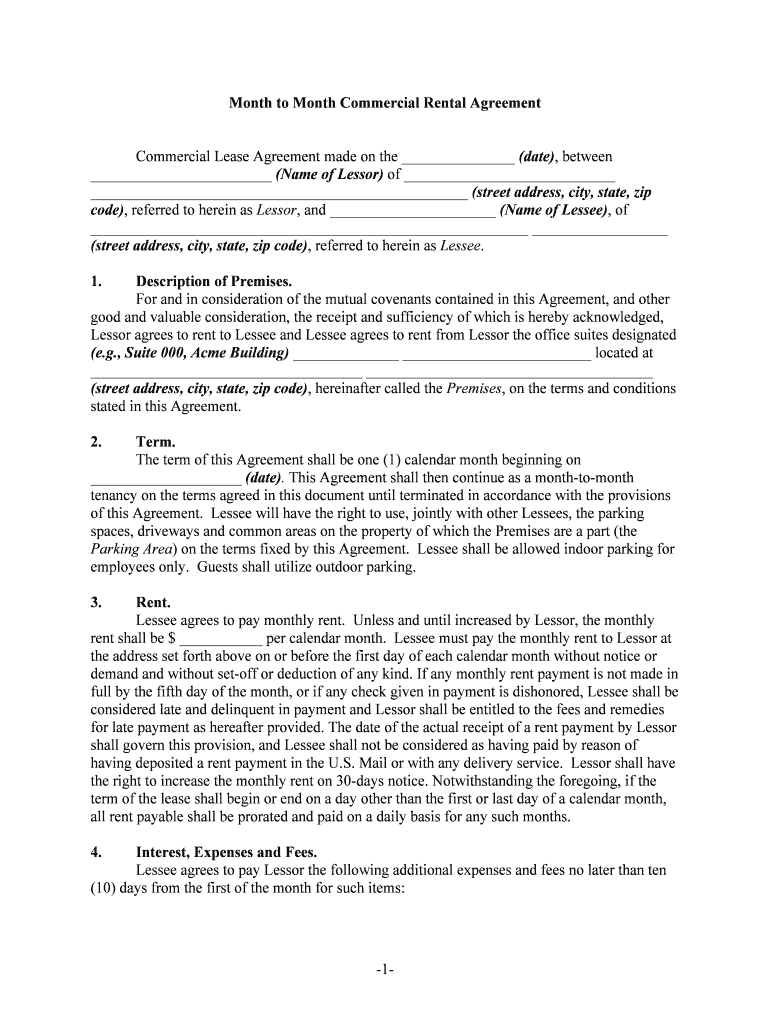
A month-to-month agreement is a flexible rental contract typically used for leasing office or residential properties. It provides both the landlord (Lessor) and tenant (Lessee) the ability to continue the lease on a monthly basis without committing to a long-term contract. In this agreement, either party can terminate the lease with a notice period, often ranging from 30 to 60 days. This type of agreement affords flexibility and is particularly useful in dynamic markets or transitional periods where either party may need to adapt quickly to changing circumstances.
How to Use the Month Agreement
Utilizing a month-to-month agreement involves understanding the specific terms and responsibilities outlined in the contract. Typically, the agreement details rent amount, payment schedules, and additional provisions like security deposits and maintenance duties. Begin by reviewing the terms carefully, ensuring all parties are clear on expectations. Once signed, both parties should communicate regularly to address any potential issues. To terminate the agreement, either party must provide proper notice as stipulated in the contract, ensuring a smooth transition and compliance with the agreement’s terms.
Steps to Complete the Month Agreement
- Review and Understand the Terms: Carefully read through the contract to understand rental terms, responsibilities, and any clauses regarding termination and maintenance.
- Negotiate Terms if Necessary: Discuss any adjustments or conditions that may need modification before proceeding.
- Complete the Agreement Form: Fill in all necessary sections, ensuring each part is completed with accurate and detailed information.
- Signatures: Both the Lessor and Lessee should sign the document to make it legally binding.
- Documentation: Keep copies of the signed agreement for both parties’ records.
Key Elements of the Month Agreement
The month agreement includes several critical components that delineate the responsibilities and rights of both the Lessor and Lessee. Key elements typically include:
- Rent Payment Terms: Details concerning the monthly rental amount, payment due dates, and accepted payment methods.
- Security Deposits: Information on the deposit amount required and conditions for its return.
- Maintenance Responsibilities: Outlines whether the landlord or tenant is responsible for certain repairs and how these should be reported and executed.
- Termination Notice Period: Specifies how much notice must be provided if either party wishes to terminate the agreement.
- Rules for Property Use: Any specific guidelines concerning the use of the property, such as restrictions on alterations or subletting.
Legal Use of the Month Agreement
Month-to-month agreements must comply with state and federal laws, including fair housing regulations and local tenancy laws. These agreements are legally binding once signed and provide a framework for resolving disputes. Should issues arise, the terms of the agreement and supporting legal frameworks can be used to mediate and resolve conflicts. Additionally, landlords need to ensure that their agreements comply with applicable rent control ordinances in certain jurisdictions, which may impose limits on rent increases or eviction notifications.
Important Terms Related to Month Agreement
Understanding critical terminology is essential when dealing with a month-to-month agreement:
- Lessor and Lessee: Refers to the landlord and tenant, respectively.
- Tenancy at Will: A legal term often synonymous with month-to-month agreements, highlighting the flexibility in duration.
- Notice of Termination: The required notification a party must provide to end the agreement.
- Prorated Rent: Rent calculated based on the number of days the property is occupied in a given month.
- Leasehold Improvements: Any changes or upgrades made by the tenant, which often need prior approval from the landlord.
Examples of Using the Month Agreement
Month-to-month agreements are popular in various situations due to their flexibility:
- Startups or Small Businesses: Preferred by businesses needing temporary office space or those uncertain of their long-term space requirements.
- Transitional Housing: Suitable for tenants between permanent housing situations, such as those relocating for work or awaiting closing on a home purchase.
- Market Volatility: Beneficial in fluctuating real estate markets where both parties need the ability to adapt quickly to changes in rental prices or space demand.
State-Specific Rules for the Month Agreement
State regulations can influence key elements of a month-to-month agreement. For example, some states may have specific requirements for the minimum notice period for terminating a tenancy. Others may offer additional protections for tenants under rent control laws. Compliance with state laws is critical, and landlords need to ensure that their agreements are drafted in accordance with these local statutes to avoid potential legal issues. Engaging with a legal professional or using a standardized state-compliant template can help mitigate risks associated with state-specific regulations.




