







Definition & Meaning
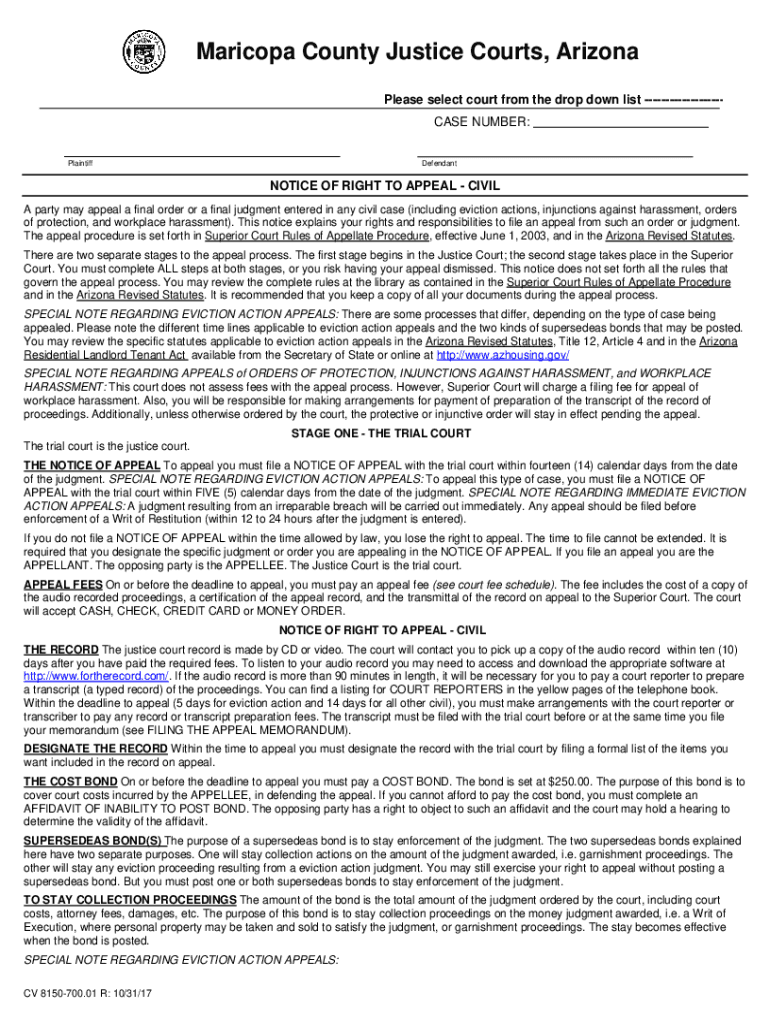
The term "Appeal an Eviction Action Judgment" refers to the legal process in which a party disputes the decision made by a court in an eviction case. This process allows either the landlord or the tenant to challenge the trial court’s verdict with the aim of having a higher court review and potentially reverse or modify the judgment. The appellate court analyzes whether legal errors were made that could have affected the outcome of the case.
Key Elements
- Judgment Review: The appeal focuses on examining whether the original court ruling was legally sound and supported by evidence.
- Higher Court Involvement: Appeals are directed to a superior court, typically a state or circuit court, where judges assess the legal framework and procedural correctness of the initial proceedings.
- Resolution Objective: The overarching goal is to ensure that justice is served by rectifying any judicial mistakes or injustices encountered in the initial judgment.
Steps to Complete the Appeal Process
Successfully appealing an eviction action judgment involves several critical steps:
-
File a Notice of Appeal:
- Typically must be filed within five calendar days of the judgment in most jurisdictions, such as Maricopa County.
- This document formally indicates the intent to appeal and initiates the appellate procedure.
-
Prepare the Required Documentation:
- Gather and submit all relevant documents, including transcripts from the original trial, legal forms, and any supporting evidence that will aid the appeal.
- Documentation requirements can vary by state, influencing how comprehensive your preparation needs to be.
-
Payment of Fees and Bonds:
- An appealing party is usually required to pay a filing fee.
- A supersedeas bond may also be necessary to stay eviction proceedings during the appeal. This bond serves as a security deposit to cover any potential damages the appeal might cause the opposing party.
-
Draft an Appellate Brief:
- The brief presents the arguments for why the trial court's decision should be overturned.
- It should be clear, concise, and thoroughly reasoned, citing specific legal precedents and regulations.
-
Court Attendance:
- Be prepared to attend any appellate hearings, where lawyers may present oral arguments to elaborate on written briefs.
Why Appeal an Eviction Action Judgment
Appealing helps ensure fair legal proceedings and provides a mechanism for correcting judicial errors. Key motivations include:
- Contest Judicial Errors: Address any legal missteps that occurred during the trial, such as improper evidence rulings or jury instructions.
- Protect Tenant Rights: Tenants may appeal to safeguard their housing rights if they believe the eviction was wrongful or unlawful.
- Landlord Interests: Landlords can also appeal to argue for enforcement of the original eviction decision if they believe it was legally justified.
Required Documents
When initiating an appeal, precise documentation is crucial. The primary documents include:
- Notice of Appeal: Indicates your intention to contest the judgment.
- Court Transcripts: A verbatim record of the trial proceedings.
- Briefs and Arguments: Detailed explanations of the legal errors perceived in the initial judgment.
- Supersedeas Bond: If required, ensures that the tenant can stay in the property pending the appeal outcome.
Legal Use & Implications
Appealing an eviction judgment sits squarely within tenants' and landlords' legal rights:
- Access to Higher Judicial Insight: Appeals provide another chance to have the case reviewed, evaluated, and possibly reversed.
- Judicial Overviews: Superior courts examine whether previous rulings adhere to correct legal standards, thus maintaining judicial fairness.
Penalties for Non-Compliance
Failing to comply with the requirements of the appeal process, such as missing deadlines or failing to submit necessary documents, can have serious repercussions:
- Dismissal of Appeal: Non-compliance typically results in the appellate court dismissing the appeal, which enforces the original judgment.
- Financial Liabilities: Additional costs or bond forfeitures might occur if the appeal process isn’t correctly managed.
State-Specific Rules
Different states may apply unique regulations and requirements to the appeal process. It's crucial to:
- Research State Regulations: Understand the particular rules that apply in your jurisdiction, as timelines and documentation can vary.
- Consult Legal Experts: Engage with legal counsel well-versed in state-specific landlord-tenant laws to ensure compliant appeal processing.
State-by-State Differences
Eviction laws and appeal procedures can vary significantly across different states, so detailed examination of local statutes is essential. Elements that often differ include:
- Filing Timelines: Some states might allow more time than others for filing a notice of appeal.
- Bond and Fee Requirements: Variations in how bonds and fees are assessed can impact the appeal process financially.
- Documentation Standards: State legislatures may define what qualifies as adequate documentation for a notice of appeal.
Examples of Using the Appeal Process
Consider real-world scenarios to understand the context of appealing eviction judgments:
- Tenant Perceived Unfair Eviction: A tenant may believe their eviction was based on discrimination, prompting an appeal.
- New Evidence Emerged Post-Trial: Presentation of new evidence that was not available during the original trial can be grounds for appeal.
- Legal Misinterpretation by Trial Court: If the trial court applied laws incorrectly, an appeal helps rectify the error, ensuring justice is served.




