




01. Edit your outboard motor bill of sale online
Type text, add images, blackout confidential details, add comments, highlights and more.

Type text, add images, blackout confidential details, add comments, highlights and more.

Draw your signature, type it, upload its image, or use your mobile device as a signature pad.

Send bill of sale for outboard motor via email, link, or fax. You can also download it, export it or print it out.
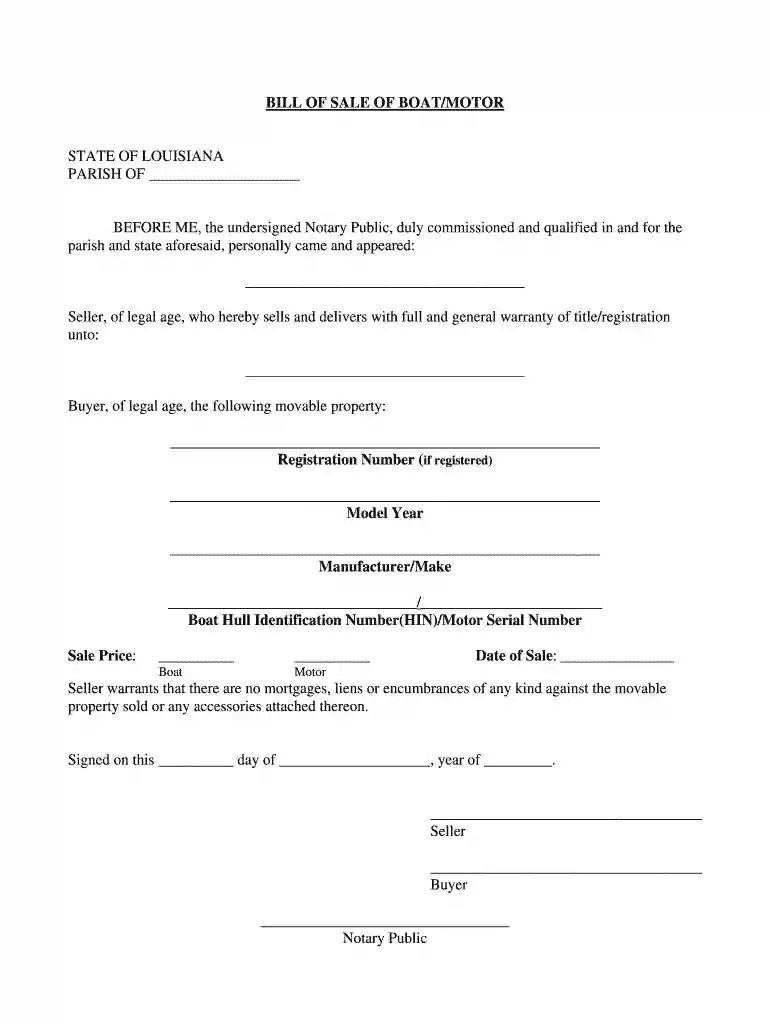
An outboard motor bill of sale is a legal document that facilitates the transfer of ownership of an outboard motor from a seller to a buyer. This document serves several important purposes in the transaction:
The bill typically includes details such as the seller’s and buyer’s names, contact information, the outboard motor’s identification number, make, model, year, and any conditions regarding the sale.
When drafting an outboard motor bill of sale, several critical components should be included to ensure that the document is comprehensive and legally binding:
Ensuring these elements are thoroughly detailed helps avoid future disputes and provides clarity on the transaction.
Completing an outboard motor bill of sale involves several straightforward steps. Each step ensures that all necessary information is captured, making the transaction smooth:
Following these steps helps ensure clarity in the transaction, protects legal rights, and facilitates future registration with local authorities if necessary.
The outboard motor bill of sale holds significant legal value in various situations, particularly within the state regulations governing the sale of watercraft. It is essential for several reasons:
For the document to be legally binding, it is advisable that it conforms to state-specific laws regarding vehicle and motor sales. This includes understanding any requirements for notarization or additional documentation that may be needed.
Understanding commonly used terminology related to the outboard motor bill of sale is vital for both buyers and sellers. Here are some key terms:
Familiarity with these terms aids both parties in understanding their responsibilities and rights involved in the transaction process.
Real-world scenarios illustrate how an outboard motor bill of sale is utilized effectively:
Private Sale Scenario: A seller decides to sell their outboard motor after purchasing a new boat. They draft a bill of sale that outlines the motor's specifications, and after review, both parties sign the document. This transaction is now recorded legally, allowing the buyer to register the motor in their name and protecting the seller from any future claims.
Dealership Transaction: A boating dealership sells an outboard motor as part of a bundled package with a boat. They prepare a bill of sale incorporating details about the outboard motor and boat, ensuring both parties have a clear understanding of what is included in the sale.
These scenarios highlight the versatility and importance of the outboard motor bill of sale in various sales contexts, reinforcing its role in lawful ownership transfer and protection.
Regulations regarding the outboard motor bill of sale can differ significantly from one state to another. Understanding these state-specific rules is critical for ensuring compliance and protecting ownership rights. Important considerations include:
Researching local laws before completing a transaction is essential for both buyers and sellers to ensure full compliance and avoid potential fines or legal issues.
At DocHub, your data security is our priority. We follow HIPAA, SOC2, GDPR, and other standards, so you can work on your documents with confidence.
A boat (vessel) bill of sale provides a buyer with proof of purchase for a watercraft and a record of the price paid. To purchase or sell a boat or any otherRead more
dealers bill of sale that includes the amount of sales tax collected; and. 5. a check for $50 payable to the Commissioner of Motor Vehicles. Title OnlyRead more
A copy of the contract, specifications and bill of sale for raw materials must accompany registration and title application. The person furnishing rawRead more


