
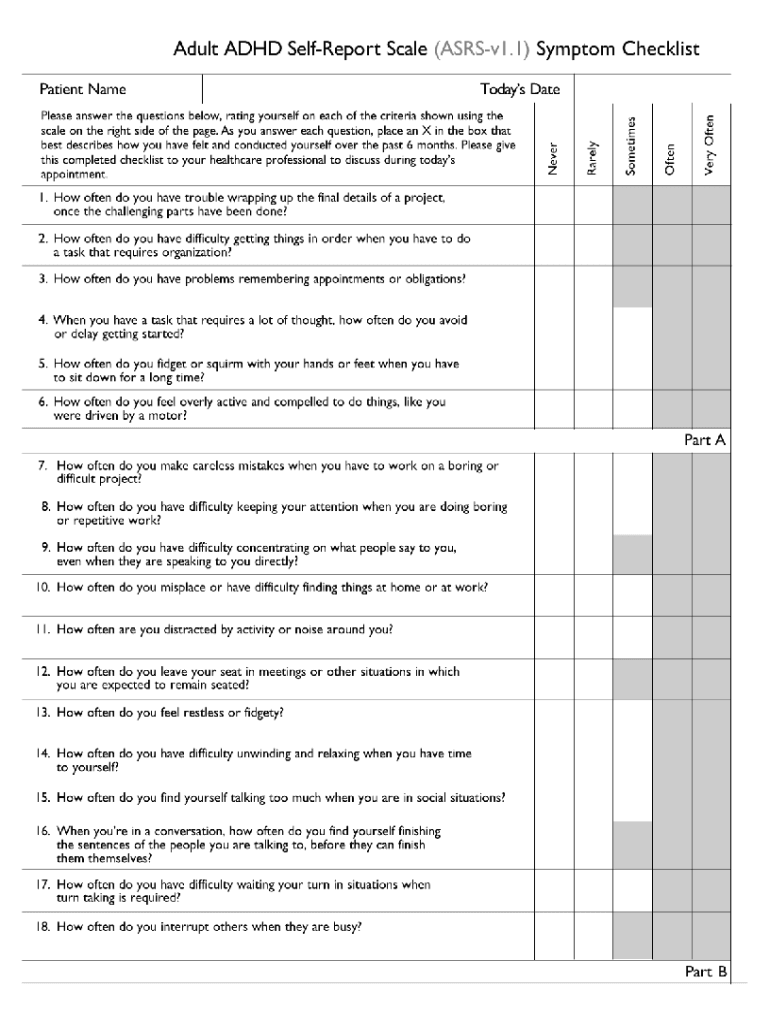







Overview of the ASRS Test
The Adult ADHD Self-Report Scale (ASRS) is a widely recognized tool used for the assessment of attention-deficit/hyperactivity disorder (ADHD) symptoms in adults. This self-reported questionnaire helps individuals articulate their experiences of ADHD symptoms, guiding them toward a better understanding of their condition.
Purpose of the ASRS Test
The primary purpose of the ASRS is to identify potential ADHD symptoms in adults. This assessment can act as a first step in determining whether further evaluation is needed. Completing the ASRS can facilitate discussions with healthcare professionals regarding symptoms, diagnosis, and possible treatment options.
Format and Administration
The ASRS is typically administered as a self-report questionnaire consisting of 18 questions. Respondents rate the frequency of their experiences related to various ADHD symptoms over the past six months. The responses may indicate the degree to which individuals experience difficulties in attention, hyperactivity, and impulsivity, providing valuable insights for further diagnostic considerations.
Scoring the ASRS Test
The ASRS employs a scoring metric that allows individuals to evaluate their responses systematically. Each question is scored on a scale from zero to three. The total score is calculated and can be compared against established thresholds to identify the presence of significant ADHD symptoms. For instance:
- Scores ranging from zero to four may suggest minimal symptoms.
- Scores from five to fourteen could indicate moderate symptoms.
- Scores of fifteen or higher suggest significant ADHD-related challenges that warrant further attention.
Availability of the ASRS Test
The ASRS test is available in various formats, including downloadable PDF versions and online assessments. The flexibility in format allows individuals to choose their preferred method of administration, catering to differing accessibility needs. The ASRS is also available in different languages, reaching a diverse audience and providing broader availability for those who may prefer to complete it in their native language.
Interpretation of Results
Interpreting ASRS results necessitates professional guidance. While scoring provides a preliminary understanding of possible ADHD symptoms, it is essential for individuals to discuss their results with qualified healthcare providers. A comprehensive evaluation often includes a detailed clinical interview and possibly additional psychological assessments to confirm a diagnosis of ADHD.
Importance for Healthcare Professionals
The ASRS serves not just individuals but also healthcare professionals. It acts as an effective discussion starter during consultations and can guide the clinical assessment process. Professionals use the ASRS to gather essential background information that informs their diagnostic approach, particularly for patients who might be hesitant to discuss their symptoms openly.
Legal and Ethical Considerations
Utilizing the ASRS in clinical practice comes with legal and ethical responsibilities. Compliance with confidentiality standards and informed consent protocols is crucial. Healthcare providers must ensure that patients understand the purpose of the ASRS, how the information will be used, and their rights regarding data privacy.
Limitations of the ASRS Test
While the ASRS test is a valuable screening tool, it has limitations. The self-report nature means it may depend significantly on an individual's self-awareness and willingness to disclose symptoms. Misinterpretation of questions or biases in self-reporting can impact accuracy. Therefore, it should be interpreted as part of a comprehensive diagnostic process rather than a standalone tool.
Who Should Consider Taking the ASRS Test?
The ASRS test is suitable for adults who suspect they may have ADHD or those who have been referred for evaluation by a healthcare professional. Additionally, it can be beneficial for individuals who have been diagnosed with ADHD in the past and want to assess their current symptom levels or treatment efficacy.
Engaging with the ASRS fosters a proactive approach to understanding and managing ADHD, enabling individuals to seek the support they need.




