




01. Edit your informed consent for psychotropic medications form florida online
Type text, add images, blackout confidential details, add comments, highlights and more.

Type text, add images, blackout confidential details, add comments, highlights and more.

Draw your signature, type it, upload its image, or use your mobile device as a signature pad.

Send psychotropic medication consent form template via email, link, or fax. You can also download it, export it or print it out.
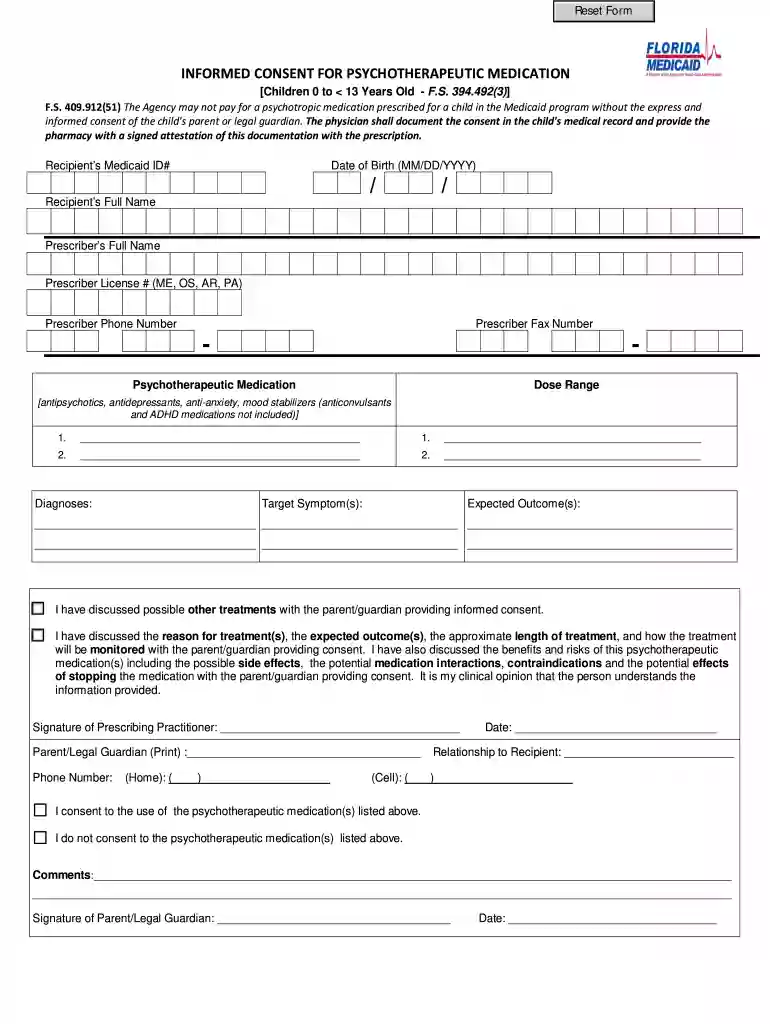
Informed consent for psychotropic medications in Florida refers to a formal agreement obtained from a patient or their legal guardian prior to prescribing psychotropic drugs. This form is critical in ensuring that patients understand the potential risks and benefits associated with the medications they will be taking, particularly when these drugs are intended for treating mental health conditions. The need for such consent is underscored by legal and ethical standards in healthcare, aiming to protect patient autonomy and informed decision-making.
The informed consent form typically outlines essential information about the prescribed medication, including its purpose, possible side effects, and intended outcomes. It should also provide a thorough discussion of alternative treatment options, their effectiveness, and the implications of refusing medication. The signing of the form signifies that the patient or guardian has been adequately informed and agrees to proceed with the treatment, thus documenting the healthcare provider's compliance with Florida's legal requirements regarding psychotropic medications.
Patients receiving psychotropic medications, particularly children under 13 in the Medicaid program, are required to have an informed consent form completed and signed by a parent or legal guardian. This ensures that guardians are fully aware of their child's treatment plan and the intricacies involved in administering such medications.
There are several critical components that must be included in the informed consent for psychotropic medications form in Florida. These elements serve not only as a guide for healthcare providers but also ensure that patients and their guardians are fully educated about the treatment process. Here are the key elements typically required:
Patient Information: This includes demographic details such as the child's name, birth date, and relevant medical history to provide context for treatment.
Medication Information: A detailed description of the prescribed psychotropic medication, including the drug’s name, dosage, and the condition it is treating.
Potential Benefits: A clear outline of what the treatment aims to achieve, such as symptom relief and improved functioning in day-to-day life.
Risks and Side Effects: An exhaustive list of potential side effects that may arise from taking the medication. This should also include both common and severe adverse effects to fully inform the patient or guardian.
Alternative Treatments: Information about other treatment options, including non-medication therapies, should be provided. This ensures that the patient and guardian are aware of different pathways for care.
Signature Section: A space for both the healthcare provider and the parent or guardian to sign, confirming that consent has been obtained after thorough discussion.
Date of Consent: The date on which the consent is signed should also be clearly noted to establish a timeline for the treatment.
Completing the informed consent form for psychotropic medications in Florida involves several structured steps, ensuring that all necessary information is gathered and appropriately documented. Below are the general steps to follow:
Gather Required Information: Collect all necessary patient details, including the child's name, date of birth, and existing medical conditions. This information is vital for appropriate treatment planning.
Consult with Healthcare Provider: Schedule a meeting with the prescribing physician. During this session, the provider will discuss the prescribed medication, its purpose, all associated risks, expected benefits, and any alternative treatments.
Listen and Ask Questions: Encourage the parent or guardian to ask questions regarding any unclear aspects of the medication and its effects. A thorough dialogue enhances understanding and informs decision-making.
Review the Form: After gathering information, review the informed consent form carefully. Ensure it includes all necessary sections and that any potential concerns raised during discussions are addressed.
Sign and Date: Once both parties (the guardian and the healthcare provider) are satisfied with the information presented, both should sign and date the form to confirm consent.
Submit the Form: Follow any specific institutional procedures for submitting the completed form, whether electronically or in a paper format.
Keep Records: Retain copies of the signed consent for both the patient’s medical records and the parent’s records for future reference.
The informed consent for psychotropic medications form is essential for ensuring that prescribing practices comply with legal requirements set forth in Florida law. Legally, healthcare providers must obtain informed consent prior to initiating treatment with psychotropic medications, particularly when treating children and vulnerable populations. The failure to secure appropriate consent could lead to potential legal ramifications for healthcare providers, including malpractice lawsuits or regulatory penalties.
Guardianship Considerations: In Florida, consent must specifically come from a parent or legal guardian when prescribing psychotropic medications to minors. Understanding who holds guardianship rights is crucial when working with children.
Documentation Requirements: Maintaining thorough documentation of informed consent is legally required. This documentation serves as both a legal safeguard and a means of ensuring clarity in the treatment process.
State-Specific Regulations: Florida has specific rules governing the treatment of minors and the use of psychotropic medications, necessitating alignment with state statutes to avoid infractions.
The informed consent for psychotropic medications form plays a vital role in protecting patient rights and promoting informed decision-making. Its significance extends beyond regulatory compliance to encompass ethical considerations in healthcare. Here are several reasons that demonstrate its importance:
Patient Autonomy: By signing the consent form, patients and guardians exercise their right to make informed choices about the medications prescribed, encouraging active participation in their treatment plans.
Informed Decision-Making: The process of understanding the medication, including its risks, benefits, and alternatives, allows patients and guardians to weigh their options thoroughly before proceeding with treatment.
Building Trust: Transparent communication facilitated by the informed consent process fosters trust between healthcare providers and patients, which is crucial in ongoing treatment relationships.
Legal Protection: Having a signed informed consent form helps protect healthcare providers from potential legal disputes related to unauthorized treatments or misunderstandings about medication effects and expectations.
Educational Tool: The form serves as an educational resource, providing essential information that can empower patients and guardians to advocate for their mental health treatment effectively.
In practice, the informed consent forms for psychotropic medications have specific use cases that illustrate their application. Here are a few examples demonstrating how these forms support clinical practices:
Pediatric Treatment: When treating a child diagnosed with Attention-Deficit/Hyperactivity Disorder (ADHD), a psychiatrist may prescribe a medication such as methylphenidate. The informed consent form will detail the medication's benefits for managing symptoms, the possible side effects like decreased appetite, and alternative behavioral therapies.
Anxiety Disorders: If a child is facing severe anxiety and a healthcare provider recommends an SSRI (Selective Serotonin Reuptake Inhibitor) for treatment, the consent form must outline the expectations regarding symptom management, potential risks of increased suicidality in younger populations, and the importance of follow-up appointments.
Multi-Disciplinary Approaches: In situations where a child's mental health treatment involves multiple providers (e.g., a psychologist and psychiatrist), the informed consent form becomes a collaborative document that encompasses insights from all professionals involved, ensuring that guardians are well-informed about the entirety of the treatment approach.
These examples emphasize the necessity of the informed consent for psychotropic medications form in various clinical contexts, ultimately contributing to informed treatment decisions and patient safety.
At DocHub, your data security is our priority. We follow HIPAA, SOC2, GDPR, and other standards, so you can work on your documents with confidence.
a) Psychotropic medication may only be authorized by the court for a child who is in out-of-home placement upon a finding that there is a substantialRead more
If, at any time, a parent whose parental rights have not been terminated provides express and informed consent to the provision of a psychotropic medication,Read more
Jun 11, 2019 Im a professor at the University of New Mexico and. 19 senior associate director at Project ECHO,. 20. University of New Mexico. Thank you.Read more


