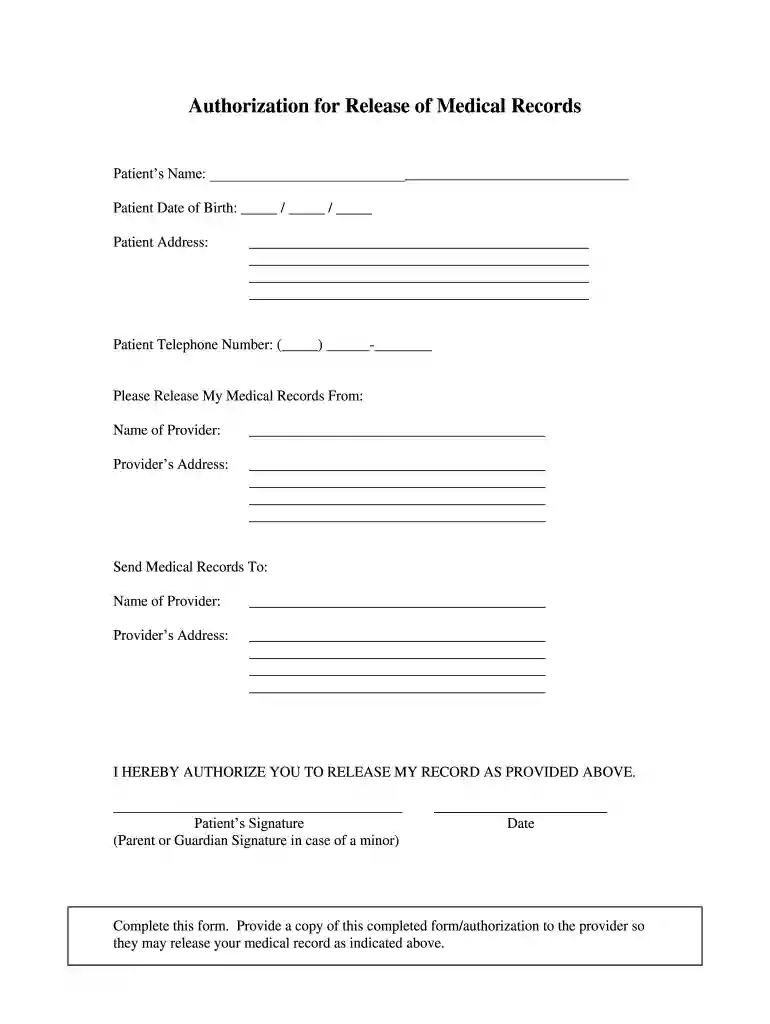
Authorization release medical resurrection 2026

Get Form
medical record request form Preview on Page 1

Here's how it works

01. Edit your medical record request form online
Type text, add images, blackout confidential details, add comments, highlights and more.

02. Sign it in a few clicks
Draw your signature, type it, upload its image, or use your mobile device as a signature pad.

03. Share your form with others
Send medical records release form florida pdf via email, link, or fax. You can also download it, export it or print it out.

Understanding the Authorization for Release of Medical Records

The Authorization for Release of Medical Records form is essential for managing patient information within healthcare systems. It enables patients to permit the transfer of their medical records from one healthcare provider to another. This form is crucial for ensuring continuity of care, facilitating referrals, and enabling healthcare providers to access necessary patient information for effective treatment.

Key Components of the Authorization Form

The authorization form must include specific components to be valid:

  • Patient Information: Includes the patient's full name, date of birth, and contact details to clearly identify the individual whose records are to be released.
  • Provider Information: The form requires details of both the releasing and receiving healthcare providers, including their names and addresses.
  • Scope of Records: Patients need to specify which medical records are authorized for release, such as full medical history, specific treatment records, or diagnostic information.
  • Expiration Date: The form should state an expiration date, indicating how long the authorization remains valid, ensuring that it complies with legal and ethical standards.
  • Patient's Signature: It is mandatory for the patient or their authorized representative to sign the form, validating the request.

Steps to Complete the Authorization Form

  1. Download the Form: Obtain the Authorization for Release of Medical Records form. These are often available in PDF format from healthcare provider websites or state health departments.

  2. Fill in Personal Details: Enter your name, date of birth, and any other requested identifying information accurately to avoid processing delays.

  3. Provide Provider Information: List the names and contact details of both the healthcare provider who will release the records and the one who will receive them.

  4. Specify Records to be Released: Clearly indicate the specific medical records you wish to be transferred. You can request all records or select particular documents relevant to your care.

  5. Set an Expiration Date: Include a specific date when the authorization will expire. This can often range from a few months to several years, as needed.

  6. Sign and Date the Form: Your signature is crucial, as it confirms your consent for the release. Ensure that you date the form appropriately.

Legal Considerations and Compliance

Understanding the legal framework surrounding the release of medical records is vital:

  • Health Insurance Portability and Accountability Act (HIPAA): This federal law governs the privacy and security of medical records. Ensure that the form complies with HIPAA by including specific authorizations as required.
  • State Laws: Different states may have specific regulations regarding medical records release, which may affect how the authorization form must be completed. Be aware of your state's requirements to avoid non-compliance issues.

Common Scenarios Requiring Medical Record Transfers

Several scenarios may necessitate the use of the authorization release medical records form:

  • Changing Providers: When transitioning to a new healthcare provider, a patient typically needs to authorize the transfer of their medical history.
  • Specialist Referrals: In instances where a primary care physician refers a patient to a specialist, ensuring that the specialist receives all relevant medical records is often critical for effective treatment.
  • Legal Requirements: In legal cases, patients may need to provide their medical records to attorneys or other authorized entities, requiring proper documentation.

Important Elements in the Medical Records Release Process

When engaging in the release of medical records, consider:

  • Record Retention: Understand how long your medical records are retained by healthcare providers. Familiarize yourself with your rights regarding access to these records even after they've been released.
  • Revocation of Authorization: Patients can revoke their authorization at any time. Familiarize yourself with the process to ensure you can take control over your medical information when necessary.

Best Practices for Handling Medical Records

To ensure a smooth process when dealing with the authorization for release of medical records:

  • Keep Copies: Always retain a copy of the signed authorization form for your records.
  • Follow Up: After submitting your request, follow up with both the releasing and receiving providers to confirm that the records have been transferred.
  • Secure Storage: Ensure that any medical documents you receive are stored securely, protecting your sensitive information against unauthorized access.

Understanding the Authorization for Release of Medical Records form helps patients navigate the complexities of healthcare documentation, ensuring they maintain control over their medical information while complying with legal requirements.

be ready to get more

Complete this form in 5 minutes or less

Get form

Security and compliance

At DocHub, your data security is our priority. We follow HIPAA, SOC2, GDPR, and other standards, so you can work on your documents with confidence.

Learn more
ccpa2
pci-dss
gdpr-compliance
hipaa
soc-compliance
be ready to get more

Complete this form in 5 minutes or less

Get form