







Understanding the Lloyds Bank Standing Order Form
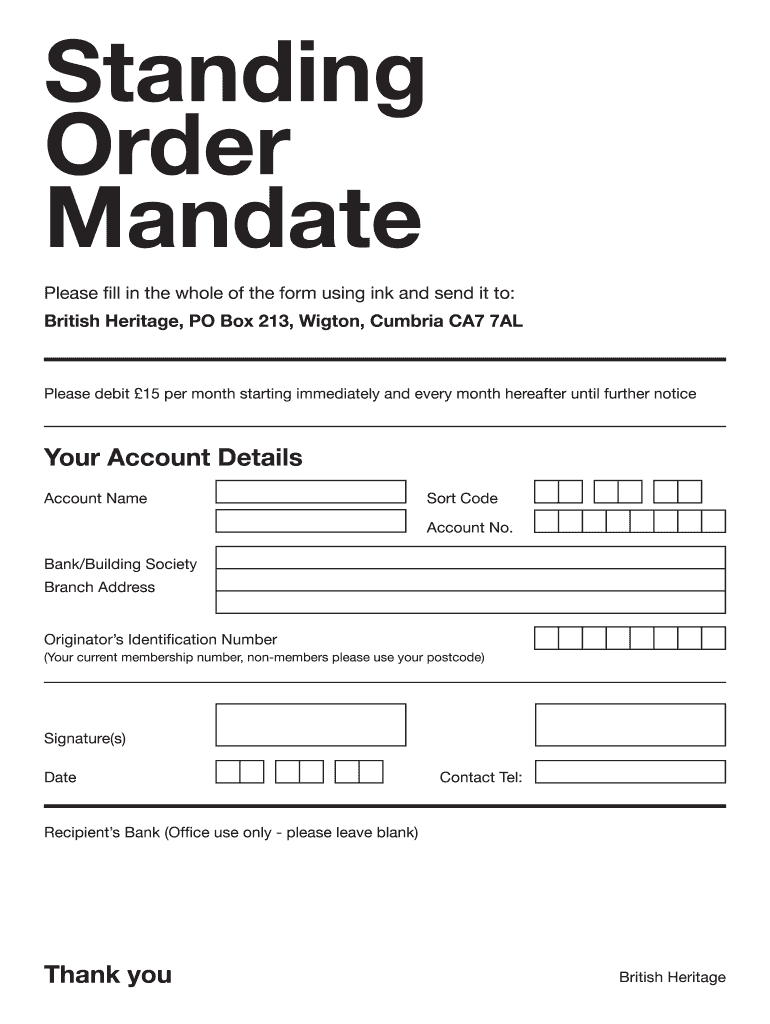
The Lloyds Bank standing order form is a vital document for individuals looking to set up regular payments directly from their bank accounts. A standing order enables the account holder to instruct the bank to pay a fixed amount at specified intervals to a designated recipient. This system can be beneficial for managing subscriptions, rent, or recurring business transactions.
Components of the Lloyds Bank Standing Order Form
The standing order form includes several essential fields that must be completed accurately to ensure smooth processing. Key components typically consist of:
- Account Holder Information: This includes the name, address, and contact details of the account holder initiating the standing order.
- Recipient Details: Essential for directing payments, this section requires the name and account number of the recipient, alongside their bank details.
- Payment Amount and Frequency: Users need to specify the amount to be transferred and the frequency of these payments, whether it is weekly, monthly, or annually.
- Start Date: The form requires the initiation date of the standing order, which is crucial for planning future payments.
- Signature: A signature from the account holder is mandatory, as it serves as authorization for the bank to execute the standing order.
Steps to Complete the Standing Order Form
Filling out the Lloyds Bank standing order form is straightforward. Here’s a step-by-step guide:
- Download the Form: Obtain the Lloyds Bank standing order form PDF, which can typically be found on the bank’s official website or requested from a branch.
- Fill in the Personal Details: Accurately complete the fields regarding your identity and contact information.
- Input Recipient Information: Clearly state the recipient's bank account details to prevent any future transaction errors.
- Specify Payment Amount and Schedule: Enter the exact amount and select how often you want the payments to be made.
- Date of Commencement: Indicate when you want the payments to begin, ensuring that it aligns with when the recipient expects the first payment.
- Review and Sign: Double-check all entries for accuracy, then sign the document to authorize the transactions.
Practical Examples of Standing Orders
A standing order can be utilized in various situations, exemplifying its versatility:
- Monthly Rent Payments: A tenant may set up a standing order to automatically pay their landlord each month, ensuring timely payments without manual intervention.
- Subscription Services: Individuals subscribing to services like gym memberships or streaming platforms can use standing orders to maintain their subscriptions effortlessly.
- Loan Repayment: Borrowers might set up standing orders to facilitate regular loan repayments, promoting financial management discipline.
Importance of Knowing How to Cancel a Standing Order
Understanding the process to cancel a standing order is equally crucial as setting one up. An account holder may wish to cancel this service for various reasons, such as changes in financial circumstances or the end of a subscription. To do so, the account holder should:
- Contact Lloyds Bank via phone or visit a local branch to request the cancellation.
- Fill out any required forms to formalize the cancellation.
- Confirm that the cancellation has been processed, ensuring no further payments are deducted.
Common Variants of Standing Order Forms
In the United Kingdom, there are several formats and templates for standing orders, including:
- General Templates: Available widely online, these enable users to create customizable standing orders tailored to specific needs.
- Bank-Specific Forms: Many banks, including Lloyds, provide proprietary forms that may include unique features or requirements.
- Digital Options: Online banking platforms may offer electronic forms that users can complete and submit online, streamlining the process.
Legal and Compliance Considerations for Standing Orders
While standing orders are a convenient way to manage payments, it’s essential to be aware of legalities involved. The following points are crucial when setting up or modifying a standing order:
- Authority to Charge: Ensure that the recipient has authorization to receive funds through the standing order.
- Record Keeping: Keep detailed records of all standing orders for personal financial management and potential audits.
- Adherence to Bank Policies: Familiarize yourself with Lloyds Bank's specific policies regarding standing orders, as these will outline any differences based on account types or changes in terms.
Conclusion
The Lloyds Bank standing order form PDF is a key resource for enabling regular financial transactions without manual intervention. Understanding its components, completion steps, and potential applications helps ensure efficient financial management.




