





Definition and Meaning of Writ of Assistance in Oklahoma
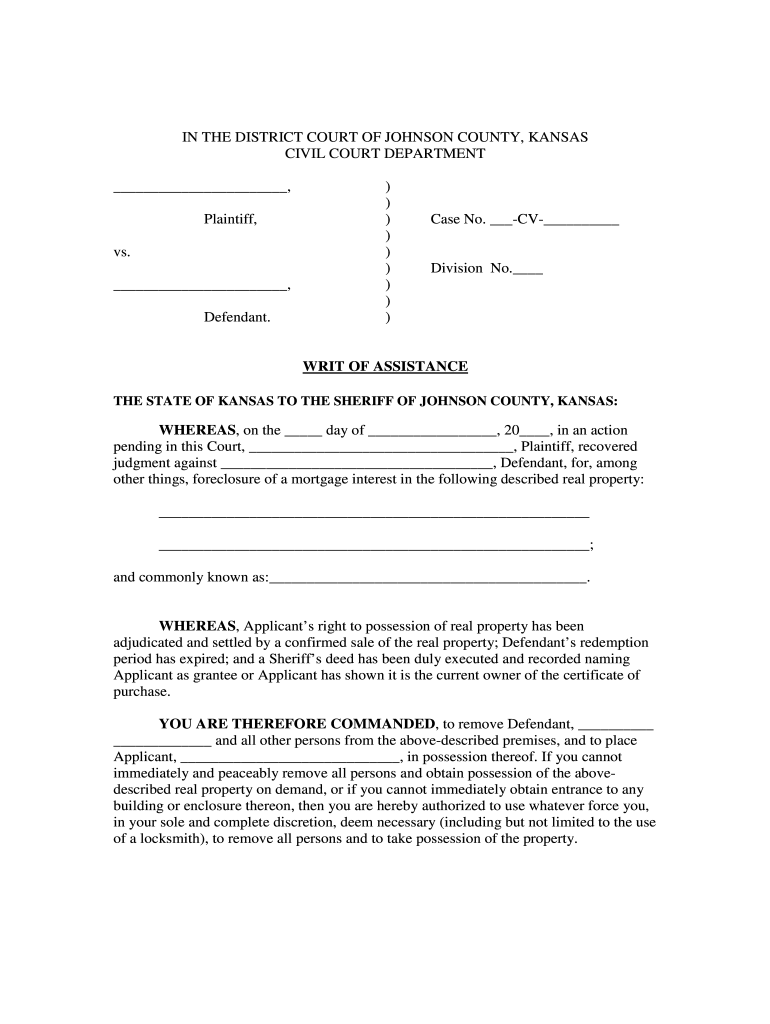
A writ of assistance in Oklahoma is a legal document issued by a court that grants authority to law enforcement, typically the sheriff, to assist in executing a court order. This may involve removing occupants from a property, enforcing a judgment, or ensuring compliance with a court ruling. Commonly used in eviction cases, foreclosures, and child custody matters, the writ serves as a means to ensure that a court's decision is enforced effectively.
The term "writ of assistance" can encompass various situations, including eviction proceedings where a landlord seeks to reclaim possession of a rental property after a tenant has failed to comply with an eviction order. In child custody disputes, a writ of assistance may be requested to enforce a custody order when one parent refuses to adhere to the terms set by the court. Understanding the specific context in which this writ is utilized is essential for both litigants and legal practitioners within the Oklahoma legal framework.
How to Use the Writ of Assistance in Oklahoma
Using a writ of assistance effectively requires an understanding of the circumstances that necessitate it and the procedures involved in obtaining and executing the writ. The writ is primarily used for two main purposes:
- Forcing Removal: In cases of eviction or foreclosure, the writ allows law enforcement to remove individuals from a specific property after a court ruling.
- Enforcing Orders: The writ can also be directed at ensuring compliance with custody or visitation orders.
To use a writ of assistance, an individual typically must first ensure that a judgment or order has been made in their favor by a court. Once the judgment is entered, the appropriate legal documents must be filed to request the writ from the court.
Steps to Obtain the Writ of Assistance in Oklahoma
Acquiring a writ of assistance involves a clear set of steps that must be followed to ensure its validity and enforceability:
- File a Request: Submit a formal request for the writ of assistance to the court that issued the original ruling.
- Include Supporting Documentation: Provide all relevant legal documents, such as the original judgment or court order and any additional evidence supporting your request.
- Attend a Hearing (if applicable): In some cases, a hearing may be scheduled where parties can present their arguments regarding the issuance of the writ.
- Receive the Writ: If the court approves the request, it will issue the writ of assistance, providing the necessary legal authority for enforcement.
- Serve the Writ: The writ must be served to the sheriff or appropriate law enforcement agency for execution.
Following these steps diligently helps ensure that the writ is properly issued and enforced, reinforcing the court's authority in the matter.
Important Terms Related to Writ of Assistance in Oklahoma
Familiarity with certain legal terminologies can significantly enhance one's understanding of the writ of assistance process. Key terms include:
- Plaintiff: The individual or party who brings a case to court seeking a legal remedy.
- Defendant: The party being accused or sued in a court proceeding.
- Eviction: The legal process of removing a tenant from rental property due to noncompliance with rental agreements.
- Enforcement: Actions taken to compel compliance with a court order.
- Judgment: The official decision of a court resolving the dispute between parties.
- Sheriff’s Department: The law enforcement body responsible for executing court orders, including writs of assistance.
Understanding these terms is essential for navigating the legal landscape associated with a writ of assistance in Oklahoma.
State-Specific Rules for Writ of Assistance in Oklahoma
State law governs the issuance and execution of writs of assistance, and it is crucial to be aware of specific Oklahoma regulations:
- Court Structure: Writs of assistance must be requested from the district court where the original ruling was made.
- Deadline for Filing: After a judgment, there may be a limited timeframe within which a request for a writ can be filed, so timely action is vital.
- Fee Requirements: Filing for a writ may involve associated court fees, which can vary by county.
- Law Enforcement Cooperation: The local sheriff’s department will typically have its procedures for handling writs of assistance, including forms of identification and the presence required for execution.
Being informed about these state-specific rules can prevent delays or complications in the enforcement process.
Examples of Writ of Assistance Use in Oklahoma
The practical applications of a writ of assistance can be observed in various legal scenarios, including:
- Evictions: A landlord may file for a writ following a judgment that allows them to regain possession of their rental property after a tenant fails to pay rent or violates lease terms.
- Child Custody Enforcement: A parent may request a writ to compel the return of a child in instances where the other parent fails to comply with a court-ordered custody arrangement.
- Foreclosure Actions: In foreclosure cases, a lender may obtain a writ to remove occupants from a foreclosed property to allow for sale or resale under court supervision.
Each scenario underscores how the writ of assistance serves as a vital tool for enforcing court decisions across various contexts in Oklahoma law. Understanding these examples helps illustrate the practical implications and necessity of the writ in upholding legal orders.