




01. Edit your halal questionnaire online
Type text, add images, blackout confidential details, add comments, highlights and more.

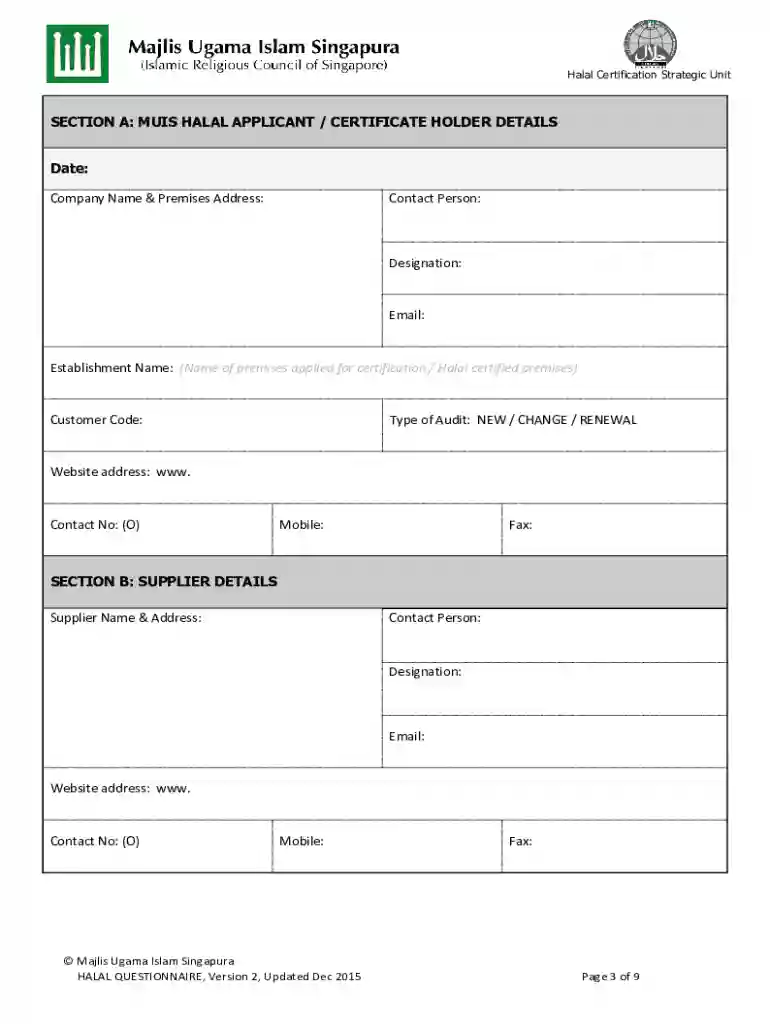
Type text, add images, blackout confidential details, add comments, highlights and more.

Draw your signature, type it, upload its image, or use your mobile device as a signature pad.

Send halal questionnaire muis via email, link, or fax. You can also download it, export it or print it out.
A halal questionnaire is a structured document utilized primarily by businesses to assess and ensure compliance with halal standards in their products or services. This tool facilitates manufacturers, suppliers, and service providers in gathering the necessary information about their ingredients and processes, ensuring they align with Islamic dietary laws. The halal questionnaire often contains questions addressing various aspects of production, sourcing, and ingredient integrity, aimed at verifying the halal status of products.
Halal refers to what is permissible or lawful in Islam, particularly relating to food and drink. For businesses, a halal certification can open doors to a broader market segment, particularly among Muslim consumers. This questionnaire serves as a guide for the halal certification process and is essential for obtaining certification from recognized halal certifying bodies, such as the Majlis Ugama Islam Singapura (Muis).
Using the halal questionnaire involves a systematic approach to ensure that all required information is accurately captured. Here are the steps to follow:
A halal questionnaire typically encompasses several key elements crucial for evaluating the halal status of products. These elements include:
This structure ensures a thorough assessment of whether products can be certified as halal.
The halal questionnaire is not merely a formality; it is critical for various reasons:
The halal questionnaire is utilized by a broad range of stakeholders within the food and beverage industries and beyond.
By filling out this questionnaire, these parties ensure that they adhere to the necessary requirements for halal certification and can meet the demands of their clientele effectively.


At DocHub, your data security is our priority. We follow HIPAA, SOC2, GDPR, and other standards, so you can work on your documents with confidence.
Intrigued by this, we decided to to gauge the regional interest in vegan, Halal, and Kosher collagen via a questionnaire, and the findings revealed a need forRead more
by H Oemar 2023 Cited by 83 A questionnaire is chosen as the research instrument. The questionnaires were re-translated from English to Indonesian, except for those references that wereRead more
by AL Ariff 2023 This study used a cross-sectional study with a survey method via a questionnaire, which involved 100 consumers at Malaysia International Halal Showcase (MIHAS)Read more


