Understanding the Arizona Joint Tenancy Deed Form
Definition and Purpose of the Joint Tenancy Deed Form
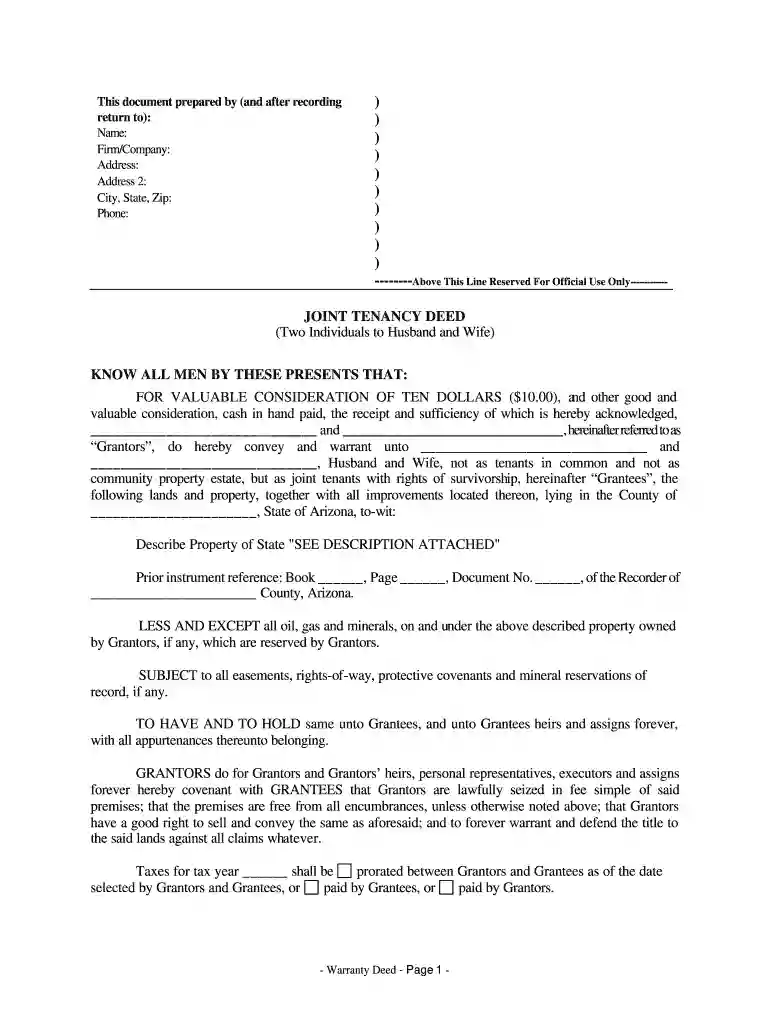
The Arizona joint tenancy deed form facilitates the transfer of real property—such as land or buildings—where two or more individuals hold ownership rights in a specific manner. This legal document is especially important because it establishes joint tenancy with rights of survivorship, meaning that if one owner dies, their share automatically passes to the surviving owner(s) without going through probate. This type of ownership structure is beneficial for married couples or partners who want to ensure that their property is easily transferred to the survivor.
Key Components of the Joint Tenancy Deed
The form includes critical elements that should be clearly defined to ensure proper legal standing:
- Grantors and Grantees: This section names the individuals transferring the property (grantors) and those receiving it (grantees).
- Property Description: An accurate legal description of the property must be included, detailing boundaries and specific identifiers (e.g., parcel number).
- Consideration: A statement acknowledging the consideration given for the transfer, typically money but can also include services or love and affection.
- Covenants: Assurances regarding the title's validity, including the absence of encumbrances or liens on the property.
Steps to Complete the Arizona Joint Tenancy Deed Form
- Prepare the Form: Obtain the correct version of the joint tenancy deed form specific to Arizona. This can often be found online or through legal offices.
- Fill in Grantor and Grantee Information: Ensure all names are spelled correctly and include the current addresses.
- Describe the Property: Accurately describe the property being transferred, ensuring compliance with local laws.
- Sign the Document: Both the grantors and grantees must sign the form; consider having it notarized for enhanced credibility.
- Record the Deed: Submit the completed form to the appropriate county recorder’s office in Arizona to officially document the change in ownership.
Legal and Practical Considerations
- Rights of Survivorship: One of the primary advantages of a joint tenancy deed is ensuring seamless property transfer upon an owner's death. Unlike tenants in common, where shares may go to heirs, joint tenants retain complete control.
- Implications of Divorce: In an event of divorce, the status of joint tenancy may change, and individuals may choose to change ownership terms. Legal counsel is advised to navigate such situations.
- Tax Implications: Transfers through a joint tenancy deed are generally not taxable events, but beneficiaries may face capital gains taxes when the property is sold.
Examples of Joint Tenancy Scenarios
- Married Couples: When a husband and wife purchase a home together, they may choose to hold the property as joint tenants. If one passes, the surviving spouse inherits the home automatically.
- Business Partners: Two individuals in a business may acquire property together under joint tenancy. This allows their business operations to continue seamlessly even if one partner passes away.
- Inherited Property: An individual may gain property through inheritance and choose to establish joint tenancy with a family member to facilitate a smooth transfer of ownership.
Important Variations and Considerations
- Quitclaim Deed in Joint Tenancy: In Arizona, a quitclaim deed can be executed to add or remove individuals from a joint tenancy arrangement.
- State-Specific Regulations: While the joint tenancy deed generally adheres to a common legal framework, Arizona law may have unique stipulations that differ from other states, such as requirements for notarization or specific wording.
Key Elements to Ensure Validity
- Notarization: Although not always required, notarizing the document can help avoid disputes over its legitimacy.
- Witnesses: Depending on jurisdictional requirements, witnesses may be needed to validate the signing of the deed.
- Recording: Properly recording the deed with the county ensures public notice of the title transfer, which is necessary for protecting the rights of the parties involved.
By understanding the nuances of the Arizona joint tenancy deed form, individuals can effectively manage their property ownership and ensure secure transitions in ownership among parties.