
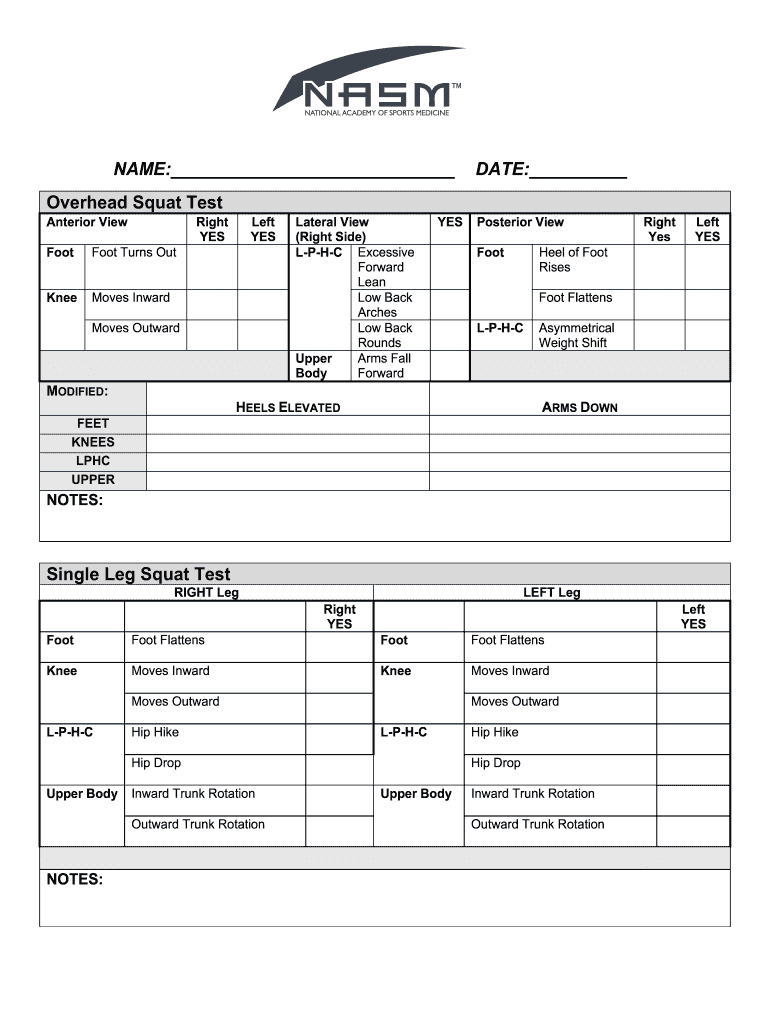







Overview of the NASM Overhead Squat Assessment Form
The NASM Overhead Squat Assessment Form is a crucial tool for fitness professionals to evaluate an individual's squat mechanics and overall movement efficiency. This form is utilized to identify potential areas of dysfunction in various body parts while performing an overhead squat, which is integral for understanding a client's movement patterns and developing appropriate training programs.
Key Components of the Assessment Form
An effective overhead squat assessment includes multiple components that provide insights into the participant's structural and functional movement.
- Client Information Section: Collects basic details about the participant, including name, age, height, and weight.
- Assessment Objectives: Clarifies the purpose of the assessment, which is to identify alignment, stability, and mobility in clients.
- Visual Observation Checklist: Trains the assessor to look for specific movements such as foot positioning, knee alignment, hip range of motion, and upper body posture during the squat.
How to Use the NASM Overhead Squat Assessment Form
Using the NASM Overhead Squat Assessment Form effectively begins with preparing the environment and the client:
- Setting the Stage: Ensure a safe space for the assessment free of obstructions.
- Instructing the Client: Explain the purpose of the overhead squat and guide them through the movements to ensure understanding.
- Performing the Squat: Instruct the client to perform a maximum-effort overhead squat while you observe from multiple angles.
As the client performs the squat, mark any noted flaws on the form to capture essential data for future reference. Observers should note issues related to foot positioning, knee movement, and torso alignment.
Steps to Complete the NASM Overhead Squat Assessment Form
Complete the assessment form in an organized manner to facilitate accurate analysis:
- Pre-Assessment Consultation: Discuss the client's history, goals, and any present injuries.
- Client Performance: Have the client perform the sidewalk in a controlled, balanced manner.
- Data Entry: Document real-time observations on the form concerning alignment deviations and compensatory movements.
- Post-Assessment Review: Discuss findings with the client, providing feedback on what was observed during the assessment.
Benefits of Using the NASM Overhead Squat Assessment Form
Utilizing the NASM Overhead Squat Assessment Form has several significant benefits:
- Identifies Functional Limitations: It helps trainers pinpoint specific areas where clients may lack strength or mobility.
- Informs Program Design: Insights gained can guide the development of individualized training regimens tailored to each client's unique needs.
- Tracks Progress: Regular assessments using the form allow for systematic tracking of improvements over time, contributing to either corrective strategies or fitness goals.
Typical Users of the NASM Overhead Squat Assessment Form
This assessment form is predominantly used by:
- Personal Trainers: To develop and modify client workout plans based on their assessments.
- Physical Therapists: To identify and address movement dysfunctions in patients.
- Athletic Coaches: To discern movement quality in athletes and enhance their performance while minimizing injury risks.
Important Terms Related to the NASM Overhead Squat Assessment Form
Understanding key terminology associated with this assessment is critical for effective communication and application:
- Kinematic Chain: The interconnected system of joints and segments involved in movement.
- Compensation Patterns: Adaptations made by the body to maintain a functional movement despite limitations.
- Mobility vs. Stability: The relationship between a joint's range of motion and its ability to maintain a position for controlled movement.
Legal Use of the NASM Overhead Squat Assessment Form
Make sure to adhere to legal standards associated with client data collection:
- Confidentiality: Ensure that client information remains private and secure throughout all assessment processes.
- Informed Consent: Obtain explicit permission from clients to conduct the assessment and use the data for developing personal fitness plans.
Examples of Using the NASM Overhead Squat Assessment Form
Real-world applications can illustrate the effectiveness of the NASM Overhead Squat Assessment Form:
- Initial Consultation: A trainer uses the form during the client’s intake session to gather data for a tailored workout plan.
- Re-assessments: An athlete performs the overhead squat multiple times over a training cycle, and the resulting data from the assessments inform adjustments to their regimen for optimal performance improvement.
This structured approach aims to facilitate comprehensive understanding and effective use of the NASM Overhead Squat Assessment Form within fitness and rehabilitation contexts.




