
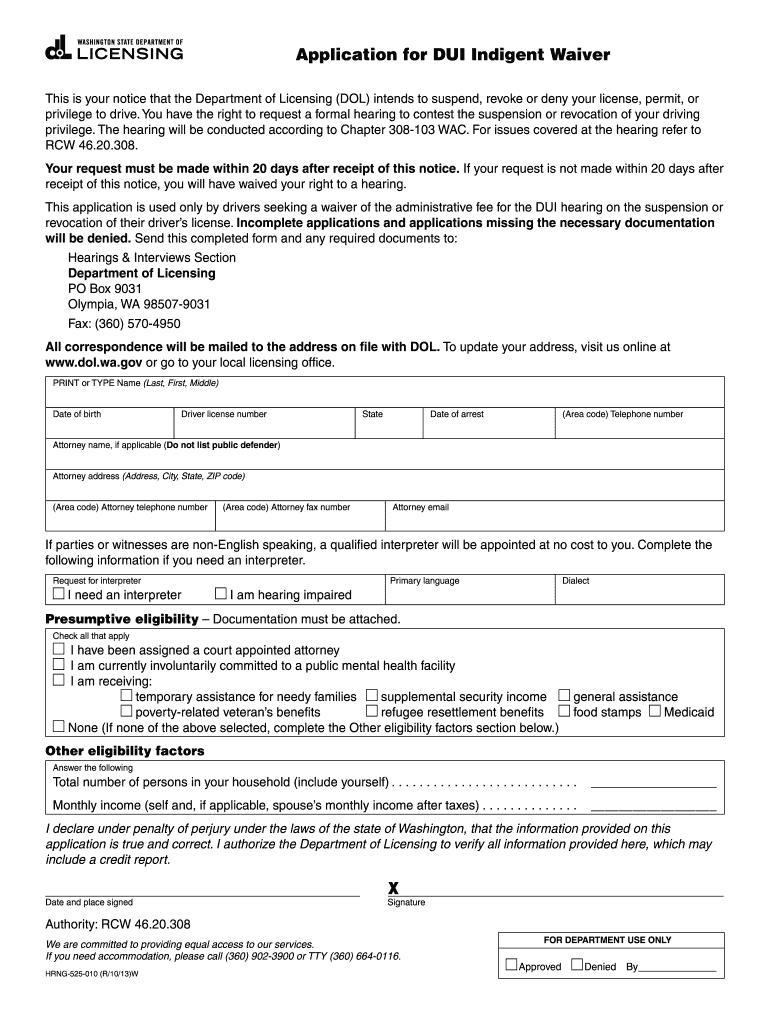







Definition and Purpose of the Interlock Waiver Form Tennessee
The interlock waiver form in Tennessee serves as a crucial document designed for individuals seeking to contest the compulsory installation of an ignition interlock device (IID) following a DUI conviction. This form facilitates the formal request for an exemption based on specified conditions. Understanding this form is essential for individuals navigating the legal requirements associated with DUI penalties in Tennessee.
The primary aim of the interlock waiver form is to provide a pathway for individuals who may not be able to meet the requirements of having an IID installed in their vehicle due to financial hardship, medical conditions, or other valid reasons. The form delineates the criteria applicants must meet to qualify for a waiver, protecting those who genuinely cannot comply with the state's interlock laws.
Key aspects of the interlock waiver form include:
- Purpose: To formally request relief from the IID requirement.
- Usage: Necessary for individuals demonstrating valid reasons for exemption.
- Significance: Supports compliant behavior in DUI cases while considering individual circumstances.
Key Elements of the Interlock Waiver Form Tennessee
Understanding the key elements of the interlock waiver form is essential for successful completion and submission. The form typically requires the following information:
- Personal Information: Full name, address, and contact information for the applicant.
- DUI Information: Details regarding the DUI offense, including date and nature of the conviction.
- Justification for Waiver: A clear explanation of the reasons necessitating the waiver, which may include financial statements or medical documentation.
- Legal Citations: Reference to the specific Tennessee law under which the request for an interlock waiver is made.
Accurate and complete information is critical to the approval process. Incomplete forms can delay or deny the exemption request, making it imperative to review the form thoroughly before submission.
Steps to Complete the Interlock Waiver Form Tennessee
Completing the interlock waiver form in Tennessee involves a systematic approach. Follow these steps to ensure a successful submission:
- Obtain the Form: Access the interlock waiver form through appropriate legal websites or the Tennessee Department of Safety and Homeland Security's resources.
- Fill in Personal Information: Begin by providing all requested personal details accurately.
- Detail the DUI Offense: Clearly outline the specifics of the DUI conviction to provide context for the waiver request.
- Justification for the Waiver: Provide a compelling justification for the waiver. This section must include evidence or documents that substantiate the claim.
- Review the Form: Ensure completeness and accuracy before submitting. Double-check all personal information and the details about the DUI offense.
- Submission: Submit the form via the prescribed method, whether online, by mail, or in person.
Following this structured approach minimizes the risks of rejection due to incorrect or incomplete submissions.
Important Terms Related to the Interlock Waiver Form Tennessee
Several important terms are associated with the interlock waiver form that applicants should be aware of:
- Ignition Interlock Device (IID): A breathalyzer installed in a vehicle to prevent it from starting if the driver has been drinking.
- DUI (Driving Under the Influence): A criminal offense involving operating a vehicle while impaired by alcohol or drugs.
- Waiver: A legal exemption that releases a person from a particular requirement, such as the mandatory installation of an IID.
- Eligibility Criteria: The specific conditions that must be met for an applicant to qualify for the interlock waiver.
- Approval Process: The evaluation procedure followed by the Department of Safety and Homeland Security in determining whether to grant the waiver.
Familiarity with these terms provides clarity on the process and aids applicants in constructing a compelling case for exemption.
Legal Use of the Interlock Waiver Form Tennessee
The legal use of the interlock waiver form in Tennessee is grounded in the state's DUI laws and regulations. The form must adhere to specific requirements to ensure its effectiveness and compliance with legal standards. Applicants should consider the following:
- Compliance with State Law: Ensure that the waiver request is filed according to Tennessee state laws concerning DUI penalties.
- Authentication: Signatures on the form must be valid and may require notarization depending on specific legal stipulations.
- Submission Timelines: Adhere to any deadlines associated with waiver applications to avoid forfeiting the right to contest the IID requirement.
- Documentation: Include all necessary supporting documents that verify the claims made within the form, such as proof of income or medical records that support the request for a waiver.
Understanding the legal framework ensures that applicants remain within the bounds of the law while pursuing their waiver, thus enhancing the chances for a favorable outcome.
Examples of Using the Interlock Waiver Form Tennessee
Practical examples illustrate the application of the interlock waiver form in various scenarios to provide a clearer understanding of its use:
- Financial Hardship: An individual who has lost their job and is now struggling to meet basic living expenses may submit the interlock waiver form with a statement of their financial situation. Supporting documents could include recent pay stubs, tax returns, or bank statements.
- Medical Condition: An applicant with a medical condition preventing them from operating a vehicle with an IID installed might use the waiver to justify their request. This could be accompanied by a letter from a licensed physician outlining the health implications.
- Historical Context: Individuals with a history of responsible behavior post-DUI conviction, such as completing rehabilitation programs, may strengthen their case by including evidence of such programs along with their waiver request.
These scenarios highlight the importance of articulating a coherent and substantiated justification for the waiver request while ensuring adherence to the requisite legal framework.




