




01. Edit your cash for keys agreement template ontario online
Type text, add images, blackout confidential details, add comments, highlights and more.

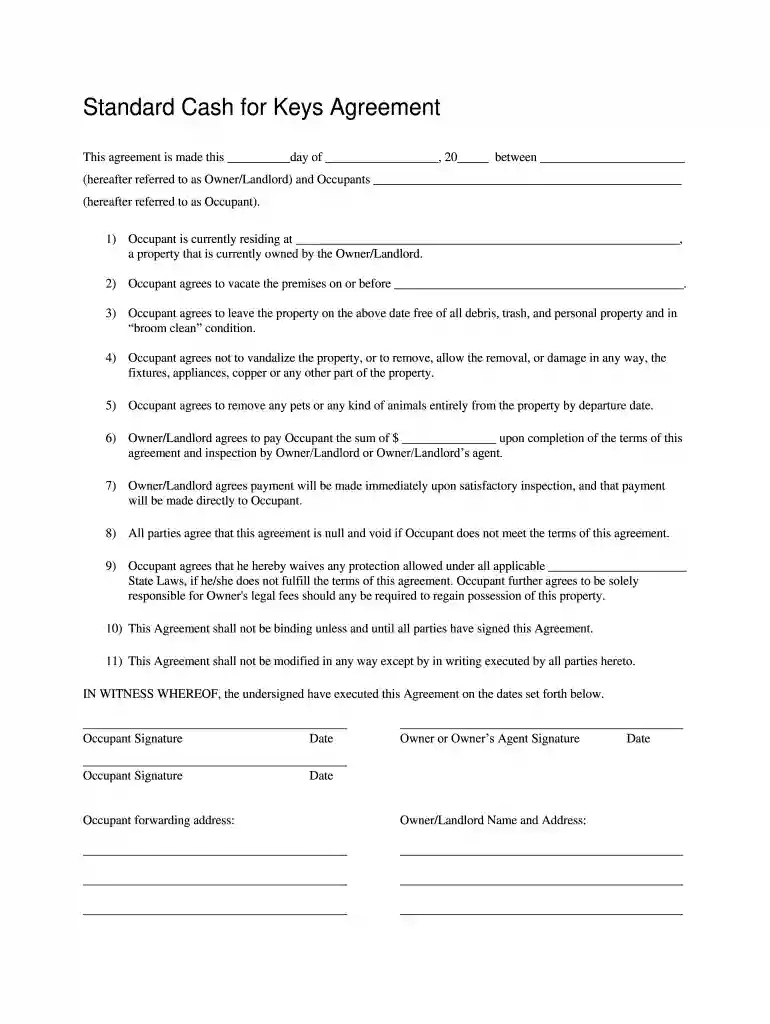
Type text, add images, blackout confidential details, add comments, highlights and more.

Draw your signature, type it, upload its image, or use your mobile device as a signature pad.

Send cash for keys agreement california via email, link, or fax. You can also download it, export it or print it out.
Cash for keys is a property management strategy used in Ontario, allowing landlords and tenants to reach an agreement that facilitates a smoother transition when a tenant needs to vacate a property. It essentially involves a landlord providing monetary compensation to tenants in exchange for agreeing to leave the premises. This arrangement benefits both parties: landlords avoid lengthy eviction processes, while tenants receive financial incentives to relocate.
A cash for keys agreement in Ontario contains several critical components that define the responsibilities and expectations for both parties:
Monetary Amount: The agreement specifies the amount of money the tenant will receive for vacating the property. This figure is often negotiable and should take into account the local rental market and the tenant's circumstances.
Move-Out Date: The agreement includes a clear timeline for when the tenant is expected to leave the property. This date is essential for landlords looking to avoid extended vacancies.
Property Condition: Tenants typically agree to leave the property in good condition, minimizing damage and ensuring cleanliness to avoid disputes about the condition of the unit upon move-out.
Legal Implications: Both parties acknowledge the legal nature of the agreement, ensuring clarity on what will happen if either side fails to meet their obligations.
Implementing a cash for keys agreement involves several straightforward steps. Below is a general outline to help both landlords and tenants navigate the process:
Negotiation: Both parties should negotiate the terms of the agreement. Landlords may offer different amounts based on factors like the tenant's lease duration and current rental market conditions.
Drafting the Agreement: A written cash for keys agreement should be drafted, outlining all terms, including payment details, move-out timelines, and responsibilities for property condition.
Signing the Agreement: Both landlord and tenant must sign the agreement. This step ensures accountability and clarity on expectations.
Fund Payment: Payment to the tenant should occur upon successful completion of their move, ensuring that they meet the conditions specified in the agreement.
Final Walkthrough: Conduct a walkthrough of the property with the tenant to verify its condition before handing over the cash. This step can help avoid future disputes.
While cash for keys is widely used, there are some legal considerations and best practices to keep in mind:
Legality: Cash for keys agreements are legal in Ontario as long as both parties voluntarily agree to the terms. However, landlords should refrain from offering amounts that could be construed as coercive.
Documentation: Maintain thorough documentation of the arrangement, including the agreement, communication, and any receipts or records of payment. This documentation can be crucial in case of any disputes.
Use a Template: Utilizing a cash for keys agreement template can streamline the process. Templates can ensure that all necessary components and legal nuances are covered.
Creating a cash for keys agreement template can save time and ensure completeness. Below is a simplified outline:
This basic structure can be customized according to specific agreements and needs.
Is cash for keys taxable in Canada?: Typically, cash received in these relocations may be considered taxable income. Consult a tax professional for personalized advice.
Is cash for keys a legal option in Ontario?: Yes, cash for keys agreements are legal and provide a cooperative way for landlords and tenants to handle terminations.
What happens if the tenant fails to move?: If a tenant fails to comply with the cash for keys agreement, the landlord may need to pursue further legal action, which should have been outlined in the agreement.
Understanding these facets of cash for keys in Ontario offers valuable insight into creating and executing agreements that can serve the interests of both landlords and tenants, fostering a more amicable and efficient property management process.
At DocHub, your data security is our priority. We follow HIPAA, SOC2, GDPR, and other standards, so you can work on your documents with confidence.





The Keys to Community: Housing Rehabilitation Loan offers up a $30,000 no-interest loans to eligible homeowners and qualified home buyers enabling them to makeRead more
Apr 18, 2013 A component of the eMedNY system operated by New York State serves as a Medicaid. Eligibility Verification and Dispensing Validation SystemRead more
Jan 30, 2017 Financially, the partnership made money for. Ontario. The government contributed C$29 million in equity at the beginning of the projectRead more


