




01. Edit your blank coi online
Type text, add images, blackout confidential details, add comments, highlights and more.

Type text, add images, blackout confidential details, add comments, highlights and more.

Draw your signature, type it, upload its image, or use your mobile device as a signature pad.

Send blank coi form via email, link, or fax. You can also download it, export it or print it out.
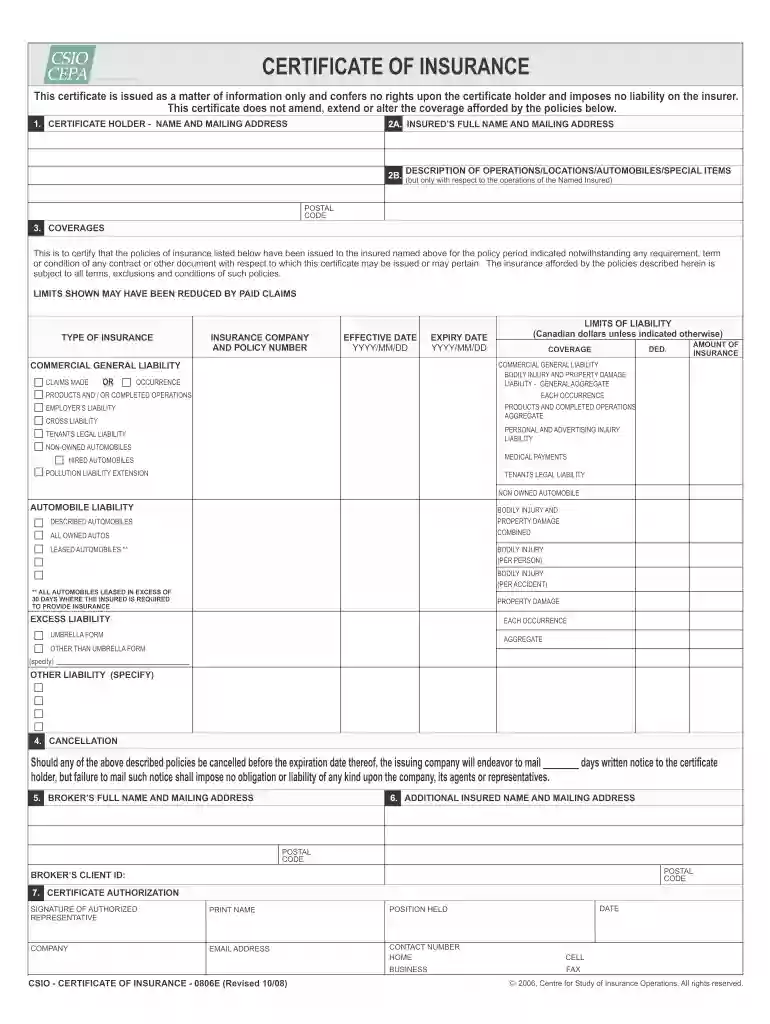
The Certificate of Insurance (COI) serves as a vital document that outlines the insurance coverage possessed by a specific entity or individual, such as a contractor or business. It provides a snapshot of the insurance policies, including key details such as type of coverage, effective dates, and coverage limits.
This document is instrumental in various professional settings where proof of insurance is mandated. For instance, clients frequently request a COI before entering into contracts with service providers to ensure that the provider maintains adequate insurance to cover any potential risks.
Key components typically included in a Certificate of Insurance from RWGlobal are:
This information plays a critical role in risk management, enabling businesses to operate with greater security.
Utilizing a Certificate of Insurance effectively requires an understanding of its purpose and how to present it appropriately in professional interactions. The COI acts as assurance that the insured party has coverage which can protect against claims related to injuries, damages, or other liabilities.
To use a COI effectively:
By following these steps, businesses can reaffirm their professionalism and compliance with contract requirements.
Understanding the terminology associated with the Certificate of Insurance is essential for effective communication and interpretation of the document. Here are several key terms related to COI:
Familiarity with these terms enhances comprehension and ensures more effective discussions regarding insurance coverage.
Completing a Certificate of Insurance involves gathering necessary information and filling out specific sections accurately. This typically includes:
Following these steps will ensure the COI meets all requirements set forth by contracting parties.
Each state may have its own regulations and standards regarding the required insurance coverages and the specifics of what a Certificate of Insurance must include. It is crucial for businesses to understand these variances, as they can affect both compliance and liability.
Key considerations include:
It's recommended to consult with an insurance professional or legal expert to ensure compliance with your state's particular requirements when issuing or obtaining a Certificate of Insurance.
At DocHub, your data security is our priority. We follow HIPAA, SOC2, GDPR, and other standards, so you can work on your documents with confidence.


