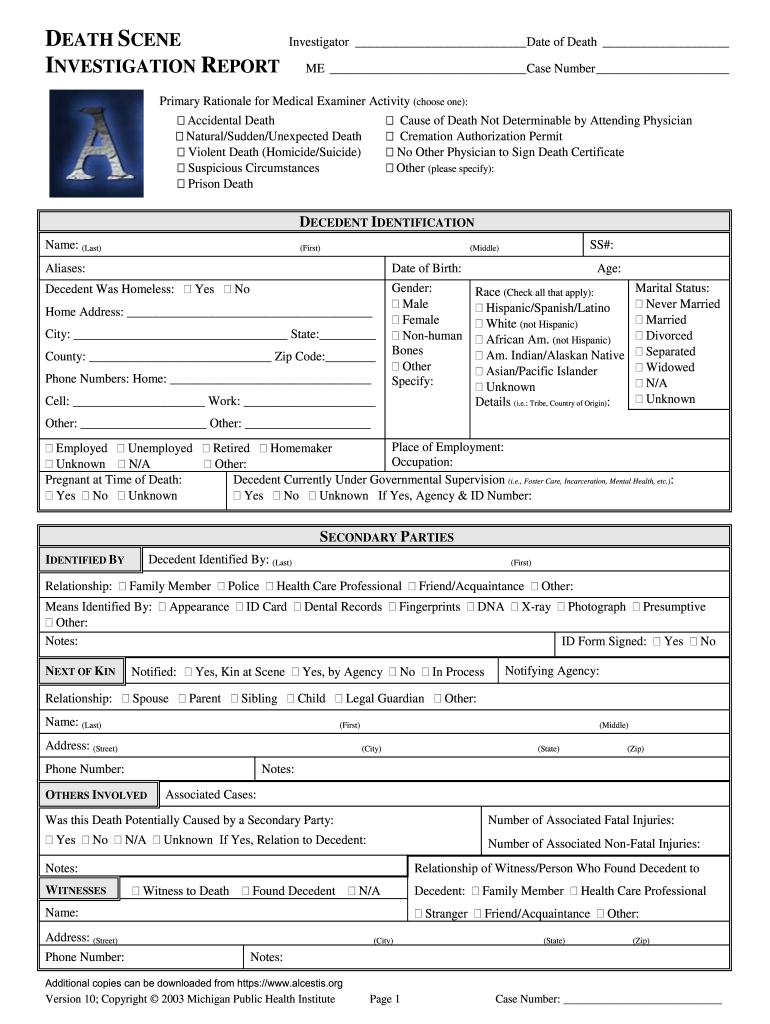







Understanding the Death Investigation Report
A death investigation report serves as a critical document detailing the circumstances surrounding an individual's death. This form is essential for medical examiners, law enforcement officials, and legal professionals as it outlines the investigation process, findings, and conclusions drawn regarding the cause and manner of death.
Key Components of a Death Investigation Report
-
Identification Details: This section includes information about the decedent, such as name, age, date of birth, and any unique identifiers like a social security number. Accurate identification is crucial for legal and medical purposes.
-
Scene Information: A comprehensive description of the death scene is provided, including the location, time of death, environment, and initial observations made by investigators. Photographic evidence and sketches may also be included to enhance clarity.
-
Cause and Manner of Death: This critical section outlines the medical determinations made regarding the death. The cause of death refers to the specific injury, condition, or disease leading to death, while the manner of death categorizes it as natural, accidental, suicidal, or homicidal.
-
Medical History: Relevant medical history of the decedent is documented, including any prior health conditions, treatments received, or medications taken. This information assists investigators in understanding possible contributing factors to the death.
-
Forensic Findings: Results from autopsies and toxicology screens are summarized in this section, presenting evidence that supports the conclusions drawn about the decedent's death.
-
Administrative Notes: Any procedural notes, including dates of report completion, names of the investigators involved, and any other pertinent documentation related to the investigation, are included for record-keeping.
Utilizing a Death Investigation Report Example
Reviewing death investigation report examples can provide valuable insights into proper structure and content. An example report should reflect thorough investigation practices and adhere to legal standards relevant to U.S. jurisdictions.
-
Formatting Considerations: Each investigation report should follow a formal structure, with clear headings and subheadings. This makes it easier for readers to locate specific details quickly.
-
Language Clarity: The language used should be straightforward, avoiding unnecessary jargon while ensuring precise technical terminology is maintained for accuracy.
-
Consistency and Detail: An effective report must maintain consistency in style and detail orientation. Each section should be sufficiently detailed to allow for comprehension by individuals without direct knowledge of the case.
Common Uses of the Death Investigation Report
Death investigation reports are often utilized in various scenarios, including:
-
Legal Proceedings: These reports may be referenced in criminal cases, civil lawsuits, or insurance claims where determination of cause and manner of death impacts the proceedings.
-
Public Health Studies: Data gathered from these reports can inform public health responses and identify trends in mortality that may require intervention.
-
Crime Analysis: Law enforcement agencies analyze trends in death reports to understand crime patterns, particularly in homicide or suicide investigations.
-
Family and Estate Matters: The report can serve as an essential document for families in managing the estate of the deceased, including resolving any disputes regarding the cause of death.
The Process of Composing a Death Investigation Report
Creating a thorough death investigation report typically involves the following steps:
-
Initial Assessment: Investigators assess the scene, noting any immediate observations and securing evidence.
-
Data Collection: Gathering information from witnesses, family members, and medical personnel is critical to painting a full picture of the circumstances.
-
Autopsy and Forensics: Upon obtaining consent, autopsy procedures are conducted to reveal internal findings that may not be visible externally. Toxicology screenings are also critical.
-
Documentation: All findings and observations are meticulously documented in the report, maintaining an objective tone throughout.
-
Review and Finalization: The report undergoes a review process, ensuring all sections are filled out accurately and comprehensively before being finalized.
Variations of Death Investigation Reports
Different types of death investigation reports may include:
-
Homicide Investigation Report: Focused specifically on deaths that occur under suspicious circumstances, detailing investigations related to criminal acts.
-
Suicide Investigation Checklist: A specialized format targeting cases of suspected suicide, including behavioral signs and circumstances leading to the death.
-
Coroner Report Template: Often utilized by coroners to detail findings in a format specific to their requirements, aligning with local laws.
In conclusion, understanding the structure and content of a death investigation report is essential for various stakeholders, including investigators, legal professionals, and family members. Accurate documentation and thorough investigation practices are vital for ensuring justice and clarity in the face of loss.