



01. Edit your objection letter form online
Type text, add images, blackout confidential details, add comments, highlights and more.

Type text, add images, blackout confidential details, add comments, highlights and more.
Draw your signature, type it, upload its image, or use your mobile device as a signature pad.
Send how to write a no objection letter from parents to allow child to travel via email, link, or fax. You can also download it, export it or print it out.
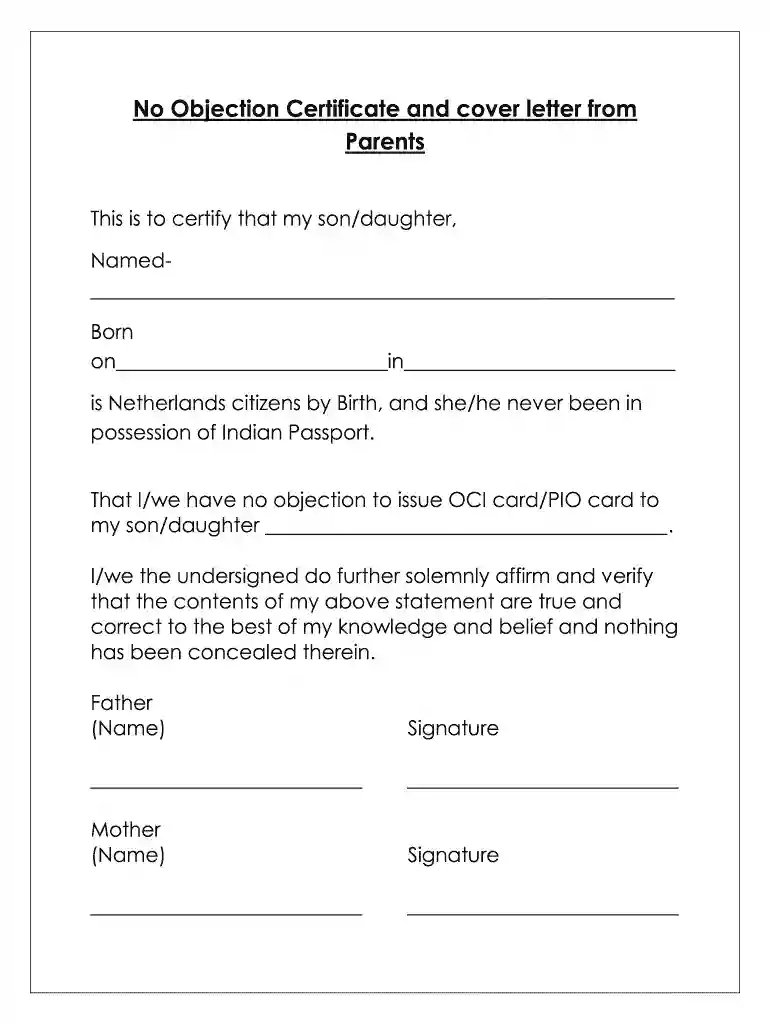
A no objection letter from parents is a formal document in which parents provide consent for a child to undertake specific activities, such as travel, educational opportunities, or visa applications. This letter asserts that the parents have no objections to the outlined plans and often necessitates the parents' signatures to affirm its authenticity. The document serves as an essential tool for various situations, including:
The no objection letter is typically associated with scenarios involving minors, whereby parental consent is a legal and safety requirement, reflecting the responsibility parents hold over their children’s well-being.
When crafting a no objection letter, several key elements must be included to ensure it fulfills its intended purpose:
Including these elements ensures the letter is precise and legally sound, minimizing the chances of complications when presented to authorities such as schools or immigration offices.
Obtaining a no objection letter requires a straightforward process, which includes the following steps:
The process should be guided by clarity and mutual agreement between parents to ensure there are no misunderstandings regarding consent.
The legal standing of a no objection letter varies by context and jurisdiction. Key points to consider include:
Understanding the legal implications associated with this letter can prevent unforeseen complications and foster compliance with relevant regulations.
Practical scenarios illustrate how a no objection letter from parents functions in various contexts:
These examples underscore the versatility and necessity of the no objection letter in facilitating various child-centered activities while maintaining legal protections for all parties involved.
At DocHub, your data security is our priority. We follow HIPAA, SOC2, GDPR, and other standards, so you can work on your documents with confidence.
Jul 14, 2017 The Foreigners Regional Registration Office (FRRO) advises that adoptive parents must obtain a no objection certificate (NOC) from the FRRORead more
Docket No. 46936. 104. Page 105. G-4. EXHIBIT B. TO LETTER OF CREDIT. FORM OF TRANSFER REQUEST. Irrevocable Standby Letter of Credit No.Read more


