
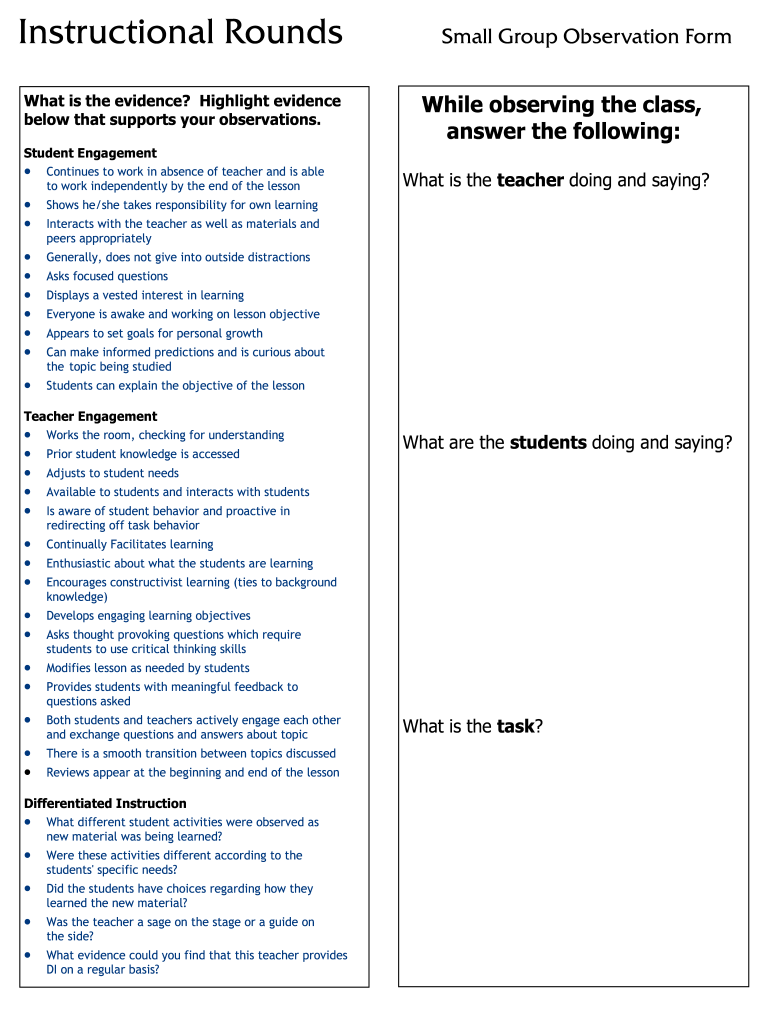







Definition and Purpose of the Instructional Rounds Template
The instructional rounds template serves as a structured framework for observing classroom practices and enhancing educational effectiveness. It is a tool that facilitates collaborative discussions among educators, allowing them to focus on specific teaching practices, student engagement, and overall learning experiences. By standardizing the observation process, this template aids in identifying strengths and areas for improvement, promoting reflective practice among educators.
- Observation Focus: The template typically emphasizes four key areas: student independence, teacher engagement, peer interaction, and critical thinking. This focus guides observers in collecting relevant data and insights during instructional rounds.
- Facilitating Discussions: Utilizing this template during instructional rounds encourages meaningful conversation among educators about observed strategies and their impact on student learning, fostering a culture of continuous improvement.
Key Elements of the Instructional Rounds Template
Understanding the essential components of the instructional rounds template is crucial for effective implementation. Key elements include:
- Observation Criteria: The template includes specific criteria for evaluating instructional practices, such as clarity of learning objectives, effectiveness of instructional strategies, and responsiveness to student needs.
- Data Collection Sections: Designed to help observers take structured notes, these sections focus on gathering evidence related to student behaviors and teaching methods.
- Post-Observation Reflection: This part of the template encourages educators to reflect on their findings and discuss potential implications for teaching and learning.
These elements ensure that observations are not only systematic but also constructive, improving the overall quality of education.
Steps to Complete the Instructional Rounds Template
To effectively use the instructional rounds template, a clear process should be followed. The steps include:
- Preparation: Select the focus area for the observations based on a shared problem of practice among educators.
- Conduct Observations: Use the template to record observations, focusing on the established criteria. Take detailed notes regarding student engagement, instructional strategies, and teacher responses.
- Data Analysis: After completing the observations, analyze the collected data to identify patterns and insights related to teaching practices and student outcomes.
- Collaborative Discussion: Schedule a follow-up meeting where all participants can share their findings. Use the insights to inform discussions about effective practices and potential areas for improvement.
- Action Planning: Conclude with actionable steps that educators can take based on the observations and discussions.
This structured approach not only enhances observation quality but also promotes collaborative professional development.
Who Uses the Instructional Rounds Template
The instructional rounds template is widely utilized in educational settings, particularly by:
- Teachers: To gain insights into their teaching practices through peer observations and feedback.
- School Leaders: Administrators and instructional coaches use the template to facilitate discussions on instructional effectiveness and support professional development initiatives.
- Professional Learning Communities (PLCs): Educators involved in PLCs use this tool to collaboratively assess teaching practices and student learning outcomes.
These groups leverage the template's structured format to foster a culture of collaboration and continuous improvement in their educational environments.
Examples of Using the Instructional Rounds Template
To better understand the application of the instructional rounds template, consider the following examples:
- Focus on Collaborative Learning: A team of teachers might observe how well students work together in small groups. They could use the template to note specific interactions, such as peer feedback and role distribution within groups.
- Analyzing Differentiated Instruction: Educators could employ the template to observe a lesson aimed at diverse learners. Observers would document how the teacher tailors instruction to meet varying student needs and the effectiveness of these strategies.
- Examining Engagement Strategies: A round focused on student engagement could use the template to collect data on student attentiveness and participation levels during a lesson, helping educators refine their engagement techniques.
These examples showcase how the instructional rounds template facilitates focused observations that lead to actionable insights and improved educational practices.




