
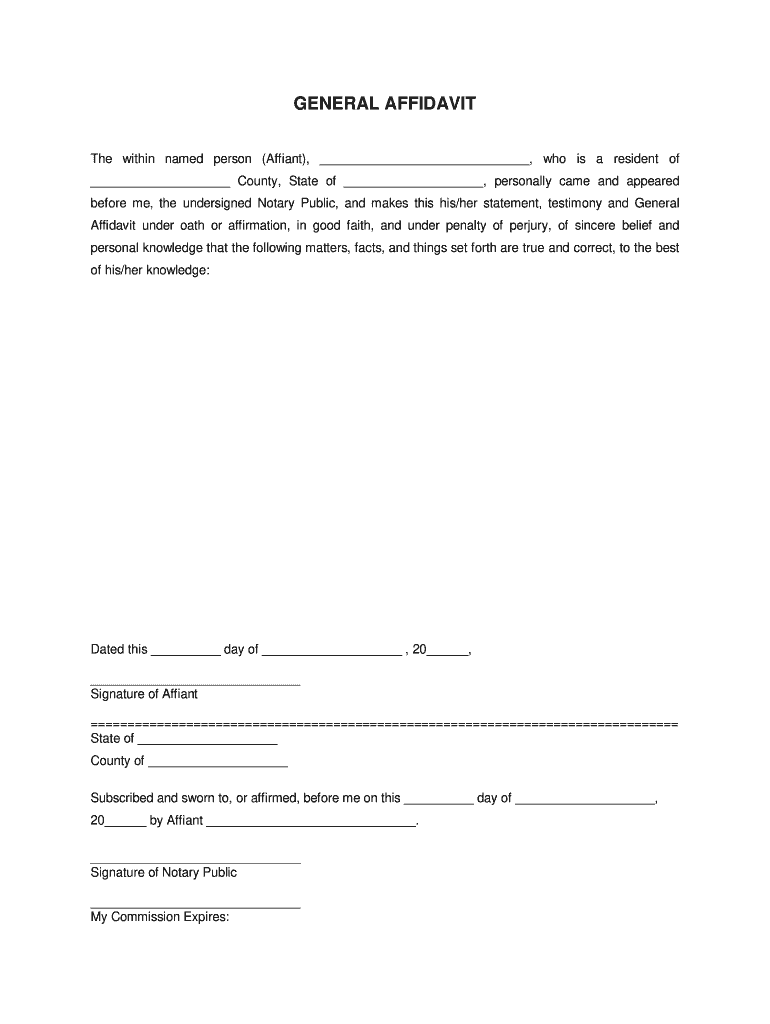







Definition & Meaning
An affidavit form is a legally binding document where the affiant, the person making the statement, swears under oath that the information contained within is true to the best of their knowledge and belief. This sworn statement is often used in legal proceedings and can serve as evidence in court. Unlike a deposition, an affidavit is written and signed outside of a courtroom setting and doesn't involve direct questioning. It is typically witnessed by a Notary Public to validate the affiant's identity and the authenticity of their signature.
How to Use the Affidavit Form
Filling out an affidavit form is a critical process in ensuring that legal statements are documented accurately. Follow these steps to use an affidavit form effectively:
- Title and Case Details: Start by filling in the title of the affidavit and any related case information, such as a case number or court details.
- Statement Details: Clearly outline the facts you are swearing to be true. This section must be precise and free from ambiguity.
- Affiant's Information: Include personal information such as your full name, address, and any other identifiers necessary for the form.
- Oath and Declaration: Affirm your statement under oath, acknowledging that you understand the legal implications of providing false information.
- Notarization: Have the affidavit signed in front of a Notary Public, who will verify your identity and add their seal.
Affidavits are commonly used in various legal contexts, including verifying financial records, affirming identity, or providing witness statements.
Key Elements of the Affidavit Form
An effective affidavit form should include several crucial components:
- Affiant's Declaration: A statement asserting that the affiant is voluntarily providing truthful details.
- Factual Assertions: Specific facts that are being sworn to as true.
- Legal Language: Phrases establishing the legal context, such as references to perjury laws.
- Signatures: The affiant and Notary Public's signatures are mandatory to validate the document.
- Notary Seal: An official seal from the Notary Public to confirm the affidavit's authenticity.
Each element is essential for the form’s legal enforceability and recognition in court.
Steps to Complete the Affidavit Form
To efficiently complete an affidavit form, adhere to these procedural steps:
- Gather Necessary Information: Ensure you have all details pertinent to your statement.
- Draft Your Statement: Write a clear and concise account of the facts you wish to assert. The statement should be in your own words.
- Review and Revise: Carefully proofread your draft to prevent mistakes and ensure clarity.
- Consult Legal Counsel: If uncertain, seek advice from a lawyer to ensure your affidavit meets all legal requirements.
- Sign Before a Notary Public: Do not sign the document until you are in front of a Notary Public, who will authenticate the signing process.
Legal Use of the Affidavit Form
In the United States, affidavit forms serve multiple legal purposes:
- Court Proceedings: Used to submit evidence without requiring the presence of the affiant, thereby saving time and resources.
- Verification of Information: Utilized to confirm details in processes such as citizenship applications, property transactions, and business dealings.
- Identity Verification: Essential in situations where individuals need to authenticate their identity or familial relationships.
Affidavits are a crucial tool in verifying and presenting truthful information in legal contexts.
State-Specific Rules for the Affidavit Form
While affidavits have a general framework that applies nationwide, individual states may have specific rules:
- Notarization Requirements: Certain states may impose stricter notarization requirements or additional witness criteria.
- Form Formats: Some states provide standardized templates for specific situations like family law or real estate.
- Filing Protocols: States may differ on how affidavits are filed with courts or other legal bodies.
It is advisable to check state-specific guidelines before drafting or submitting an affidavit to ensure compliance.
Examples of Using the Affidavit Form
Affidavit forms are versatile and can be used in various scenarios:
- Witness Statements: In personal injury cases, affidavits provide accounts from witnesses unable to attend court.
- Financial Affidavits: During divorce proceedings, parties submit affidavits outlining their financial status.
- Property Disputes: Affidavits can assert claims or prove ownership in real estate disputes.
Including real-world context enhances your understanding of how affidavits function in differing situations.
Important Terms Related to Affidavit Form
Understanding these terms will clarify the use of affidavit forms:
- Affiant: The individual who swears to the truth of the statements made in the affidavit.
- Notary Public: A certified officer who witnesses the signing of the affidavit and ensures its authenticity.
- Perjury: The offense of lying under oath, which carries potential legal penalties.
- Jurisdiction: The legal area or court where the affidavit is filed or relevant.
Knowing these terms will aid in correctly preparing and utilizing affidavit forms.
Who Typically Uses the Affidavit Form
Affidavit forms are used by a wide range of individuals and entities:
- Legal Professionals: Attorneys use affidavits to support evidence in trials or legal arguments.
- Real Estate Agents: Agents may require affidavits to verify property details or transactions.
- Government Officials: For official processes requiring identity or factual verification.
The diverse users of affidavit forms highlight their significance across different sectors.






