




01. Edit your illinois odometer statement online
Type text, add images, blackout confidential details, add comments, highlights and more.

Type text, add images, blackout confidential details, add comments, highlights and more.

Draw your signature, type it, upload its image, or use your mobile device as a signature pad.

Send odometer disclosure statement illinois via email, link, or fax. You can also download it, export it or print it out.
The odometer disclosure statement in Illinois is a legally mandated document required during the transfer of vehicle ownership. Specifically, it serves to accurately report the vehicle's mileage at the time of sale or transfer. This form is crucial for protecting both buyers and sellers from potential fraud, guaranteeing transparency regarding a vehicle’s mileage history.
Legal Requirement: The odometer disclosure statement is mandated by both federal and Illinois state law, necessitating disclosures for most vehicles manufactured after 2010. Failure to provide accurate information can lead to significant legal penalties, including fines or criminal charges for fraudulent misrepresentation.
Fraud Prevention: The primary aim is to prevent odometer fraud, which can occur if a seller rolls back the odometer to misrepresent the vehicle’s mileage. This type of fraud not only misleads buyers but can also diminish trust in the used vehicle market.
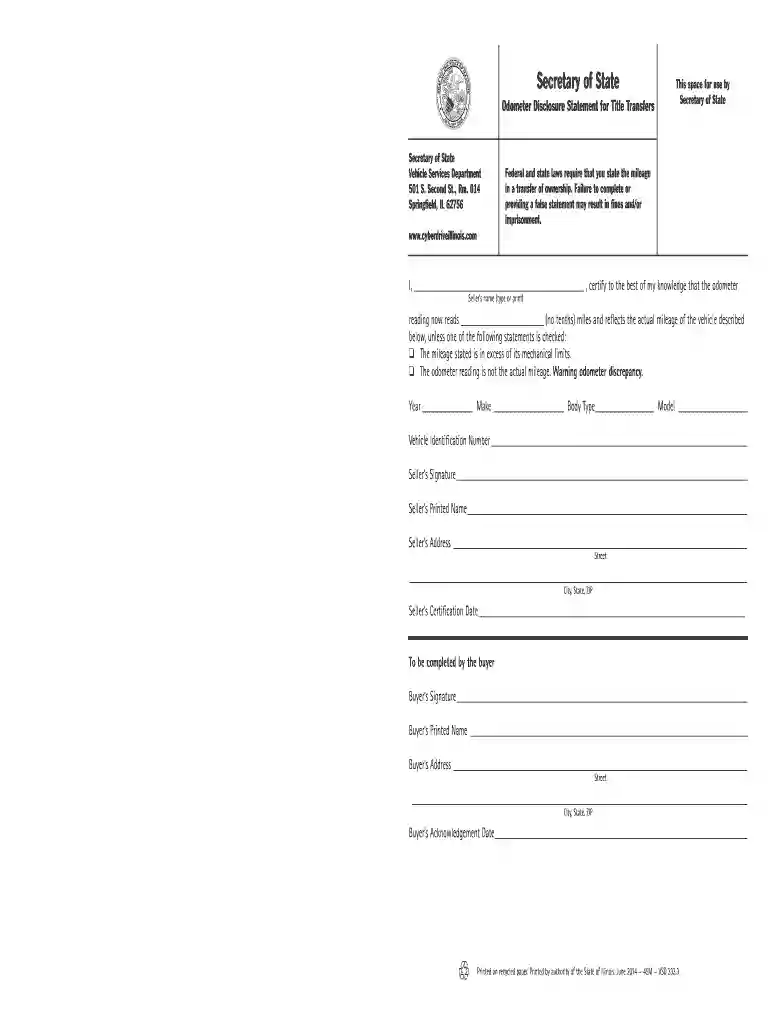
Documentation: The form captures essential details such as the seller’s and buyer’s names, vehicle identification number (VIN), and the current odometer reading. It typically includes certification from the seller regarding the accuracy of the reported mileage.
Filling out the Illinois odometer disclosure statement requires careful attention to detail to comply with legal expectations. The following steps outline the process clearly.
Obtain the Form: Access the odometer disclosure statement, often referred to as VSD 333, from the Illinois Secretary of State's website or other authorized sources.
Fill in Seller and Buyer Information: Start by entering the full names and addresses of both the seller and buyer. This ensures clarity in ownership transfer.
Vehicle Information: Enter the vehicle’s identification number (VIN), make, model, year, and the exact odometer reading at the time of the transaction.
Certification: The seller must certify the accuracy of the odometer reading by signing the form. This section typically includes a statement that the seller understands the responsibilities under Illinois law.
Copy Distribution: After completion, provide a copy to the buyer and retain one for personal records. This serves as proof that the disclosure was made.
Various individuals and entities are involved in the usage of the odometer disclosure statement in Illinois. Understanding who typically utilizes the form provides context for its importance.
Private Sellers and Buyers: Individuals transferring ownership of used vehicles must complete the statement to verify the miles.
Dealerships: Automotive dealerships dealing in used vehicles also use this disclosure statement during sales transactions to comply with state and federal laws.
Loan and Financial Institutions: Banks or credit unions financing vehicle purchases often require this document to assess loan values based on accurate vehicle information.
Vehicle Repossession Agents: In situations where vehicles are repossessed, agents must use the form to report accurate mileage for auction or resale purposes.


Understanding the key elements of the Illinois odometer disclosure statement is essential for compliant vehicle transactions. The main components of the statement include:
Seller Information: Full details, including name and address, representing the current owner of the vehicle.
Buyer Information: Identifying the party acquiring the vehicle, including their full name and address.
Vehicle Identification: Critical vehicle specifics, including the VIN, make, model, year, and odometer status at the time of the sale.
Certification Section: A declaration by the seller confirming the accuracy of the odometer reading and acknowledging the legal implications of nondisclosure.
Date of Transfer: Indication of when the vehicle transfer took place, which is vital for regulatory purposes.
It is essential to understand the potential legal repercussions if the odometer disclosure statement is not accurately completed or if fraudulent information is provided.
Penalties for Non-Compliance: Sellers who fail to provide an odometer disclosure statement may face penalties, including fines and possible criminal charges if fraud is detected.
Legal Liability: If a buyer discovers that the odometer reading was incorrectly reported, they may pursue legal action against the seller for damages, leading to costly settlements and loss of reputation.
Impact on Vehicle Title: In the absence of a valid odometer disclosure statement, state authorities may refuse to transfer the title, complicating the sale process.
Acquiring the Illinois odometer disclosure statement can be straightforward with the following options outlined for potential users:
Online Resources: The Illinois Secretary of State's website offers downloadable versions of the disclosure forms, including the VSD 333.
Local DMV Offices: Individuals can also visit local Department of Motor Vehicles (DMV) or Secretary of State offices to obtain a hard copy of the form directly.
Auto Dealerships: Many car dealerships provide the odometer disclosure statements as part of their sales paperwork to streamline the process for buyers.
By understanding these aspects of the odometer disclosure statement in Illinois, individuals involved in vehicle sales and purchases can ensure compliance with applicable laws while safeguarding their interests.
At DocHub, your data security is our priority. We follow HIPAA, SOC2, GDPR, and other standards, so you can work on your documents with confidence.
The Vehicle Title marks the vehicles ownership, while the Odometer Disclosure Statement records the mileage at the time of sale to prevent odometer fraud.Read more
This data is shared and sold anonymously in a form that does not personally identify you. The collection and use of this location information are described in.Read more


