
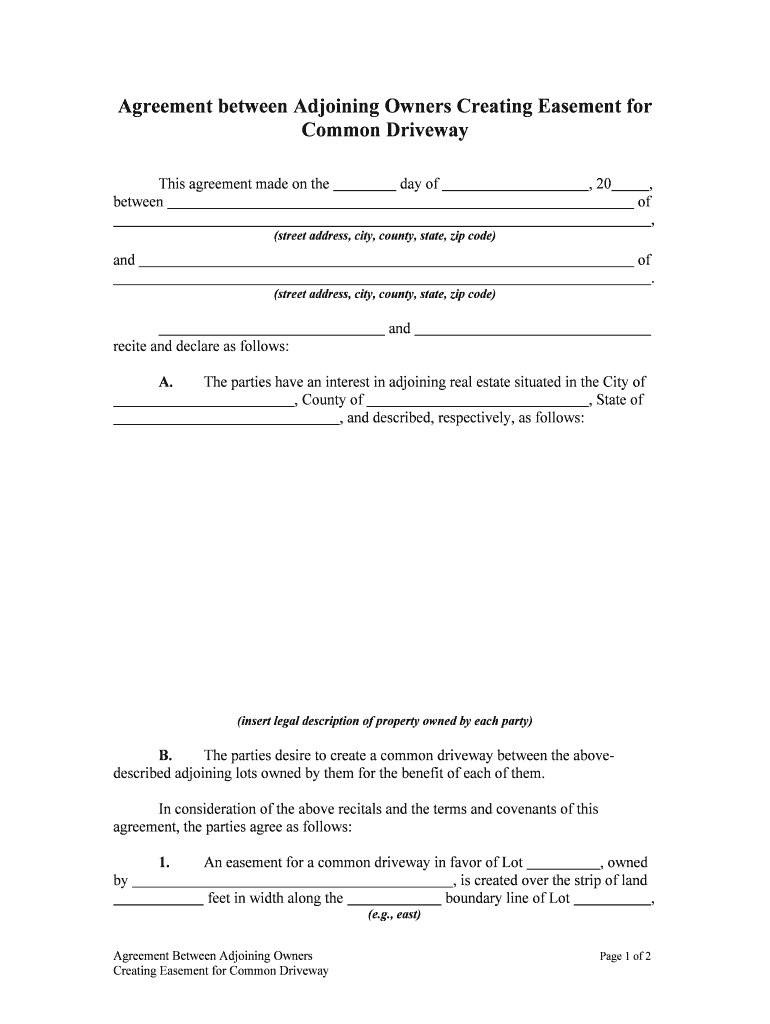







Definition and Meaning of a Driveway Easement
A driveway easement is a legal agreement between property owners to grant shared access to a specific parcel of land, typically a driveway, that benefits the involved parties. The easement is a non-possessory right, meaning that while the holders have the right to use the property, they do not own it. Easements are typically recorded in public records and include detailed descriptions of the land covered by the easement as well as any restrictions or obligations. These agreements can enhance property value by improving access and reducing maintenance burdens on individual owners.
How to Use the Driveway Easement
Using a driveway easement involves understanding the rights and limitations set forth in the easement agreement. Typically, property owners and their authorized visitors can use the driveway for vehicle and pedestrian access. Users must adhere to any specific conditions outlined in the agreement, such as speed limits, maintenance responsibilities, and restrictions on blocking the easement. Maintaining clear communication among all parties is essential to prevent disputes about the use of the easement. Documentation and a clear understanding of the easement's terms can facilitate cooperation and mutual benefit.
Practical Examples
- A homeowner with limited road access may gain vital connectivity through a neighbor's property via a driveway easement.
- Two entities using a shared driveway may agree on a maintenance schedule to ensure the pathway remains accessible for both parties.
Steps to Complete the Driveway Easement
Completing a driveway easement involves several legal and procedural steps to ensure all parties agree on terms and that the agreement is legally binding.
- Assess Needs: Determine why a driveway easement is necessary and what benefits it will provide to the involved parties.
- Consult Legal Professionals: Engage with a real estate attorney to draft the easement agreement, ensuring it complies with state laws.
- Include Key Elements: Clearly outline the properties involved, dimensions, purpose, and any restrictions or obligations.
- Obtain Signatures: All property owners involved must sign the agreement. Notarization may be required to confirm identity and intent.
- Record the Easement: File the completed easement agreement with the local county recorder's office to make it an official part of public records.
Key Elements of the Driveway Easement
The comprehensive documentation of a driveway easement requires several critical components to ensure clarity and enforceability.
- Legal Descriptions: Precise details about the properties involved, including lot numbers and boundaries.
- Purpose and Scope: Clear definition of the easement's intended use, such as vehicular access.
- Responsibilities: Outline the maintenance duties and cost-sharing arrangements if applicable.
- Term and Duration: Specify whether the easement is permanent, temporary, or subject to conditions.
- Dispute Resolution: Provisions for resolving disagreements between the parties involved.
Legal Use of the Driveway Easement
The legal framework guiding the use of a driveway easement ensures that rights are respected, and obligations are met. The easement must comply with local zoning laws and any specific covenants applying to the properties. unauthorized alterations or enhancements to the easement area, such as paving or installing gates, require consensus and might need additional legal documentation. Regular legal reviews and consultations help maintain compliance and address evolving legal standards.
State-Specific Rules for the Driveway Easement
Driveway easements are subject to state-specific regulations that govern their creation, enforcement, and modification. States vary in their requirements for recording easements, taxation implications, and default provisions for resolving disputes. Property owners should familiarize themselves with their state's laws and consult with a local real estate attorney to ensure that the easement agreement adheres to these legal standards. Awareness of these rules can prevent future legal challenges and ensure the easement's enforceability.
Who Typically Uses the Driveway Easement
Driveway easements are commonly used by homeowners and businesses facing access limitations. Residential property owners on land-locked parcels may require such easements to connect their residence with public roads. Similarly, commercial enterprises leveraging shared driveways can improve visitor access and operational efficiency. Utility companies might also use easements to access areas otherwise unreachable for infrastructure maintenance. The agreement enables diverse users to benefit from shared access in a structured and legally recognized manner.

Important Terms Related to Driveway Easement
Understanding terminology in the context of driveway easements assists in comprehending their legal and practical implications.
- Grantor: The property owner who provides the easement.
- Grantee: The individual or entity receiving the easement rights.
- Ingress and Egress: Rights to enter and exit the property through the easement.
- Servient Estate: The property burdened by the easement, providing shared use to the dominant estate.
- Dominant Estate: The property benefiting from the easement, receiving access rights.
Familiarity with these terms aids in navigating the legal intricacies associated with executing and managing a driveway easement agreement.




