





Definition & Meaning
Focusing on the core functionality of a form online, this refers to the electronic format of various documents, allowing for completion, submission, and management through internet platforms. Forms online are designed to facilitate data collection, authorization, and information exchange in a digital environment. They replace traditional paper-based processes, offering greater efficiency, accuracy, and accessibility. For example, tax forms, legal agreements, and license applications can all be processed online, reducing the time and resources required compared to physical document handling.
How to Use the Form Online
To effectively use a form online, users typically interact with a digital interface that replicates a traditional form's structure. Most platforms, including DocHub, provide a straightforward process:
-
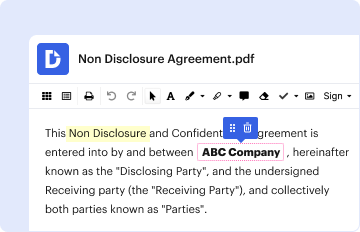
Access the Form: Open the form through a web platform like DocHub. You can import documents from cloud storage services such as Google Drive.
-
Complete Required Fields: Fill out mandatory fields using form field managers that often include text boxes, checkboxes, and dropdown menus.
-
Review and Edit: Utilize tools to add text, insert images, and annotate.
-
Submit or Save: Forms can be directly submitted online to the intended recipient or saved for future submission, ensuring that any modifications are preserved.
Online forms streamline data gathering, allowing users to fill in information at their convenience and ensuring a secure transfer of data.
Key Elements of the Form Online
Forms online are characterized by several integral components designed to enhance user experience and security:
-
Intuitive Interface: Ensures that users can navigate and complete forms efficiently, often including instructions and tooltips.
-
Data Validation: Real-time checks that verify entered data meets expected parameters.
-
Security Features: Most platforms include encryption and password protection to safeguard sensitive information.
-
Dynamic Fields: Adaptive elements that respond to user's inputs, such as conditional fields that appear based on previous responses.
-
Electronic Signature Options: Legally binding electronic signature functionalities in compliance with legislation such as the ESIGN Act.
These elements make online forms versatile tools for various applications, from personal to professional contexts.
Steps to Complete the Form Online
Completing a document form online typically involves a sequential process:
-
Initiate: Visit the relevant website or open the form from your stored files.
-
Populate: Input all necessary data into the required fields. Use the guided input steps if available.
-
Verify: Check all entered information for accuracy. Use built-in validators that highlight missing or incorrectly formatted data.
-
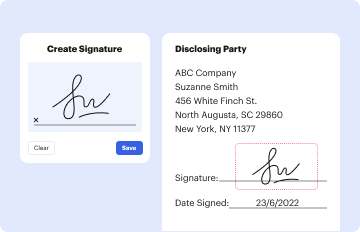
Sign: If required, apply your electronic signature. Options often include using a mouse, trackpad, or uploading a signature image.
-
Submit or Share: Finalize the process by sending the completed form directly to the intended party or saving it for records.
These steps ensure the effectiveness and completeness of submissions, maintaining a seamless transition from paper to digital processes.
Examples of Using the Form Online
Common scenarios where forms online are utilized include:
-
Tax Filings: Individuals and businesses can submit tax documents such as W-9s electronically.
-
Legal Agreements: Generate and sign contracts online without the need for physical copies.
-
Job Applications: Candidates can provide necessary details and upload resumes.
-
Medical Intake: Patients complete intake forms for medical appointments, streamlining data collection for healthcare providers.
These examples demonstrate the flexibility and broad applicability of online forms across various sectors.
Software Compatibility (TurboTax, QuickBooks, etc.)
Forms online often integrate seamlessly with popular software platforms to enhance functionality:
-
TurboTax: Users can import tax documents directly to streamline the filing process.
-
QuickBooks: Businesses use forms online to manage expenses, invoices, and other financial documents congruent with accounting software.
Compatibility ensures that forms can be dynamically integrated into existing workflows, providing users with versatile and uninterrupted service within their preferred software ecosystems.
Eligibility Criteria
Depending on the form type, eligibility criteria can vary significantly. For instance, certain tax forms might necessitate specific income brackets or employment statuses, while some legal forms might require the signatory to be of legal age or residency. Understanding the eligibility criteria is critical:
-
Age Requirements: For forms like legal agreements, where participants might need to be at least 18 years old.
-
Residency Status: Certain forms may only be applicable to residents or citizens in specific jurisdictions.
-
Income Levels: Tax forms often have thresholds that determine whether an itemized deduction is necessary.
Ensuring that all eligibility criteria are met before attempting to complete a form online is crucial to avoid non-compliance and other issues.

Who Typically Uses the Form Online
Forms online cater to a diverse audience, including:
-
Individual Users: For personal filing, administrative tasks, or legal agreements.
-
Businesses: Use forms to handle HR processes, financial documentation, and compliance submissions.
-
Government Entities: Offer essential forms online for public access, including licenses, permits, and reports.
The adaptability of online forms allows users across different sectors to streamline their administrative responsibilities with efficiency and reliability.