




01. Edit your free vaccine exemption online
Type text, add images, blackout confidential details, add comments, highlights and more.

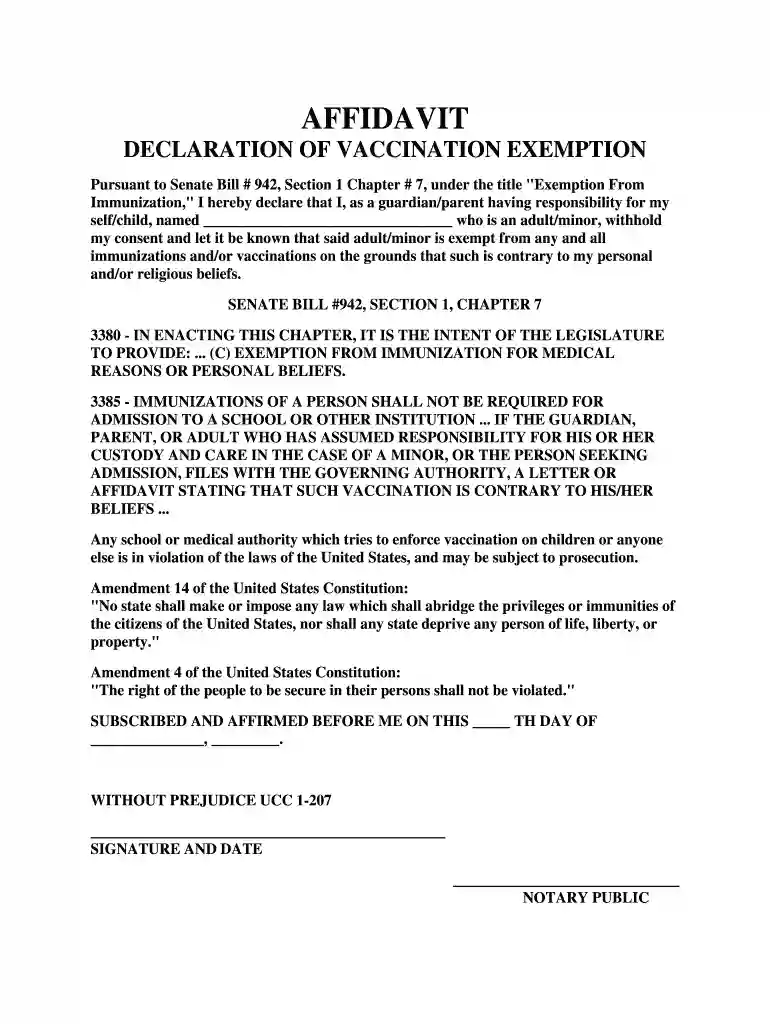
Type text, add images, blackout confidential details, add comments, highlights and more.

Draw your signature, type it, upload its image, or use your mobile device as a signature pad.

Send free religious exemption letter via email, link, or fax. You can also download it, export it or print it out.
A religious exemption letter is a formal document in which an individual articulates their personal beliefs that justify their request for an exemption from certain legal requirements, such as vaccinations. This type of letter plays a significant role, particularly in educational and healthcare settings, where immunization is often mandated. The letter serves as a critical tool for individuals looking to assert their constitutional rights, relying on the First Amendment’s protections of religious freedom.
When drafting a religious exemption letter, several essential elements must be included to ensure clarity and effectiveness. A well-structured letter typically contains:
In the United States, various laws support individuals seeking religious exemptions. The First Amendment protects freedom of religion, allowing individuals to practice their beliefs without undue government interference. States have specific laws detailing how immunization requirements can be exempted based on religious grounds. It's important for individuals drafting a religious exemption letter to familiarize themselves with relevant local and state policies, as these laws can vary significantly.
Several scenarios can illustrate when a religious exemption letter may be necessary:
Each scenario often requires adherence to unique legal statutes, which underscores the importance of understanding local regulations.
While drafting a religious exemption letter, several common pitfalls can undermine its effectiveness:
Understanding the process of crafting a religious exemption letter can empower individuals to assert their rights respectfully and effectively. The clarity, depth, and specific guidelines ensure that the letter serves its intended purpose while providing a robust defense of personal beliefs.
At DocHub, your data security is our priority. We follow HIPAA, SOC2, GDPR, and other standards, so you can work on your documents with confidence.


Some people choose not to vaccinate for personal, religious, or philosophical reasons and they can claim a nonmedical exemption to some or all immunizations. ToRead more
To receive an exemption to vaccination, an adult individual or must provide a statement detailing the medical or religious beliefs that prevent the student fromRead more
Charitable contributions to qualified organizations are deductible by individuals and corporations. Partnership contributions are passed through to the.Read more


