




01. Edit your form online
Type text, add images, blackout confidential details, add comments, highlights and more.

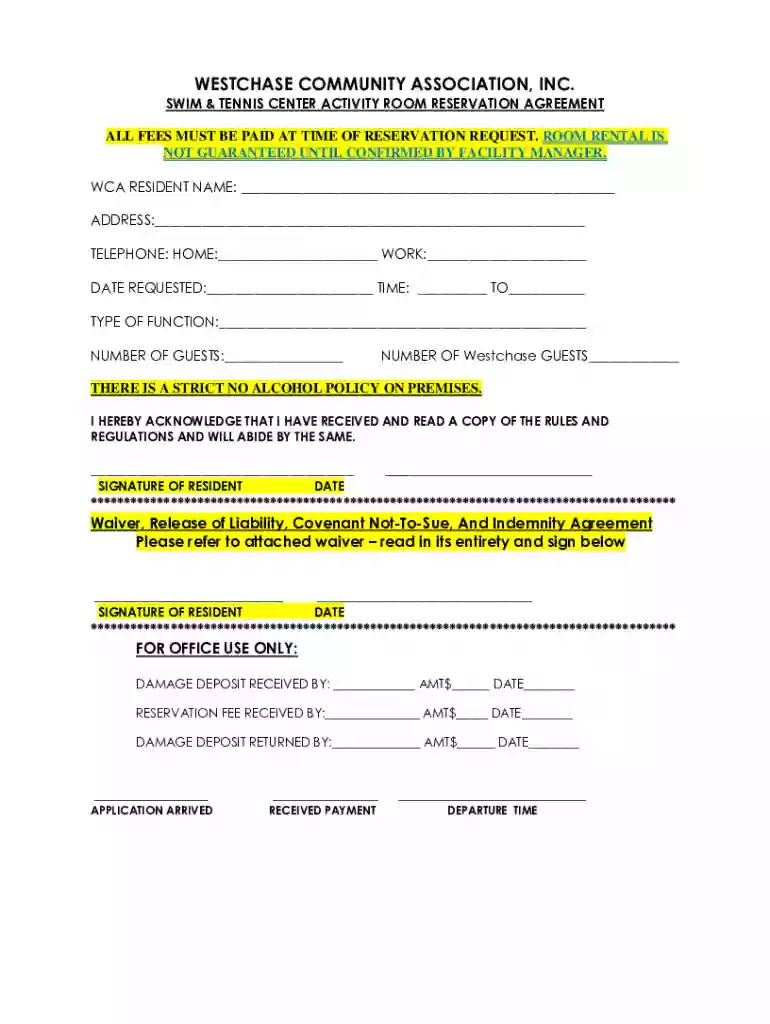
Type text, add images, blackout confidential details, add comments, highlights and more.

Draw your signature, type it, upload its image, or use your mobile device as a signature pad.

Send it via email, link, or fax. You can also download it, export it or print it out.
Governing documents, specifically Covenants, Conditions, and Restrictions (CCRs), and accompanying guidelines form the backbone of community associations in Tampa, FL. These documents establish the framework for community operations, setting rules and standards for residents and governing bodies. CCRs are legally binding documents that outline property usage restrictions, homeowner obligations, and governance structures. Guidelines often provide additional details, enhancing the understanding and applicability of CCRs.
Governing documents include several critical elements that impact both homeowners and association boards:
Governing documents offer several benefits and play a crucial role in residential communities:
Obtaining CCRs and guidelines is an essential step for homeowners in Tampa:
Residents often need to comply with certain aspects of CCRs and guidelines. Here's a step-by-step process to navigate these requirements:
Governing documents are used by:
Familiarize yourself with key terminology related to governing documents:
Legal adherence to governing documents is paramount in Tampa, FL:
While CCRs are common nationwide, certain factors are specific to Tampa, FL:
This comprehensive understanding of Governing Documents, CCRs, and Guidelines in Tampa provides residents with the knowledge to navigate their responsibilities and rights effectively.
We've got more versions of the Governing Documents - CCR's and Guidelines - Tampa FL form. Select the right Governing Documents - CCR's and Guidelines - Tampa FL version from the list and start editing it straight away!
| Versions | Form popularity | Fillable & printable |
|---|---|---|
| 2022 | 4.8 Satisfied (56 Votes) |
Sure, you’ll find numerous apps for this on the web. However, if you need to eSign your Governing Documents - CCR's and Guidelines - Tampa FL without installing additional software, DocHub is the best choice you can make. This powerful editor works on mobile devices just like on desktops. Open our editor in any internet browser, register or log in to your account, and start managing your documents.
If your go-to email service is Gmail, you can easily integrate your DocHub editor into your work. Edit your Governing Documents - CCR's and Guidelines - Tampa FL with DocHub tools and connect it to your drafts in Gmail. See how effortless it can be to exchange files and collaborate having a swift PDF editing solution at hand.
At DocHub, your data security is our priority. We follow HIPAA, SOC2, GDPR, and other standards, so you can work on your documents with confidence.
This document provides technical and regulatory guidance concerning the use of Direct Push wells for long-term environmental groundwater monitoring. Direct PushRead more
Chapter 62-347, F.A.C., entitled Stormwater Treatment Systems, provides statewide regulatory criteria for stormwater treatment systems which are designedRead more
The Property Association Documents and Conditions Covenants and Restrictions (CCRs) will TAMPA, FL 33537-6759. 813 -985-7481 X2001. NAME: DATE. DESIGNED BY:.Read more


