
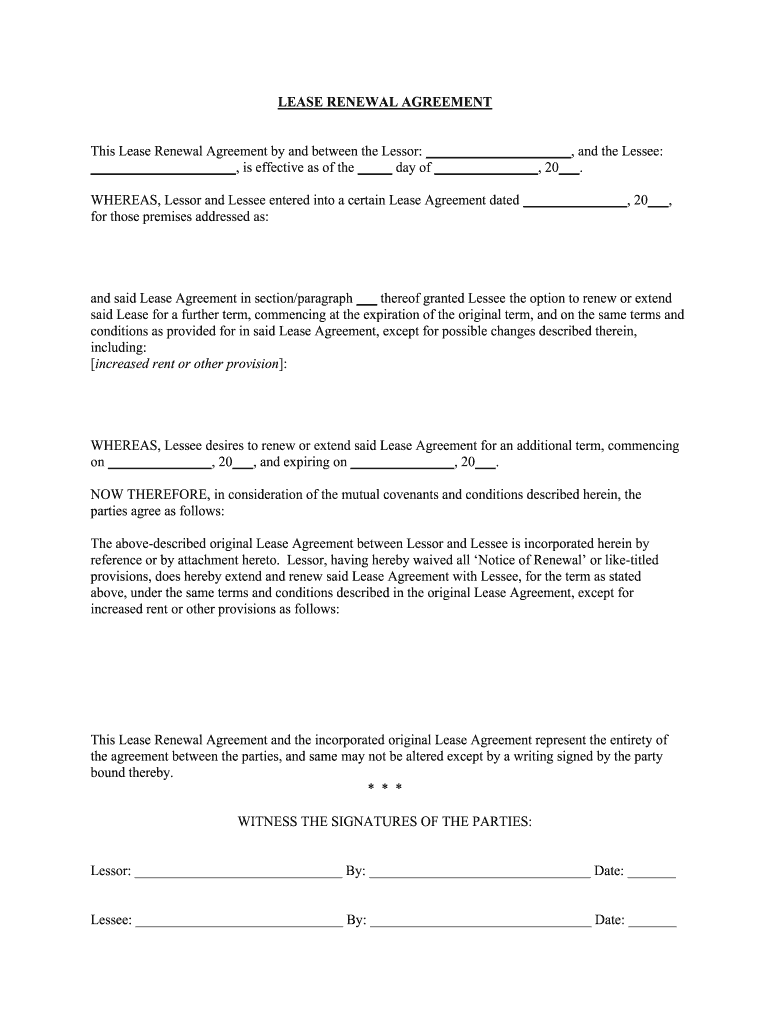







Definition and Meaning of Lease Renewal
A lease renewal is a formal agreement or contract that extends the terms of an existing lease between a lessor and a lessee. This process ensures that the tenant can continue to use the property under previously agreed-upon conditions or under new terms agreed to by both parties. Lease renewals generally include updates such as an increase in rent or modifications to clauses that reflect current market conditions. The primary purpose of a lease renewal is to provide continuity and security for both parties involved, ensuring that the tenant retains access to the property while the landlord continues to have a paying occupant.
A lease renewal contrasts with starting a new lease from scratch. While a new lease may involve entirely new terms and conditions, a renewal usually implies a continuation or minor modification of the existing agreement. This continuity benefits both sides; tenants avoid the hassle of moving, and landlords can count on continued income without experiencing a vacancy period.
How to Use the Lease Renewal Agreement
Using a lease renewal agreement involves several thoughtful steps. Initially, review the current lease to determine which terms should be renewed and what modifications might be necessary. Common changes in a renewal include rent adjustments and updates to the property’s maintenance terms.
-
Drafting the Renewal: When drafting the renewal, ensure both parties agree on the terms to be included. Write the renewal in clear, concise language to prevent misunderstandings.
-
Review and Negotiation: Both parties should review the drafted renewal carefully. At this stage, negotiations may occur to reconcile any disagreements regarding the new terms.
-
Signing the Agreement: Once a consensus is reached, both parties sign the document to make it legally binding. Signatures must be secured to formalize the extension effectively.
Given the importance of accuracy in such contracts, many turn to platforms like DocHub for tools that simplify document editing and signing, catering to the needs of both parties directly involved in real estate leasing.
Steps to Complete a Lease Renewal
Completing a lease renewal involves a sequence of actions that ensure the process runs smoothly and effectively:
-
Evaluation of Current Lease: Examine the existing lease’s terms and how they align with current needs of both parties.
-
Initiate Discussions: Start conversations between the lessor and lessee about their intentions to renew and any necessary adjustments.
-
Draft the Lease Renewal: Use forms or templates that can be customized to accommodate the agreed terms.
-
Seek Agreement: Allow room for negotiation, ensuring any changes are mutually beneficial and acceptable.
-
Finalize the Renewal: Proofread the document thoroughly, check for accuracy in the terms and conditions listed, and ensure all agreed modifications are present.
-
Sign the Document: Both parties add their signatures to the final document, often facilitated by electronic signature platforms, to cement the agreement's legitimacy.
-
Distribute Copies: Each party should keep a certified copy of the signed renewal for personal records and future reference.
Key Elements of the Lease Renewal Agreement
A comprehensive lease renewal agreement encompasses several vital elements to prevent future disputes and misunderstandings. These components typically include:
-
Parties Involved: Clearly state the names and contact information of both the lessor and lessee.
-
Property Details: Describe the property being leased, including address and unit number, if applicable.
-
Renewal Term: Specify the duration of the lease extension, including start and end dates.
-
Rent Amount: State any changes in rent amount or payment schedule compared to the original lease.
-
Updated Terms or Conditions: Highlight any adjustments to terms from the original lease, including responsibilities for maintenance and utilities.
-
Signatures: Both parties sign the document, indicating acceptance and compliance with the contained terms.
The clarity and detail of a lease renewal document can prevent numerous future legal and personal disputes, making the use of well-documented agreements critical in property management.
Important Terms Related to Lease Renewal
Understanding specific terminology is crucial when dealing with lease renewals. Some important terms include:
-
Lessor and Lessee: The lessor is the property owner, while the lessee is the tenant.
-
Term: The length or duration of the lease agreement or renewal period.
-
Rent Escalation Clause: A provision within the lease that allows for periodic increases in the rent.
-
Security Deposit: Collateral provided by the lessee to cover potential damages to the property, often returned or adjusted at the lease's end.
-
Maintenance Responsibilities: Clauses that outline which party is responsible for repairs and upkeep during the lease period.
Familiarity with these terms ensures more effective communication and understanding between parties, streamlining the renewal process.
Legal Use of the Lease Renewal
Lease renewals hold legal weight, transforming verbal agreements or informal understandings into formal, documented contracts. This process underscores the agreement’s enforceability; all clauses and terms can be legally binding if disputes arise. If any disagreements regarding conditions arise, the document serves as a reference point.
Renewal terms and any related disputes fall under applicable contract laws within the state or jurisdiction where the property is located. Legal advice may be advisable to ensure compliance with local regulations and protection for both parties' rights.
State-Specific Rules for Lease Renewal
While lease renewals follow a consistent general framework, the specific requirements and allowances can vary by state within the U.S.
-
Notice Periods: Different states may have varying requirements for how long before the lease end date a renewal must be offered.
-
Rent Control: In states with rent control laws, renewals may limit permissible rent increases.
-
Security Deposit Handling: Regulations regarding the return or continuation of security deposits may differ if new terms include increased deposits.
-
Disclosure Requirements: Some states mandate specific disclosures within renewal agreements, such as health hazards on the property.
Understanding the local rules in each jurisdiction is vital for compliance and prevents potential legal challenges from uninformed agreements.
Examples of Using the Lease Renewal
Several scenarios illustrate the practical applications of lease renewals:
-
Residential Scenario: Jane, a tenant in California, wishes to renew her apartment lease but at a slightly reduced rent. The landlord agrees due to her excellent payment history and low local demand.
-
Commercial Scenario: A small business wants to extend their commercial lease for another five years, accepting a small rent increase due to improvements made by the landlord.
By understanding these elements, landlords and tenants can execute effective and strategic lease renewals, ensuring future stability and satisfaction for both parties involved.




