
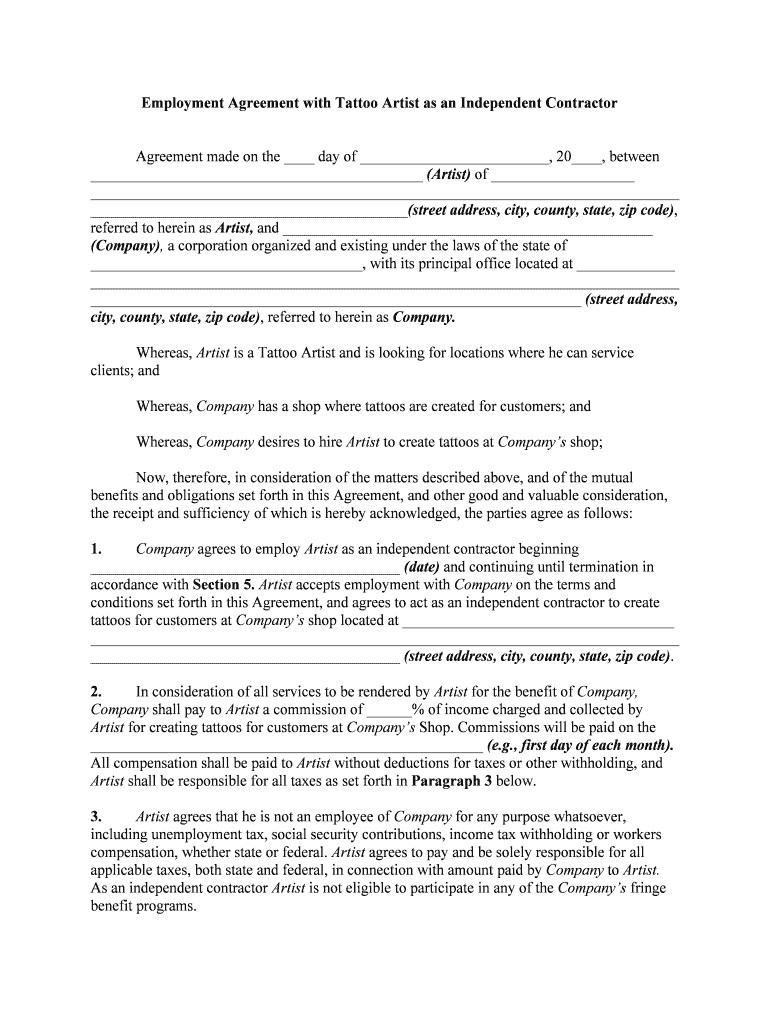







Definition and Meaning
A tattoo contract is a legally binding agreement between a tattoo artist and a client or a tattoo artist and a company. It outlines the terms and conditions under which tattooing services will be provided. This form serves to clarify the responsibilities and expectations of all parties involved, ensuring a mutual understanding of the artistic process, payment arrangements, and any specific requirements. Through this contract, both the artist and the client can safeguard their interests and formally document their agreement, thus reducing the possibility of disputes or misunderstandings. Examples of what might be included are the design specifics, placement, and size of the tattoo, as well as the fees and payment schedule.
How to Use the Tattoo Contract
To use a tattoo contract effectively, both parties should review and understand its contents before proceeding with any tattoo work. Typically, the artist will present the contract to the client after an initial consultation where design and pricing are discussed. The contract should be read thoroughly to ensure that all the terms and conditions align with the expectations of both the artist and the client. Any ambiguities or questions should be clarified with the artist before signing. Once both parties are satisfied, they sign the document, thereby indicating their agreement.
Steps to Complete the Tattoo Contract
-
Initial Consultation:
- Discuss desired tattoo design, size, location, and any specific requirements.
- Agree on pricing and payment arrangements.
-
Review Contract Terms:
- Carefully read through the contract to understand rights, responsibilities, and any obligations.
-
Seek Clarifications:
- Address any uncertainties with the artist to remove ambiguities from the terms.
-
Amendments if Necessary:
- Make changes to the contract if both parties agree on different terms.
-
Signature and Date:
- Both the artist and the client sign and date the contract to validate the agreement.
Key Elements of the Tattoo Contract
- Parties Involved: Clearly defines who is the artist and who is the client.
- Services Provided: Details the services the artist will perform, including any unique artistic elements.
- Payment Terms: Indicates the fees associated with the service, payment method, and any deposit requirements.
- Cancellation Policy: Outlines the conditions and potential penalties for cancelling or rescheduling appointments.
- Liability Waiver: Protects the artist from liabilities related to the tattoo process, such as infections or allergies.
- Consent: Confirms the client is of legal age and consents to the tattoo application.
Legal Use of the Tattoo Contract
The contract serves as a legal safeguard for both parties. By establishing legal obligations, it reduces the potential for disputes over payment or the completion of services. This contract also helps verify that the client has given informed consent for the tattoo procedure, acknowledging potential risks involved. In case of breach, it provides a legal framework for addressing grievances. It is crucial for artists to confirm that the client meets any state-specific legal requirements, such as being of a minimum age, before signing the contract.
Examples of Using the Tattoo Contract
- Freelance Tattoo Artists: An artist working independently can use the contract to outline each job's details, avoiding misunderstandings regarding the specifics of the tattoo design and payment terms.
- Tattoo Shops: A tattoo studio might use a template of such contracts for all new clients, ensuring that every transaction has a record of consent and agreed terms.
- Collaborative Projects: When more than one artist is working on a single tattoo, a contract helps delineate responsibilities and compensation for each contributor.
Important Terms Related to Tattoo Contract
- Independent Contractor: Defines the artist's status as an independent worker, not an employee of a studio.
- Indemnification: An agreement that shields the artist from liability related to design disputes or dissatisfaction.
- Amendment Procedures: The process for making changes to the contract should mutual agreement occur post-signature.
- Arbitration: An alternative dispute resolution that parties can opt for instead of litigation.
- Governing Law: Specifies which state's laws will interpret the contract terms, ensuring jurisdictional clarity.
State-Specific Rules for the Tattoo Contract
Tattoo contracts might need to adhere to specific state regulations regarding the practice of tattooing. These laws can include minimum age requirements, health and safety standards, and licensing for tattoo artists. For instance, some states may require parental consent for clients under a certain age, while others may mandate specific health department inspections for tattoo parlors. Artists should ensure their contracts comply with the legal standards in their state to avoid legal complications.
State-by-State Differences
The regulatory environment for tattoo contracts can vary significantly across the United States. For example, states like California and New York may have different age requirements and health regulations that influence contract terms. Some states might require additional disclosures related to the risks of tattooing or mandate that artists hold specific licenses. Tattoo studios in each state need to stay informed about and comply with the local laws to ensure that their contracts remain legally valid and enforceable.
Digital vs. Paper Version
While traditional paper contracts have been the norm in tattooing, many studios are adopting digital versions for ease of use, storage, and accessibility. Digital contracts can be signed electronically, making them convenient for both mobile and in-shop interactions. Electronic versions benefit from easy customization and secure online storage, providing quick reference in case of a dispute. Artists and clients might prefer digital contracts for their environmental impact, ease of organization, and compatibility with digital devices.
Required Documents
To finalize a tattoo contract, certain documents may be necessary in addition to the signed agreement. These can include identification proof, demonstrating legal age and identity. For artists, a copy of their professional license may be needed. If the client is under the legal age, parental or guardian consent forms should be completed and included. Artists must ensure their records also contain evidence of any health and safety compliance documents required by state regulators.
Penalties for Non-Compliance
Failure to adhere to the terms outlined in a tattoo contract could result in financial penalties or legal actions. For clients, not completing agreed upon payments may result in additional fees or contract termination by the artist. Artists disregarding contract terms, such as not delivering on agreed designs or deadlines, could face refund claims or reputational damage. Violating state regulatory requirements embedded within the contract can also lead to fines or the loss of business licenses for tattoo studios.




