
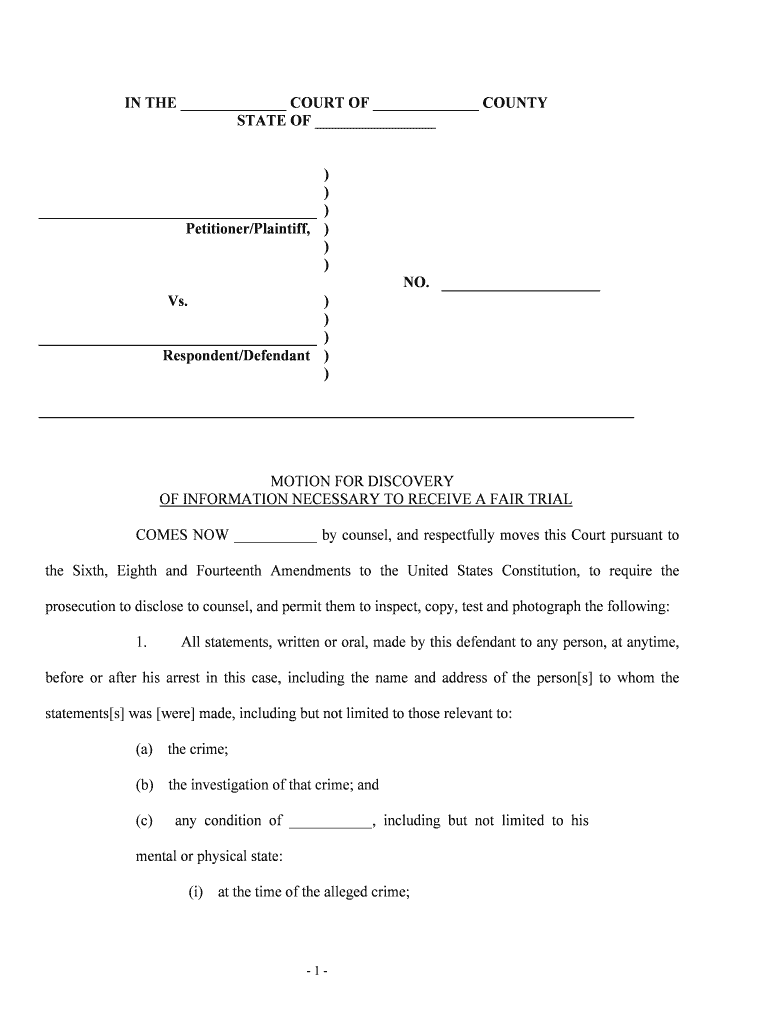







Definition and Meaning of the Discovery Form
The discovery form is a legal document primarily used in the pre-trial phase of litigation. It serves as a formal request made by one party to obtain essential information and evidence from the opposing party to prepare for trial. This form helps ensure a fair trial by allowing both parties to access necessary evidence, documents, and witness information, fostering transparency in the judicial process.
- Purpose: To gather information and evidence for trial preparation.
- Legal Context: Widely used in civil and criminal cases to request disclosure from the opposing party.
- Content Scope: Includes requests for statements, documents, witness details, and any evidence favorable to the requester.
How to Use the Discovery Form
Utilizing the discovery form effectively requires understanding the type of information being sought and the procedural requirements of the jurisdiction handling the case. This form is typically drafted by legal professionals, such as attorneys, to ensure compliance with court rules and to increase the likelihood of obtaining the desired information.
- Drafting the Form: Legal counsel usually prepares the form, detailing specific information or documents needed from the opposing party.
- Serving the Form: The completed form is served to the opposing party, typically through official legal channels, ensuring they receive the request formally.
- Responding: The receiving party must comply within a specified timeframe, providing the requested information or filing objections as allowed.
How to Obtain the Discovery Form
Acquiring a discovery form typically involves accessing resources provided by legal professionals or court clerks. Most jurisdictions have their templates to ensure uniformity and adherence to procedural rules.
- Court Resources: Local court websites or physical court clerks are primary sources for obtaining the correct form.
- Legal Assistance: Attorneys can provide the form as part of their services and offer guidance on its completion.
Steps to Complete the Discovery Form
Completing the discovery form requires specificity and compliance with legal standards to maximize its effectiveness.
- Identify Information Needed: Clearly define the documents or information required from the opposing party.
- Include Specific Details: List document specifications, including dates, names, and contexts, to avoid ambiguity.
- Follow Jurisdiction Requirements: Ensure the form meets all local court rules regarding format and submission.
- Review for Completeness: Verify all sections are filled accurately to prevent delays or rejections.
Legal Use of the Discovery Form
The legal use of the discovery form spans various types of litigation, emphasizing the importance of information exchange in the legal process.
- Civil Litigation: Used to request document production, interrogatories, and depositions.
- Criminal Cases: Allows defense access to evidence held by the prosecution to ensure fair trial rights.
- Family Law: Common in divorce or custody disputes to reveal financial documents and witness testimonies.
Key Elements of the Discovery Form
A well-prepared discovery form includes specific components to ensure clarity and compliance with legal standards.
- Heading and Case Information: Clear identification of the case number, court, and involved parties.
- List of Requested Items: Specific documents, evidence, or information being requested, each item clearly numbered and described.
- Response Deadline: A clearly defined period within which the opposing party must respond.
State-Specific Rules for the Discovery Form
Each state in the U.S. has its procedural rules governing the use of discovery forms in litigation. Understanding these state-specific nuances is crucial for timely and effective use.
- Variations in Format: Some states may require additional sections or specific wording.
- Deadlines and Timelines: Response and filing deadlines can vary, affecting how and when a discovery form must be submitted.
Examples of Using the Discovery Form
Real-world scenarios illustrate how discovery forms are utilized in various legal contexts.
- Civil Case Example: In a breach of contract case, one party uses the discovery form to request emails and contractual documents from the other party.
- Criminal Case Example: A defense attorney submits a discovery form to acquire surveillance footage from the prosecution, believed to be favorable to the defendant's case.
- Family Law Example: During a divorce proceeding, one spouse requests financial statements from the other to determine asset distribution.
By thoroughly understanding and utilizing the discovery form within its legal context, parties in a legal dispute can ensure a fair exchange of information, supporting a robust and informed trial preparation process.




