







Definition & Meaning
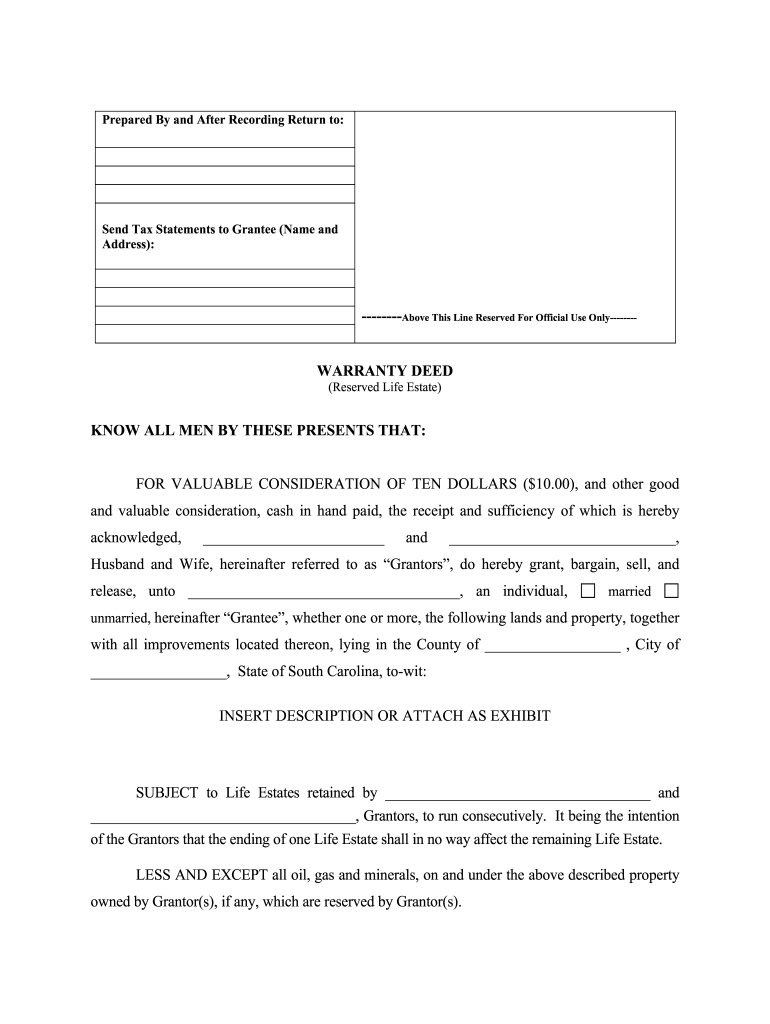
A deed is a formal legal document that confirms the ownership of property or rights. In the context of real estate, it is used to transfer property ownership from one party to another. Deeds can also pertain to other types of legal rights or obligations. For example, there is a Warranty Deed in South Carolina, which is used by parents to transfer property to their child while reserving a life estate for themselves.
Deeds must be executed by the parties involved, often requiring signatures that are either notarized or witnessed, depending on the type of deed and jurisdiction. The importance of a deed lies in its role as a legally binding document that is recognized in a court of law if disputes regarding property ownership arise.
Key Elements of the Deed
Deeds contain several essential components to ensure their validity and clarity:
- Grantor and Grantee Identification: The document must clearly identify the parties involved in the transaction. The grantor is the person transferring the property, while the grantee is the person receiving it.
- Property Description: A detailed description of the property, including boundaries and any structures located on it, is crucial to distinguish it unequivocally from other properties.
- Consideration Clause: This stipulates the financial or other value exchanged for the property. It might include a nominal amount for legal formalities.
- Legal Language and Formalities: Specific language is required to convey the nature of the document, including phrases like "conveys" or "grants."
- Signatures and Dates: All parties must sign the deed, often with witness signatures or notarization, to verify authenticity and intent.
Legal Use of the Deed
Deeds serve multiple legal purposes beyond transferring property ownership. They may also be used for:
- Establishing Easements: Creating rights for someone to use another's property, such as a road or utility lines.
- Restrictive Covenants: Imposing restrictions on property use, like prohibiting certain types of structures.
- Title Examination and Assurance: They are crucial in ensuring clear title to a property, which is necessary for obtaining title insurance or financing.
In the U.S., deeds must comply with state-specific laws that govern their use, meaning the legal requirements and processes can differ significantly depending on location.
Steps to Complete the Deed
Completing a deed involves several precise steps to ensure legality and efficiency:
- Draft the Deed: Engage a legal professional to draft the deed, ensuring it includes all required elements and complies with state laws.
- Include Necessary Details: Ensure accurate information about the grantor, grantee, and property is recorded.
- Signature and Notarization: Obtain all necessary signatures, and have the document notarized to confirm the identity and consent of the parties.
- Recording the Deed: Submit the completed deed to the appropriate county recorder or registrar’s office for official recording, making the transfer public and legal.
- Provide Copies: Ensure all parties have recorded copies for their records.
State-Specific Rules for the Deed
Due to the localized nature of property laws in the U.S., deeds are subject to state-specific rules. Each state may dictate:
- Recording Fees: Varying charges for processing and recording documents.
- Witness Requirements: Some states necessitate witness signatures in addition to notary acknowledgment.
- Specific Language or Clauses: Jurisdictions might mandate unique clauses or wording variations to avoid ambiguity.
It's crucial to consult local regulations or engage a knowledgeable attorney familiar with the specific state's law to ensure compliance.
Why Should You Deed
Transferring property via a deed offers multiple advantages:
- Legal Proof of Ownership: Deeds serve as irrefutable legal proof of property ownership.
- Facilitating Transactions: They are essential for legally transferring property or securing financing.
- Estate Planning Tool: As part of estate planning, deeds can smoothly transfer property to heirs or beneficiaries, avoiding potential probate hassles.
Examples of Using the Deed
Here are some scenarios where deeds are typically employed:
- Family Transactions: Parents may transfer a property to children while retaining lifetime use via a life estate deed.
- Commercial Transfers: Businesses use deeds when buying or selling commercial real estate.
- Gift Transfer Deeds: Used for transferring property ownership without monetary exchange between parties.
Required Documents
Before drafting a deed, certain documents might be required:
- Current Title Deed: The existing deed proving current ownership.
- Property Survey: A survey ensuring the physical boundaries align with legal descriptions.
- Government Identification: Photo ID for all signing parties to verify identity.
- Tax Clearance Certificate: Proof that all taxes related to the property are up to date.
Having these documents ready can streamline the deed preparation and execution process.
Form Submission Methods (Online / Mail / In-Person)
Deeds often need physical presence for final steps, but initial preparations can use multiple submission methods:
- Online Filings: Some jurisdictions allow electronic submissions, easing the process of filing.
- Mail Services: Traditional option for sending notarized copies to the recorder’s office.
- In-Person Submission: Preferred for those who want to ensure immediate receipt and processing.
Options vary by state, and in-person verification can speed up official recording and address immediate queries.




