Definition & Meaning of Hotel Tax Gillespie
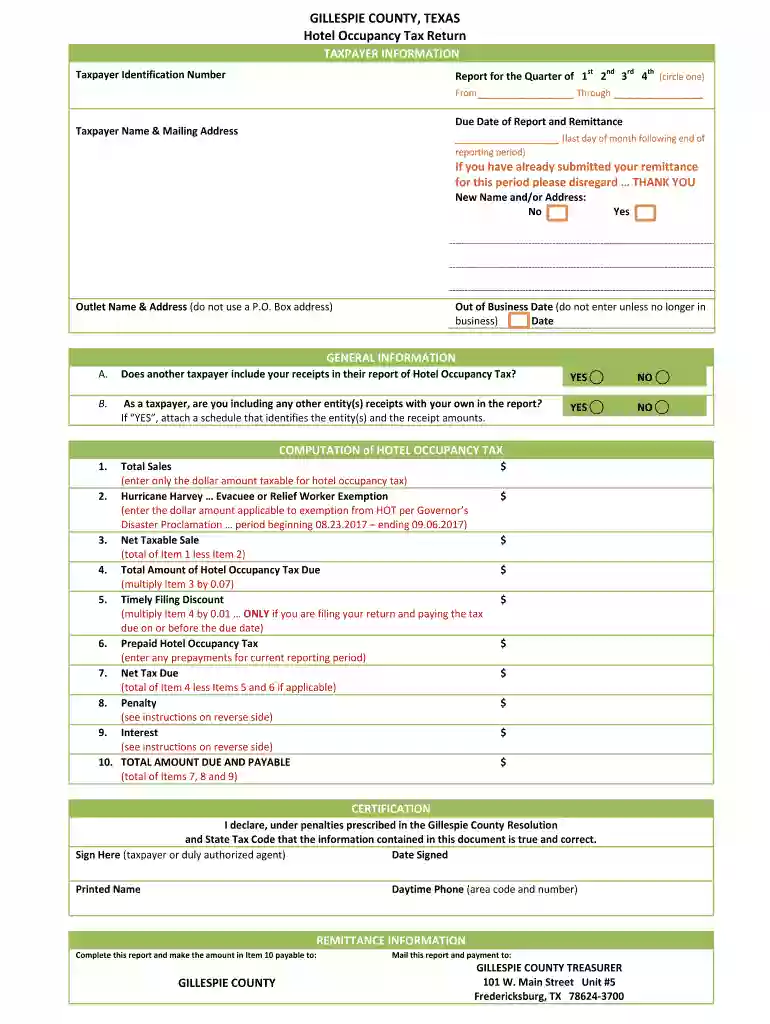
The "Hotel Tax Gillespie" refers to the hotel occupancy tax return form used specifically in Gillespie County, Texas. This form is essential for hotel operators within the county to report and remit the local hotel occupancy tax to the relevant authorities. The tax applies to charges for lodging provided to guests and is crucial in supporting local infrastructure and community services.
Key Elements:
- Taxpayer Information: The form captures essential details about the lodging entity, such as name, address, and tax identification number.
- Tax Computation: This involves calculating the taxable amount based on room sales, exemptions, and the applicable tax rate.
How to Use the Hotel Tax Gillespie
This form is utilized primarily by hotel operators in Gillespie County to report taxable sales and remit the hotel occupancy tax accurately.
- Gather Required Information: Include sales records, exemption documentation, and previous tax payments.
- Complete Tax Computation: Use the form sections to calculate total taxable sales, subtract exemptions, and determine the total tax due.
- Signature Verification: Ensure that a responsible party signs the form, verifying the accuracy of the reported information.
Steps to Complete the Hotel Tax Gillespie
Successfully completing this form involves a systematic approach:
- Initiate the Form: Start by filling out the basic taxpayer information.
- Calculate Tax Due: Follow the form's prompts to derive the total taxable sales and subtract any applicable exemptions.
- Verification and Submission: Include your signature to authenticate the form's information before submission.
Considerations:
- Ensure Accuracy: Double-check calculations and data entries to prevent errors.
- Review Exemptions: Verify that claimed exemptions comply with relevant criteria.
Who Typically Uses the Hotel Tax Gillespie
This form is necessary for various entities operating in Gillespie County's hospitality sector:

- Hotel Operators: Mandatory for all hotels, motels, and similar lodging establishments.
- Short-term Rental Managers: Applies to rental platforms such as Airbnb hosting properties in the county.
- Property Management Firms: Firms managing multiple accommodations must comply with filing requirements.
Important Terms Related to Hotel Tax Gillespie
Understanding key terminology helps clarify the form's requirements:
- Taxable Sales: The total revenue from room rentals subject to taxation.
- Exemptions: Specific lodging sales not subject to the hotel occupancy tax, such as long-term stays over 30 days.
- Penalty and Interest: Fees incurred due to late filing or payment of taxes.
Legal Use of the Hotel Tax Gillespie
Strict legal guidelines govern the use of hotel occupancy tax forms:
- Form Compliance: Ensure adherence to local and state regulations when completing the form.
- Data Privacy: Maintain confidentiality and security of guest information used for reporting purposes.
Legal Consequences:
- Penalties for Non-Compliance: Failing to file or underreport taxes can lead to fines and legal action.
Penalties for Non-Compliance
Adhering to deadlines and form requirements is crucial to avoid penalties:
- Late Payment of Taxes: Subject to a penalty, often calculated as a percentage of the tax due.
- Failure to File: Additional fines may be imposed for not submitting the form on time.
Reduction or Abatement:
- Penalty Appeals: In certain cases, taxpayers may appeal to have penalties reduced if they can demonstrate reasonable cause.
Filing Deadlines / Important Dates
Meeting filing deadlines is essential for compliance and to avoid penalties:
- Quarterly Deadlines: Typically, taxes should be reported and remitted quarterly, aligning with specific calendar deadlines.
- Annual Reconciliation: Some jurisdictions may require annual reporting to reconcile any discrepancies.
Key Considerations:
- Payment Schedules: Be aware of any differences between state and local deadlines to ensure timely compliance.
- Extension Policies: Understand options available for filing extensions if necessary.
Form Submission Methods (Online / Mail / In-Person)
The form offers several avenues for submission:
- Online Submission: Many entities provide an online portal for quick and efficient filing, often offering confirmation of receipt.
- Mail-in Option: Traditional filing through postal services, which might require additional processing time.
- In-Person Filing: Available at designated county offices, where assistance is often provided to ensure form accuracy.
Advantages:
- Online Convenience: Streamlines the process with immediate submission confirmation.
- In-Person Support: Provides personalized help for complex filing situations.