







Understanding Financial Affairs for Non-Individuals
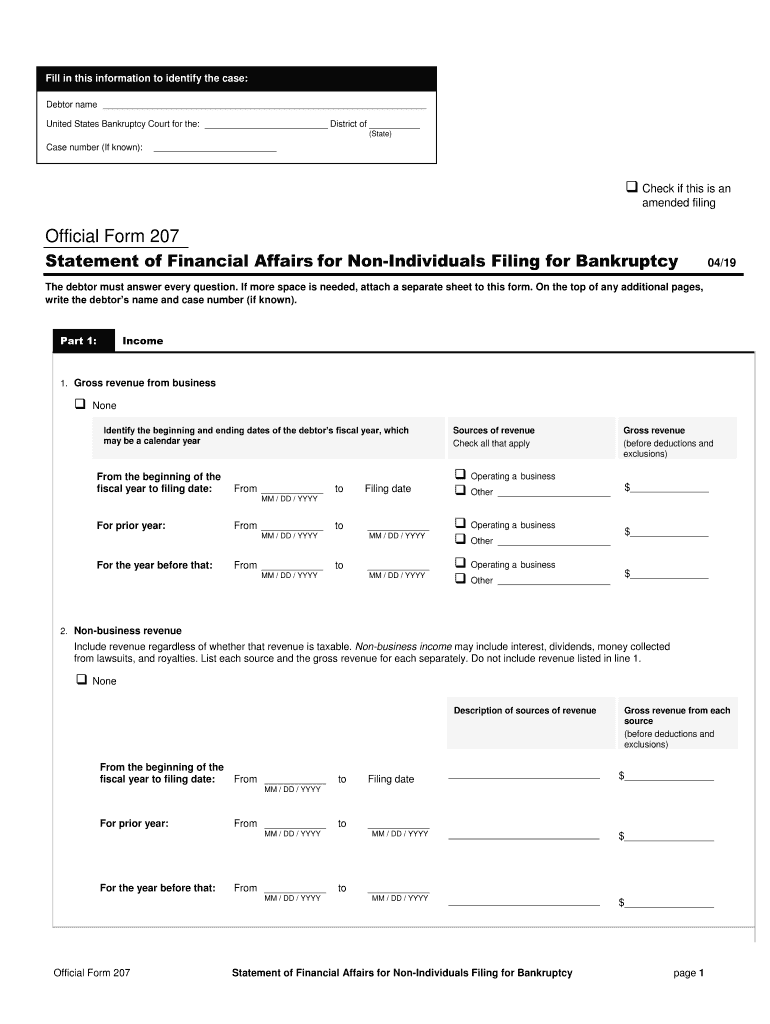
The Official Form 207, better known as the Statement of Financial Affairs for Non-Individuals Filing for Bankruptcy, requires businesses to disclose detailed financial information. This document plays a critical role in capturing the debtor's financial history and activities before seeking bankruptcy protection.
How to Utilize the Financial Affairs Form
Businesses facing financial difficulties may need to use this form to provide transparency in bankruptcy proceedings. The document demands a thorough disclosure of various financial aspects such as income sources, transactions, and legal obligations. This ensures that creditors and the court have a complete understanding of the debtor's financial condition.
Detailed Record Keeping
- Income Sources: Businesses must list all revenue streams, including any unusual income.
- Transfer of Assets: Report any significant asset transfers made before the filing.
- Legal Information: Include ongoing or past litigation, detailing any outcomes that impact finances.
Example Scenarios
Consider a corporation with multiple subsidiaries. Each entity must file its own Statement of Financial Affairs, presenting a clear and separate view of its financial state. This practice avoids complications during consolidation and ensures precise reporting.
Steps to Complete Official Form 207
Completing the form requires accurate and comprehensive financial records. Here is a streamlined process to guide businesses:
- Collect Financial Data: Gather all financial transactions, including accounts payable and receivable, and bank statements.
- Review Legal Obligations: Identify any lawsuits or outstanding judgments that need inclusion.
- Compile Transfers: List all significant asset disposals or changes in ownership.
Including All Parties
Ensure all relevant stakeholders within the organization, such as accountants and legal advisors, are part of the preparation team to provide accurate information.
Required Documents for Submission
The form demands various supplementary materials to support claims and disclosures made by an entity:
- Financial Statements: Recent balance sheets and cash flow statements.
- Tax Documents: Prior year tax returns for validation.
- Contracts and Agreements: Any binding contracts that affect financial obligations.
Legal Implications and Consequences
Filing inaccuracies can lead to serious legal consequences. Non-disclosures or false information may result in penalties, including fines or the dismissal of bankruptcy petitions. Businesses must approach this filing with thoroughness and precision.
Key Elements of the Financial Affairs Document
Several vital sections form the backbone of this document:
- Asset Transfers: Details about the transfer of assets in the preceding two years.
- Income Details: Comprehensive data on all sources of income.
- Third-Party Transactions: An outline of payments or other financial obligations to key business partners or subsidiaries.
Penalties for Non-Compliance
An incomplete or erroneous filing can attract severe ramifications. This includes monetary penalties, potential charges of bankruptcy fraud, or the denial of bankruptcy protection, underscoring the importance of diligence in form preparation.
Variants and Digital Options
While the primary form remains consistent, there are digital submission options. Electronic filing through secure portals often streamlines the approval process, offering a faster review time and fewer errors attributed to manual entry.
Integration with Existing Systems
Businesses using financial software such as QuickBooks can export vital data into forms easily, simplifying preparation while reducing manual entry errors. Ensure compatibility with your current systems to enhance efficiency.
Businesses undergoing financial distress can leverage the Statement of Financial Affairs to provide transparency, compliance, and a thorough financial picture, critical during complex bankruptcy proceedings. This ensures all stakeholders have the necessary insights to participate knowledgeably in the outcome.




