







Detailed Breakdown of Cell Organelles and Their Functions
Overview of Cell Organelles
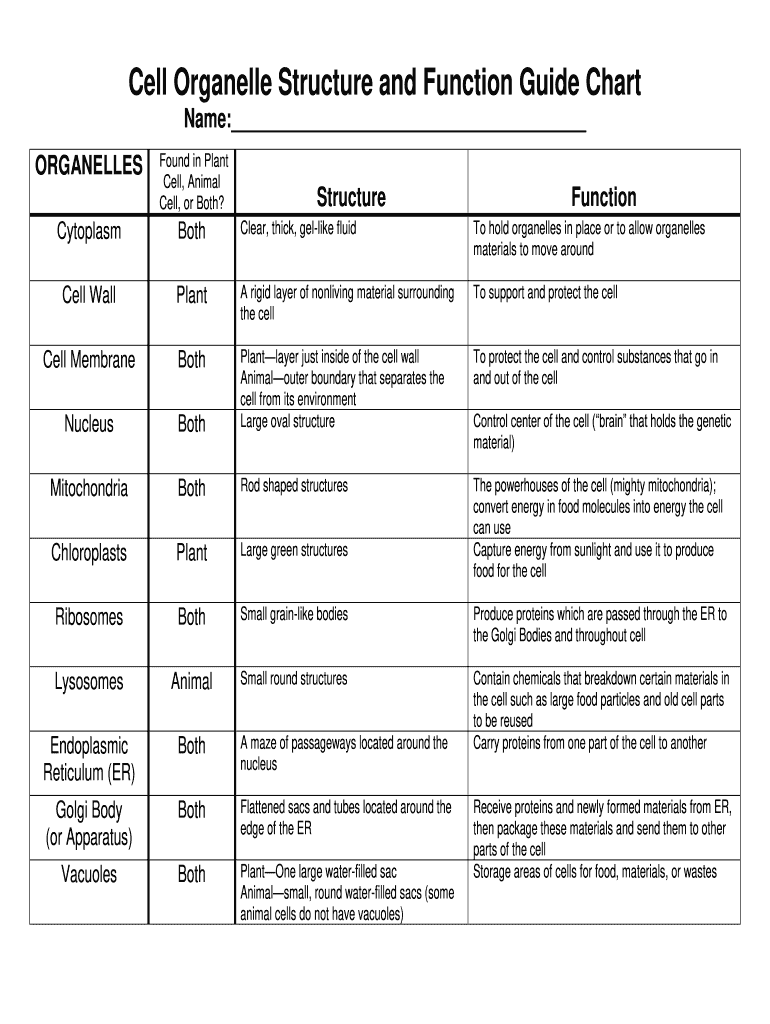
Cell organelles are specialized structures within cells that perform distinct functions necessary for cellular operation and survival. In both plant and animal cells, organelles play critical roles, contributing to processes such as energy production, waste management, and synthesis of biomolecules. Understanding these organelles is vital for studying cellular biology and overall life sciences.
Major Organelle Functions
- Nucleus: Often referred to as the control center of the cell, the nucleus houses DNA and is responsible for regulating gene expression and storing the hereditary information necessary for cell replication.
- Mitochondria: Known as the powerhouse of the cell, mitochondria generate adenosine triphosphate (ATP), which is used as energy by the cell. They are also involved in metabolic processes, including the citric acid cycle.
- Ribosomes: These organelles are the sites of protein synthesis. They can be found floating freely in the cytoplasm or attached to the endoplasmic reticulum, translating messenger RNA into amino acid chains to form proteins.
- Endoplasmic Reticulum (ER): The ER is divided into rough and smooth types. Rough ER is studded with ribosomes and is involved in protein synthesis and modification, while smooth ER is associated with lipid synthesis and detoxification processes.
- Golgi Apparatus: Often referred to as the cell's shipping center, the Golgi apparatus modifies, sorts, and packages proteins and lipids for secretion or delivery to other organelles.
Complete List of Common Cell Organelles
- Cell Membrane: Protects the cell and controls the movement of substances in and out.
- Lysosomes: Contains digestive enzymes that break down waste materials and cellular debris.
- Vacuoles: Storage organelles in plant cells that hold nutrients, waste products, and maintain turgor pressure.
- Chloroplasts (plant cells only): Sites of photosynthesis that convert solar energy into chemical energy using chlorophyll.
Cell Organelles in Plant vs. Animal Cells
Understanding the differences between plant and animal cells showcases organelles that are unique to specific cell types. For example:
- Cell Wall (plant cells): A rigid layer that provides structure and support, absent in animal cells.
- Chloroplasts (plant cells): Essential for photosynthesis, enabling plants to convert light energy into glucose.
Functions of Organelles in Cellular Processes
Each organelle's function is integral to the overall health and operation of the cell:
- Energy production by mitochondria and chloroplasts sustains cellular activities.
- Protein synthesis through ribosomes and ER is crucial for growth and repair.
- Waste processing via lysosomes helps in maintaining cellular hygiene.
Practical Examples of Organelles' Functions
In real-world scenarios, understanding organelle functions can affect fields such as medicine and biotechnology. For instance, knowledge of mitochondria is essential in studying metabolic diseases, while research on chloroplasts can lead to advancements in renewable energy through bioengineering.
Educational Resources in PDF Format
Accessing a PDF featuring a comprehensive list of cell organelles and their functions can enhance learning. These resources typically include diagrams and charts for visual learners and can serve as study guides for biology courses.
Summary of Key Cell Organelles
Here is a concise list of the primary organelles, including both plant and animal cells, along with their corresponding functions:
- Nucleus – Genetic material storage and regulation.
- Mitochondria – ATP production and energy metabolism.
- Ribosomes – Protein synthesis.
- Endoplasmic Reticulum – Protein and lipid synthesis.
- Golgi Apparatus – Protein and lipid modification and transport.
- Lysosomes – Waste digestion and recycling.
- Vacuoles – Storage and structural support in plants.
- Chloroplasts (only in plant cells) – Photosynthesis.
Understanding these organelles and their functions can provide a solid foundation for students and professionals in the fields of biology, medicine, and related disciplines.




