







Definition and Meaning
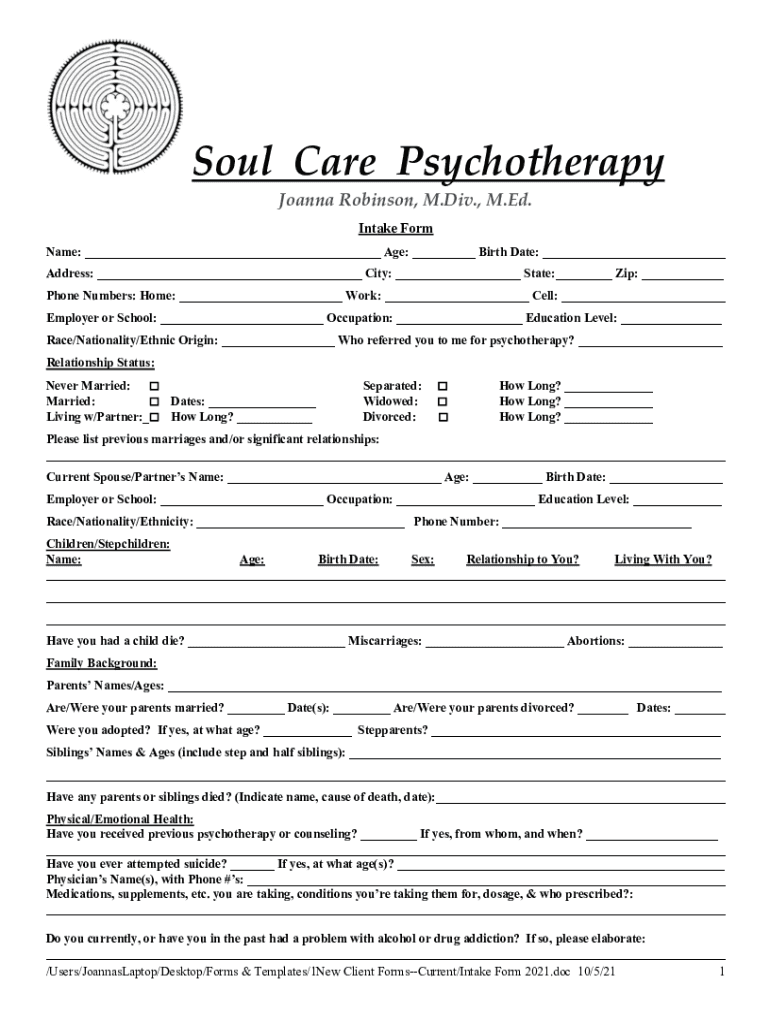
The "Welcome to Soul Care Psychotherapy" form serves as an intake document specifically designed for clients at Soul Care Psychotherapy. Developed by Joanna Robinson, it facilitates the collection of essential information from clients to better understand their concerns, goals, and backgrounds in preparation for therapy sessions. This form delves into various aspects of a client's life, such as their demographics, family history, health background, previous mental health treatments, and spiritual beliefs, ensuring a holistic approach to therapeutic care.
Key Components of the Form
- Demographics: Collects basic personal information, including age, gender, and contact details.
- Relationship Status: Asks about current relationship situations, offering context on social support systems.
- Family Background: Reveals family history that could influence the client's mental health.
- Health History: Focuses on past and present health conditions that may impact therapy.
- Previous Treatment: Reviews any earlier mental health treatments or interventions.
- Spiritual Beliefs: Considers spiritual perspectives as part of a comprehensive care approach.
How to Use "Welcome to Soul Care Psychotherapy"
The completion of the Soul Care Psychotherapy form requires careful consideration and honesty to ensure effective treatment planning. Clients are encouraged to provide thorough responses, reflecting on their personal histories and current situations. This information guides therapists in tailoring specific therapeutic interventions.
Step-by-Step Usage
- Fill Out Personal Information: Start with the demographics section by providing accurate personal details.
- Detail Relationship Status: Describe your current relationship status to help contextualize emotional support networks.
- Provide Family Background: Share insights into your family dynamics and history.
- Health History Documentation: List any medical and mental health conditions, past diagnoses, and treatments.
- Reflect on Spiritual Beliefs: Offer details on spiritual practices or beliefs, as they can influence therapy preferences.
Steps to Complete the Form
This section outlines a systematic approach to completing the intake form, ensuring all information is captured accurately and efficiently.
- Gather Necessary Documents: Before beginning, collect any items needed for reference, such as medical records or prior therapy notes.
- Allocate Time for Reflection: Set aside uninterrupted time to thoughtfully consider each question.
- Use the Guide: Refer to the accompanying instructions, if available, for clarity on complex sections.
- Review Responses: After completing the form, double-check answers for accuracy and completeness.
- Submit Securely: Depending on the intake process of Soul Care Psychotherapy, submit the form via secure online portals or in person.
Why Use This Form?
The Soul Care Psychotherapy intake form is pivotal in facilitating effective treatment plans. It provides therapists with comprehensive insights into a client's background, ensuring customized therapeutic strategies tailored to individual needs. By encompassing various life aspects, the form fosters a holistic understanding essential for therapeutic success.
Benefits
- Personalized Therapy: Ensures the development of individualized treatment plans.
- Efficient Communication: Establishes a foundation for open dialogue between client and therapist.
- Holistic Insight: Considers diverse factors that contribute to mental health, from family to spirituality.
Who Typically Uses the Form?
Targeted primarily at new clients of Soul Care Psychotherapy within the United States, this form caters to individuals seeking therapeutic services. It is suitable for anyone requiring mental health support and willing to engage in a collaborative treatment planning process.


Common User Profiles
- Individuals Facing Life Transitions: Those experiencing significant changes may benefit from therapy.
- People with Previous Mental Health Issues: Those re-entering therapy can provide context from past treatments.
- Clients with Spiritual Considerations: Individuals for whom spiritual beliefs play a role in personal healing.
Legal Use of the Form
The form's legal compliance ensures that clients' privacy is prioritized, adhering to confidentiality standards outlined by health information regulations like HIPAA in the United States. By doing so, it maintains a secure environment for clients to share sensitive information.
Privacy and Security
- Confidentiality Agreements: Protects client data through secure sharing and storage protocols.
- Informed Consent: Ensures clients are aware of how their information will be used.
Key Elements of the Form
Understanding the pivotal components of the intake form can improve the quality and efficiency of information gathering. These elements capture the breadth and depth of a client's circumstances.
Core Sections
- Comprehensive Demographic Information: Vital for identifying socio-economic factors influencing therapy.
- Detailed Health Background: Crucial for recognizing health-related barriers or facilitators to therapy.
- Therapeutic Goal Setting: Helps identify desired outcomes and measurable objectives for treatment.
Eligibility Criteria
Clients seeking to use this form should be those looking to initiate or continue mental health treatment with Soul Care Psychotherapy. The completion of this form is a prerequisite for new clients before commencing therapy sessions. It ensures the intake process is thorough and reflective of personalized needs.

Requirements
- Age: Must be at least 18 years old to self-complete; parents or guardians must complete for minors.
- Residency: Primarily for clients residing in the United States.
- Willingness to Share: Openly provide all requested information for optimal therapeutic engagement.




