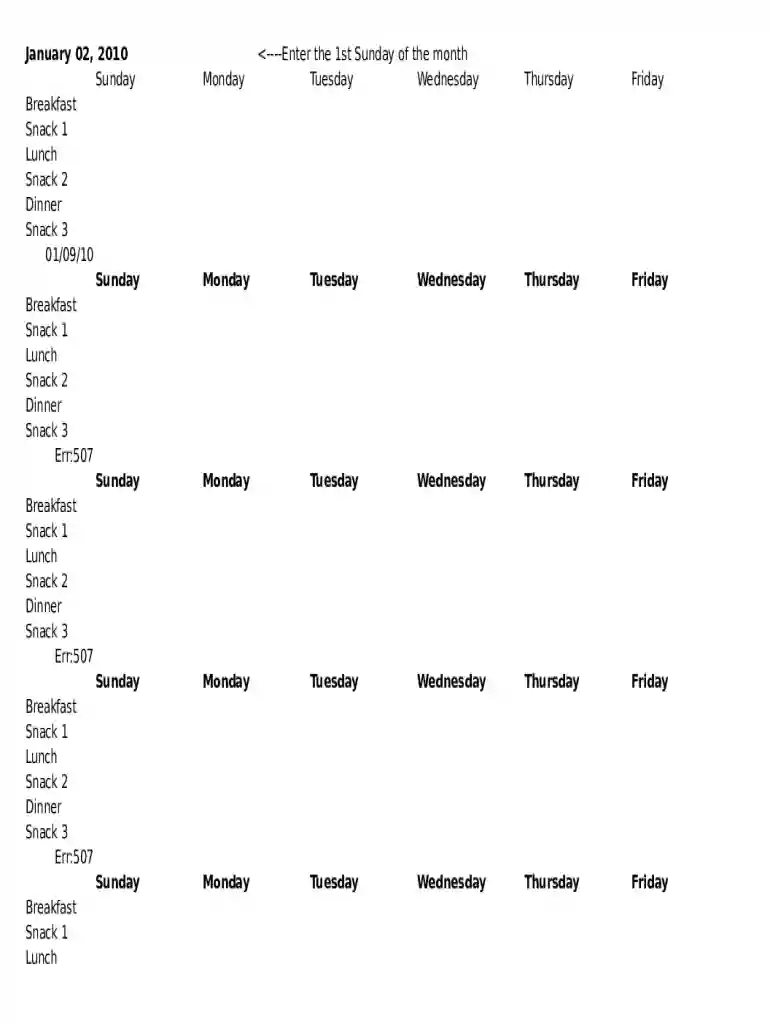
Definition and Purpose of a Monthly Meal Planner
A monthly meal planner is a structured tool designed to help individuals or families organize their meals across a month. Its primary purpose is to streamline meal preparation by laying out breakfasts, lunches, dinners, and snacks in advance, effectively managing time and resources. The planner serves to reduce food waste, ensure balanced nutrition, and manage dietary needs by setting a clear plan for each day’s meals.
Key Elements of a Monthly Meal Planner
When constructing a monthly meal planner, certain key elements should be included to maximize its effectiveness:
- Date and Day Indicators: Clearly mark each day of the month to avoid confusion.
- Meal Categories: Include separate sections for breakfast, lunch, dinner, and snacks to ensure comprehensive coverage.
- Nutritional Information: Provide space for noting the calories or nutritional content of meals.
- Special Dietary Needs: Designate areas for any allergies or specific dietary requirements, like gluten-free or vegan.
- Shopping List: Integrate a section where ingredients needed for the meals can be listed, streamlining grocery shopping.
- Notes Section: A space for additional remarks, such as meal preferences or ideas for future meal plans.
Steps to Complete a Monthly Meal Planner
- Assess Dietary Requirements: Begin by identifying any specific dietary restrictions or preferences.
- Plan Meals in Advance: Decide on weekly themes or cuisines (e.g., Italian week, vegetarian week) to bring variety.
- Balance Nutrition: Ensure each day provides a balanced mix of proteins, carbs, and fats.
- List Ingredients: Create a grocery list for each week, based on planned meals.
- Review and Confirm: Double-check to ensure all meals are covered and the shopping list is complete.
How to Use the Monthly Meal Planner
Using a monthly meal planner effectively involves:
- Weekly Review: Set aside time each week to review and update the planner.
- Adaptability: Stay flexible and make adjustments as needed based on schedule changes or leftover ingredients.
- Tracking and Adjustments: Keep track of meals that are well-received or cause issues, and adjust future plans accordingly.
- Incorporating Leftovers: Plan for leftovers to maximize resources and minimize waste.
Who Typically Uses a Monthly Meal Planner
This tool is beneficial to a wide range of individuals and groups:
- Busy Professionals: Individuals balancing work and home life who seek to save time.
- Families: Households looking to maintain balanced diets for children and adults alike.
- Fitness Enthusiasts: Those tracking their nutrition closely to achieve specific health goals.
- Elderly or Caregivers: Older adults or their caregivers managing dietary needs and ensuring consistent meals.
Examples of Using a Monthly Meal Planner
Consider practical scenarios where a monthly meal planner proves invaluable:
- Busy Household Scenario: A family with kids can plan school lunches and dinners, ensuring diversity and nutrition.
- Fitness-focused Individual: A person training for a marathon may include protein-rich meals to aid recovery and strength building.
- Budget-Conscious Planner: An individual aiming to cut down on expenditure can use the planner to avoid impulse buys and adhere strictly to needed groceries.
Important Terms Related to Monthly Meal Planning
Understanding the terminology associated with meal planning is vital:
- Pescatarian: Diet including fish but no other meats.
- Meal Prep: Preparing meals in advance for longer shelf life and reduced daily workload.
- Macros: Macros refers to macronutrients—carbs, fats, and proteins—essential dietary components.
State-Specific Considerations for Meal Planning
While meal planning largely pertains to personal and family decision-making, some aspects may vary state-by-state:
- Local Cuisine and Ingredients: Certain areas may offer unique local produce which can influence meal variety.
- Seasonal Variations: Depending on climate, the availability of ingredients may differ, affecting what can be included in meals.
- Cultural Practices: Some states have predominant cultural influences that might encourage specific meal types due to population demographics.
By addressing these aspects, the monthly meal planner becomes an effective tool to manage diet, nutrition, and budget in a comprehensive manner.