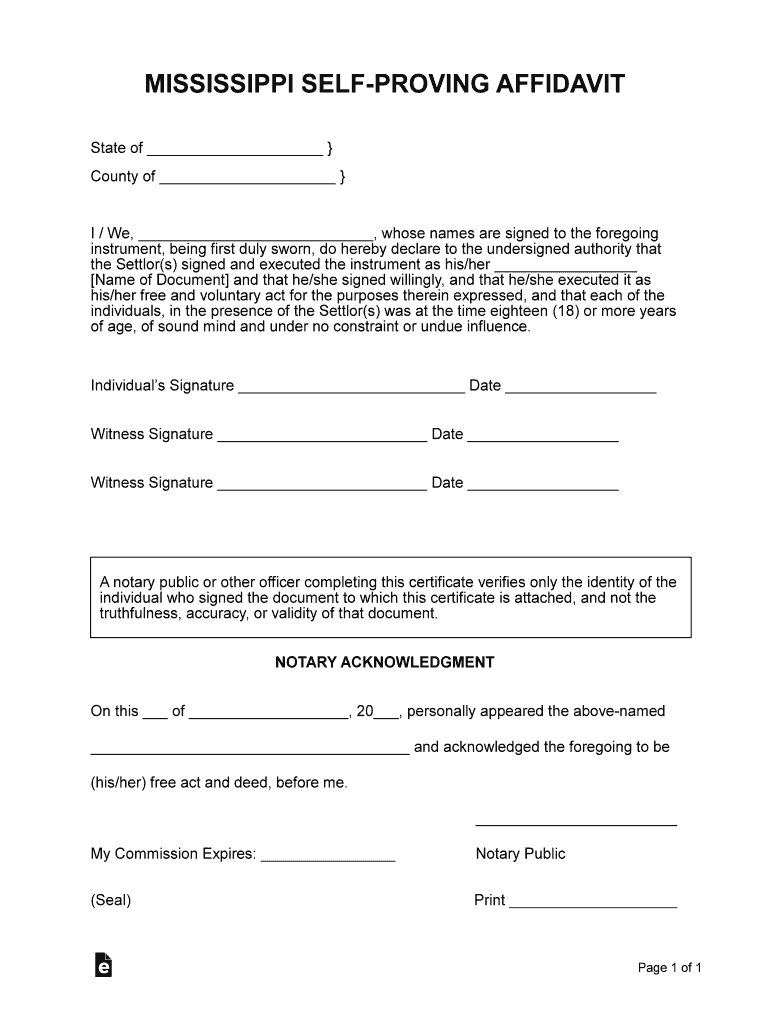







Definition & Meaning
The Washington Self-Proving Affidavit Form is a legal document used in the state of Washington as a sworn statement that affirms the validity of a will. It is signed by the testator and witnesses in the presence of a notary public. This affidavit simplifies the probate process by eliminating the need for the witnesses to testify in court about the will's authenticity after the testator's death.
How to Use the Washington Self-Proving Affidavit Form
To use the Washington Self-Proving Affidavit Form effectively, the document must accompany the will at the time of signing. The testator and witnesses should all meet in the presence of a notary public. During this meeting, the testator declares the document as their last will, and witnesses confirm their observation of the signing.
Steps to Use the Form
- Collect all necessary parties: Gather the testator, two witnesses, and a notary.
- Prepare the will: Ensure the will is complete and ready to be signed.
- Notarize the form: Execute the affidavit with the notary validating the signatures.
Key Elements of the Washington Self-Proving Affidavit Form
The Washington Self-Proving Affidavit Form includes several crucial components to ensure its legal effectiveness:
- Testator Statement: Confirmation by the person making the will that it's their testament.
- Witness Acknowledgment: Statements from witnesses affirming they watched the testator sign the will.
- Notary Public Section: Official acknowledgment by a notary public verifying the identities of all signers and affirming the execution of the document.
Steps to Complete the Washington Self-Proving Affidavit Form
Completing the Washington Self-Proving Affidavit Form involves a series of methodical steps to ensure legal compliance:
- Drafting the Will: Finalize the will before attaching the affidavit.
- Gather Signatories: Have the testator, two witnesses, and a notary present.
- Identity Verification: The notary verifies the identities of all parties.
- Signing in Order: The testator signs first, followed by witnesses, under the notary's supervision.
- Notary Certification: The notary then signs, adding their seal to authenticate the process.
Important Terms Related to Washington Self-Proving Affidavit Form
Understanding specific terminology within the Washington Self-Proving Affidavit Form is essential for accurate completion:
- Testator: The person who has created the will and whose estate is being discussed.
- Witness: Individuals who watch the signing of the will and affirm its legitimacy.
- Notary Public: A state-licensed official who validates signatures and administers oaths.
State-Specific Rules for the Washington Self-Proving Affidavit Form
Washington state's laws govern the creation and execution of self-proving affidavits within wills. Key rules include:
- Witness Requirement: Two witnesses must be present at the time of signing.
- Notarization Requirement: A notary public must officiate the signing process.
- Conformity with State Laws: The form must comply with Washington's execution laws to be valid.
Legal Use of the Washington Self-Proving Affidavit Form
In legal practice, a self-proving affidavit is utilized to streamline the probate process:
- Probate Court Reduction: The affidavit can minimize the need for witnesses to appear in court.
- Legal Assurance: Provides a verified assurance that the will is legitimate and executed per the testator's wishes.
- Efficiency in Estate Processing: Facilitates a smoother transition through probate proceedings due to pre-confirmed witness testimonies.
Examples of Using the Washington Self-Proving Affidavit Form
The use of a Washington Self-Proving Affidavit Form is advantageous in several scenarios:
- Complex Estates: For large or complex estates, utilizing a self-proving affidavit reduces potential disputes over the will's validity.
- Family Arrangements: When family members are witnesses, having a notarized affidavit supports the impartiality and legality of their testimonies.
- Out-of-State Heirs: Simplifies the execution process for heirs who do not reside in Washington, as the need to call witnesses to court is removed.
Form Submission Methods
Although primarily executed in person, the final will and affidavit documents might be stored or filed with legal counsel or estate planning offices:
- In-Person Notary Services: Completing the affidavit must occur in the presence of a notary.
- Storage Solutions: After notarization, the document should be stored in a secure location such as with an estate lawyer or in a safe deposit box.
- Digital Copy Management: While maintaining physical integrity, consider storing digital copies securely for back-up purposes.
Who Typically Uses the Washington Self-Proving Affidavit Form
The Washington Self-Proving Affidavit Form is primarily used by individuals looking to ensure their last will and testament is legally validated and streamlined for probate:
- Estate Planners: Professionals assisting clients in preparing their final documents.
- Individuals Creating a Will: Those seeking to clarify and confirm their final wishes legally.
- Attorneys Specializing in Elder Law: Lawyers facilitating legal compliance in estate planning.