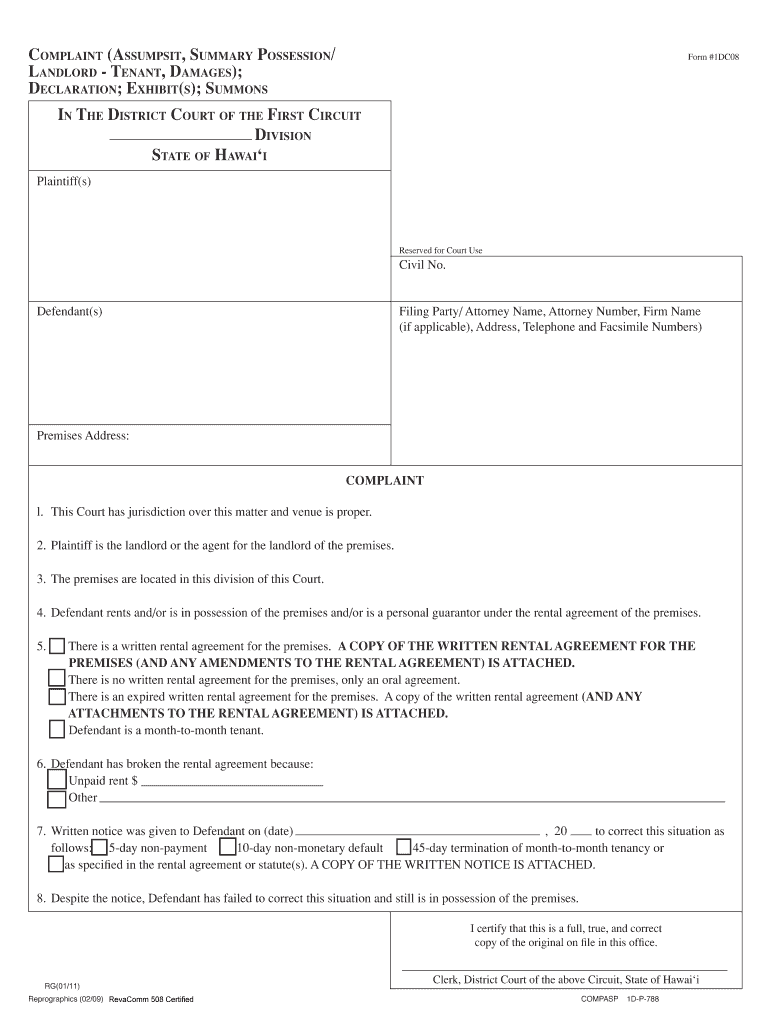







Definition & Meaning
The "district court rules of civil procedure - Hawaii State" refer to a set of legal guidelines and protocols that govern the process of civil litigation in district courts within Hawaii. These rules outline the procedures parties must follow when filing lawsuits, responding to legal actions, and navigating the trial process. They provide detailed instructions on the structure and management of civil cases, aiming to ensure fairness, consistency, and efficiency throughout judicial proceedings. Understanding these rules is crucial for individuals and entities involved in legal disputes or those looking to represent themselves or their interests in court.
Key Elements of the District Court Rules of Civil Procedure - Hawaii State
The Hawaii State district court rules of civil procedure include several critical components that define the framework of legal processes:
- Filing Procedures: Guidelines on how to properly file a lawsuit, including required documents, submission formats, and deadlines.
- Service of Process: Instructions for delivering legal documents to involved parties, ensuring they are formally notified of legal actions.
- Discovery Rules: Regulations governing the exchange of information and evidence between parties to prepare for trials.
- Trial Procedures: Detailed steps on conducting trials, including the order of proceedings, presentation of evidence, and witness examination.
- Appeals Process: Directions on how to appeal court decisions, including time frames and procedural requirements.
These elements work collectively to create a structured legal environment where parties can resolve disputes efficiently.
How to Use the District Court Rules of Civil Procedure - Hawaii State
To effectively use the Hawaii State district court rules of civil procedure, individuals should:
- Familiarize with the Rules: Obtain a copy of the rules to understand their scope and application.
- Identify Relevant Sections: Focus on specific sections of the rules that apply to your case.
- Consult Legal Professionals: Seek advice from attorneys or legal advisors for clarification and guidance.
- Apply the Rules: Follow the procedures outlined in the rules meticulously throughout your case.
In case of uncertainty or disagreement over interpretations, it may be necessary to consult with legal professionals who specialize in Hawaii State civil procedures.
Important Terms Related to the District Court Rules of Civil Procedure - Hawaii State
Understanding key legal terminology associated with these rules is essential:
- Plaintiff: The party who initiates a lawsuit by filing a complaint.
- Defendant: The individual or entity being sued or accused in a court of law.
- Motion: A formal request made to the court asking for a specific ruling or order.
- Summary Judgment: A judgment rendered by the court without a full trial when there are no disputed facts.
- Adjudication: The legal process of resolving a dispute or deciding a case.
These terms help participants comprehend the legal processes and communicate effectively in court settings.
Legal Use of the District Court Rules of Civil Procedure - Hawaii State
The legal use of these procedural rules ensures the lawful conduct of civil litigation. They serve as the foundation for:
- Ensuring Fairness: By providing a clear framework for legal proceedings, these rules aim to protect the rights of all parties involved.
- Providing Structure: They offer systematic procedures to manage cases, reducing confusion and potential errors.
- Facilitating Justice: By mandating the sharing of information and evidence, they help courts deliver just outcomes.
Compliance with these rules is mandatory for all parties involved in civil litigation within Hawaii's district courts.
Steps to Complete the District Court Rules of Civil Procedure - Hawaii State
- Review the Rules: Begin by thoroughly reading and understanding the rules relevant to your case type.
- Prepare Required Documents: Gather all necessary paperwork and evidence as outlined in the procedural requirements.
- File the Case: Submit the initial complaint with the court, adhering to format and content guidelines.
- Serve the Defendants: Ensure that the defendants receive all required legal documents.
- Engage in Discovery: Participate in the exchange of evidence and information with the opposing party.
- Attend Hearings: Be present at all scheduled court appearances and comply with procedural directives.
Adhering to these steps helps ensure that the litigation process proceeds smoothly and within legal boundaries.
State-Specific Rules for the District Court Rules of Civil Procedure - Hawaii State
Hawaii State has specific procedural rules that may differ from those in other states, including:
- Local Court Requirements: Each district court may have additional local rules or amendments that need to be followed.
- State-Specific Deadlines: Time frames for filing and responding to motions can vary from federal standards.
- Cultural Considerations: Courts may consider aspects unique to Hawaii, like linguistic diversity or native Hawaiian rights.
Familiarity with these state-specific nuances is vital for legal practitioners and litigants in Hawaii.
Who Typically Uses the District Court Rules of Civil Procedure - Hawaii State
The rules are primarily used by:
- Lawyers and Legal Professionals: Attorneys rely on these rules to navigate the procedural aspects of litigation on behalf of clients.
- Self-Represented Litigants: Individuals choosing to represent themselves must adhere to these rules to ensure their case is heard.
- Judges and Court Staff: They enforce and interpret the rules to manage cases and render judicial decisions.
Understanding and applying these rules accurately is imperative for successful legal outcomes in Hawaii’s district courts.