
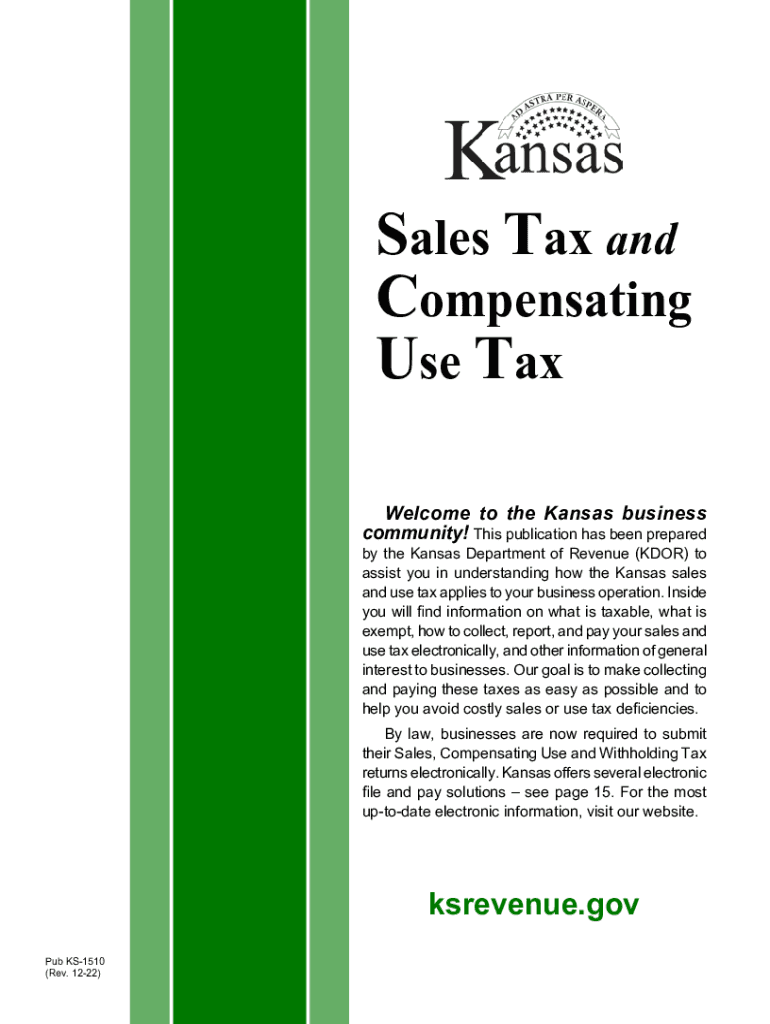







Overview of the Kansas Department of Revenue - Pub. KS-1525 Sales & Use Tax
The Kansas Department of Revenue's Publication KS-1525 serves as a comprehensive resource for understanding the intricacies of sales and use tax within the state. It provides essential guidance for businesses on their responsibilities concerning taxable and non-taxable transactions.
Steps to Complete the Publication KS-1525
-
Obtain the Publication: Access the KS-1525 form online through the Kansas Department of Revenue’s website or contact their office for a physical copy.
-
Understand Taxable Transactions: Familiarize yourself with what constitutes taxable versus exempt transactions as outlined in the publication.
-
Register Your Business: Ensure that your business is registered with the Kansas Department of Revenue for sales tax purposes, if applicable.
-
Accurately Report Transactions: Use the guidance in KS-1525 to correctly report sales and use taxes, applying exemptions where applicable.
-
File Electronically: Follow the instructions for electronic filing, ensuring timely submission according to your filing frequency.
How to Use Publication KS-1525
Businesses in Kansas can utilize the KS-1525 to ensure they comply with state sales and use tax laws. It includes detailed instructions on collecting, reporting, and remitting sales tax and highlights common exemptions. Businesses should regularly review it to stay informed about any changes or updates in tax regulations.
Key Elements of the Publication
- Taxable vs. Non-Taxable Sales: Defines which sales are subject to tax and which are exempt.
- Filing Frequency Requirements: Details on how often businesses must file their sales tax returns, which can vary based on sales volume.
- Registration Process: Steps for new businesses to register with the Department of Revenue.
- Electronic Filing Instructions: Guidance on using the state’s electronic filing system for sales tax.
Important Terms Related to Publication KS-1525
Certain key terms are essential for understanding KS-1525:
- Sales Tax: Tax imposed on the sale of goods and services.
- Use Tax: Tax on goods purchased outside the state for use within Kansas.
- Exemption Certificates: Documents that allow a purchaser to buy tax-exempt because the purchased goods are for resale or another exempt use.
Who Typically Uses Publication KS-1525
The primary users of KS-1525 include:
- Business Owners: Those responsible for the financial compliance of a business concerning sales and use tax.
- Accountants and Tax Professionals: Who need detailed information to assist clients in Kansas.
- New Businesses: Entering the Kansas market needing to understand state tax obligations.
State-Specific Rules in Publication KS-1525
Kansas has particular nuances compared to other states, such as specific exemptions and filing deadlines unique to the state. Businesses located or operating in multiple states should pay close attention to these state-specific rules to ensure compliance.
Legal Use and Compliance
Understanding and applying KS-1525 correctly helps ensure legal compliance with Kansas sales and use tax laws. Non-compliance can result in penalties, so accurate and timely use of this publication is crucial.
Filing Deadlines and Important Dates
KS-1525 highlights the importance of adhering to established tax filing deadlines. While the specific dates can vary, businesses must remain vigilant in tracking these deadlines to avoid penalties and interest charges.
Examples of Using Publication KS-1525
Consider a retail business that resides in Kansas and sells both online and in a physical store. By using KS-1525, they ensure all eligible online transactions are taxed correctly, manage exemption certificates for exempt sales, and consistently update their records to comply with state requirements.
Penalties for Non-Compliance
Failure to adhere to sales and use tax regulations as presented in KS-1525 can lead to financial penalties, interest charges, and potential legal action. This publication serves as a preventative guide to mitigate such risks.
Software Compatibility with KS-1525 Requirements
Businesses using accounting software such as QuickBooks can integrate the concepts from KS-1525 for automated tax compliance, ensuring accurate sales tax calculations and reporting are consistent with Kansas' tax laws.




