
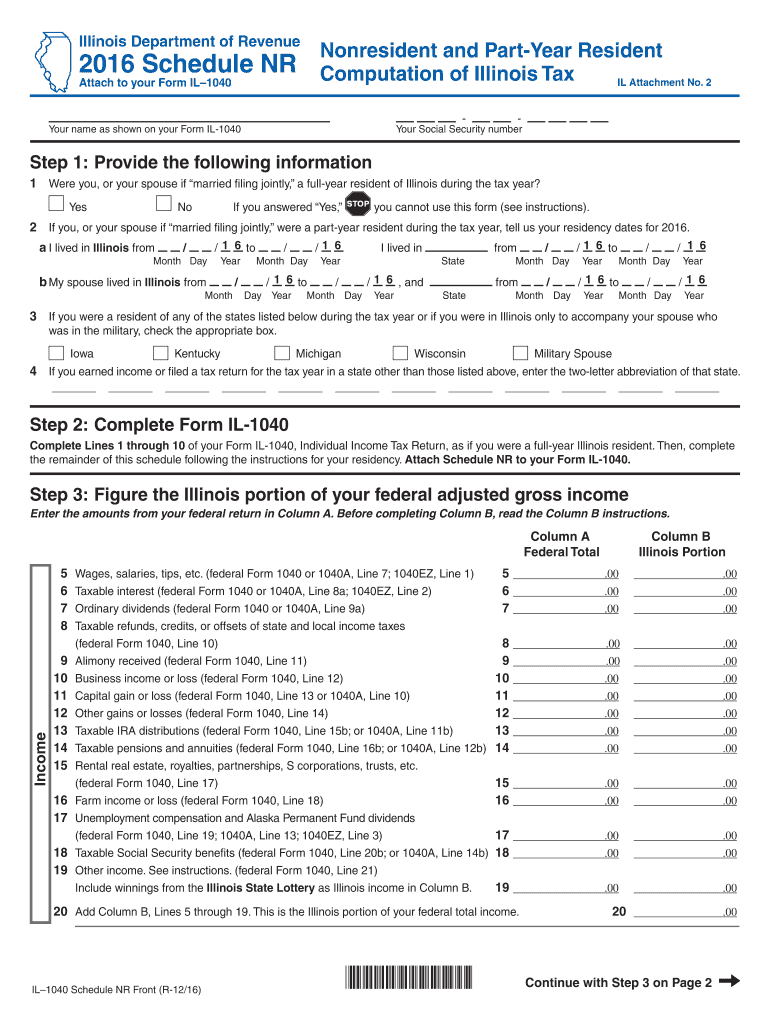







Definition & Meaning
The "Attach to your Form IL 1040" is an essential document for specific Illinois taxpayers, typically used to provide additional information that supports their main tax return, the IL-1040. This attachment may include schedules, worksheets, or forms that detail income, tax credits, or deductions relevant to an individual's financial situation during the tax year. It serves to complement the IL-1040 by offering comprehensive insights into the taxpayer's obligations and entitlements, ensuring accurate tax calculation and compliance with Illinois Department of Revenue requirements.
How to Use the Attach to your Form IL 1040
Understanding how to correctly use the "Attach to your Form IL 1040" is crucial for fulfilling your tax obligations. Generally, you will fill out the attachment with specific details not covered directly in the IL-1040. Examples include disclosures of non-taxable income, documentation for claimed deductions, or evidence of tax credits. After completing the form, ensure it is accurately filled out and cross-referenced with the relevant sections of your IL-1040. It is vital to submit these attachments alongside your main tax return to provide a complete financial picture to the state tax authorities.
Steps to Complete the Attach to your Form IL 1040
Completing the attachment involves several steps to ensure accuracy:
- Gather all relevant financial documents that might influence your tax situation, such as income statements or proof of deductions.
- Carefully read the form's instructions to understand the information required for each section.
- Enter data methodically, ensuring all figures align with those in your IL-1040.
- Review the completed form for errors, verifying that all necessary fields are filled.
- Keep a copy for your records before attaching it to your IL-1040 for submission.
Key Elements of the Attach to your Form IL 1040
Certain elements are central to the form's effectiveness in detailing your tax situation:
- Income Adjustments: Document any income adjustments such as non-taxable income or previously unreported earnings.
- Deductions and Credits: Record all applicable deductions and credits you are claiming, providing support documentation where necessary.
- Residency Information: If applicable, note residency changes or statuses that may affect your tax liability.
- Signatures and Dates: Ensure that all required signatures and dates are correctly placed to validate the form.
Filing Deadlines / Important Dates
The attachment is commonly due when your IL-1040 is submitted, usually by April 15th, unless extensions or changes have been announced. Taxpayers should remain aware of any state announcements regarding deadline modifications due to special circumstances like natural disasters or pandemics. Meeting these deadlines is vital to avoid penalties and ensure timely processing of your return and any potential refunds.
Who Typically Uses the Attach to your Form IL 1040
The attachment is primarily used by Illinois residents and part-year residents reporting state income taxes. Non-residents with Illinois-sourced income may also require this form. Common users include taxpayers with complex income streams, homeowners claiming property tax credits, and individuals claiming various state-specific tax credits and deductions. Businesses operating within Illinois might also necessitate an attachment when detailing income, deductions, and employee-related expenses.


Important Terms Related to Attach to your Form IL 1040
Familiarity with key terms enhances understanding and ensures the form is completed accurately:
- Adjusted Gross Income (AGI): The figure before state-specific deductions, crucial for computing state tax obligations.
- Standard Deduction: A predetermined amount that reduces taxable income, claimed in lieu of itemized deductions.
- Tax Credits: Specific, often state-provided reductions directly applied to tax owed.
- Non-refundable vs. Refundable Credits: Critical distinction affecting whether a credit impacts a tax refund.
IRS Guidelines
While the form is state-specific, federal guidelines influence how forms like the IL-1040 and its associated attachments are treated. The IRS stipulates documentation standards and record-keeping requirements that help ensure accurate federal and state reporting. Adhering to IRS advice on income reporting, deduction validation, and taxpayer identification can streamline the process of completing state tax forms.
Penalties for Non-Compliance
Failing to include necessary attachments or incomplete reporting can result in penalties. These might include fines, interest on unpaid taxes, or delayed processing of your state return. Understanding the importance of thorough documentation and meeting submission deadlines not only avoids these penalties but also facilitates smoother interactions with the Illinois Department of Revenue.




