
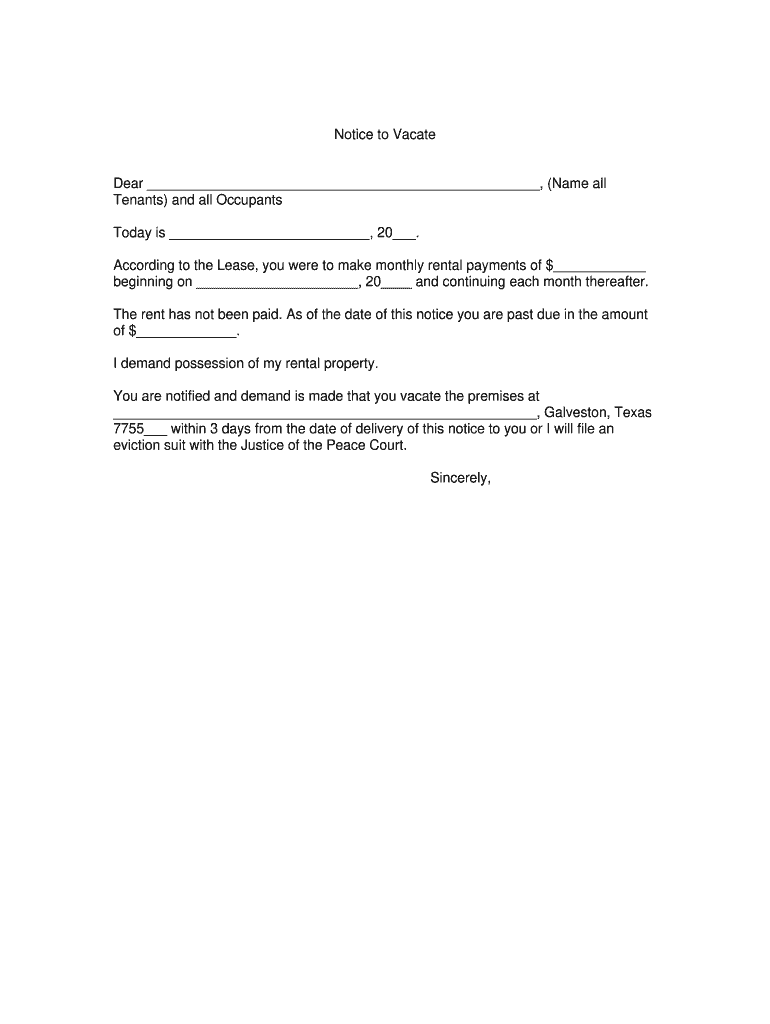







Definition and Meaning of a Notice to Vacate Letter in Texas
A notice to vacate letter in Texas is a formal document issued by a landlord to a tenant, requesting them to leave the rental property by a specified date. This letter serves as a communication tool to inform the tenant of the termination of their lease agreement, often due to reasons such as non-payment of rent, lease violations, or the expiration of a lease term. In Texas, the content and delivery method of a notice to vacate letter are guided by state laws, which aim to protect the rights of both landlords and tenants.
The notice can vary in length depending on the reason for termination. For instance, a three-day notice is typically issued for non-payment of rent, while a 30-day notice may be employed for month-to-month leases. The terms used in this context, including "eviction notice," "vacate notice letter," and "written notice to vacate," all pertain to this essential legal document that signifies a forthcoming change in tenancy.
Key Elements of a Notice to Vacate Letter in Texas
A properly constructed notice to vacate letter must contain several key elements to be legally enforceable in Texas:
-
Identification of Parties: Clearly state the landlord's and tenant's names and contact information.
-
Property Description: Include the complete address of the rental property.
-
Reason for Termination: Specify the grounds for the notice, such as overdue rent or lease expiration.
-
Notice Period: Indicate the deadline by which the tenant must vacate, adhering to Texas law regarding notice periods.
-
Delivery Method Proof: Document how the notice was delivered (via mail, hand delivery, etc.) to establish compliance with legal requirements.
-
Signature: The letter should be signed by the landlord or their representative to validate the notice.
By ensuring these elements are included, landlords can provide tenants with a clear understanding of the actions needed and maintain compliance with Texas regulations regarding tenant notifications.
How to Use the Notice to Vacate Letter in Texas
The notice to vacate letter serves several purposes beyond simply informing a tenant of their need to leave. It is a vital step in the eviction process should it become necessary. Here are some key points on how to effectively use this document:
-
Ensure Compliance with Texas Laws: Familiarize yourself with local and state laws to ensure that the notice adheres to the stipulated notice periods and reasons for termination. For example, the Texas property code may require a three-day notice for specific violations while allowing a longer notice for non-renewal scenarios.
-
Deliver the Notice Properly: Delivering the notice using an appropriate method is crucial. Methods typically include certified mail, hand delivery, or posting it conspicuously on the property. Each method has implications for proving receipt in potential future court proceedings.
-
Retain Copies for Records: Keep a copy of the notice and any delivery receipts as part of your records. This documentation can serve as evidence should the matter escalate to eviction proceedings.
-
Follow Up if Necessary: If the tenant does not respond or vacate by the specified date, be prepared to follow the legal eviction process, which may require filing a petition in a court.
By understanding these various facets of usage, landlords can more effectively communicate with tenants and reinforce the legal standing of their actions.
Steps to Complete the Notice to Vacate Letter in Texas
Creating an effective notice to vacate letter involves several essential steps:
-
Begin with the Date: Ensure the letter starts with the date it is written, establishing a clear timeline.
-
Title the Document: Label the document as a "Notice to Vacate Letter" prominently at the top to indicate its purpose.
-
Include Recipient Details: Add the tenant's full name and address to personalize the communication.
-
State the Grounds: Clearly state the reason for the notice, providing necessary details on how the tenant has failed to comply with the lease terms.
-
Specify the Timeframe: Outline the timeframe in which the tenant is expected to vacate the property according to Texas law. Be explicit about the last date for them to remain on the property.
-
Sign the Document: The landlord or an authorized representative should sign the letter to confirm its authenticity.
By following these steps, landlords can ensure the notice to vacate letter is clear, compliant, and effective in conveying the necessary information to tenants.
Legal Use of the Notice to Vacate Letter in Texas
Understanding the legal parameters governing the use of a notice to vacate letter is crucial for both landlords and tenants. Texas law outlines specific procedures that must be followed to generate a legally sound notice.
-
Adherence to Notice Periods: Depending on the circumstances, landlords must adhere to specific timeframes for notice delivery. For instance, a three-day notice is typically required for immediate eviction due to non-payment, whereas a general termination may require a minimum of thirty days.
-
Written Documentation: Texas law mandates that notices must be delivered in writing. Oral notifications do not hold legal weight in eviction proceedings.
-
Use of Appropriate Forms: Utilizing a standardized form, such as a Texas notice to vacate template, ensures that all legal language and requirements are met, reducing the likelihood of misunderstandings.
-
Documentation of Delivery: Landlords should document how and when the notice was delivered, as this may be necessary to prove during eviction proceedings.
Navigating these legal considerations not only protects landlords in the event of disputes but also provides tenants with clarity about their rights and obligations.
Examples of Using the Notice to Vacate Letter in Texas
There are various scenarios where a notice to vacate letter may be utilized in Texas, each reflecting different circumstances and legal implications:
-
Non-Payment of Rent: A landlord may issue a three-day notice to vacate letter if a tenant has failed to pay rent after the due date. The notice clearly states the amount owed and the timeframe for vacating.
-
End of Lease Term: For tenants residing in a month-to-month rental agreement, a landlord may provide a thirty-day notice to vacate to inform the tenant that the lease will not be renewed and they must look for alternative accommodations.
-
Lease Violations: If a tenant violates lease terms, such as keeping pets in a no-pet property, a landlord might issue a notice prompting the tenant to vacate. This letter should specify the violation and time to vacate.
-
Property Sale: In situations where the property is being sold, landlords may need to provide notices to vacate to existing tenants under state law, which may require longer notice periods.
Illustrating these examples helps clarify the intent and application of notice to vacate letters, emphasizing their role in upholding legal rights within tenant-landlord relationships.




